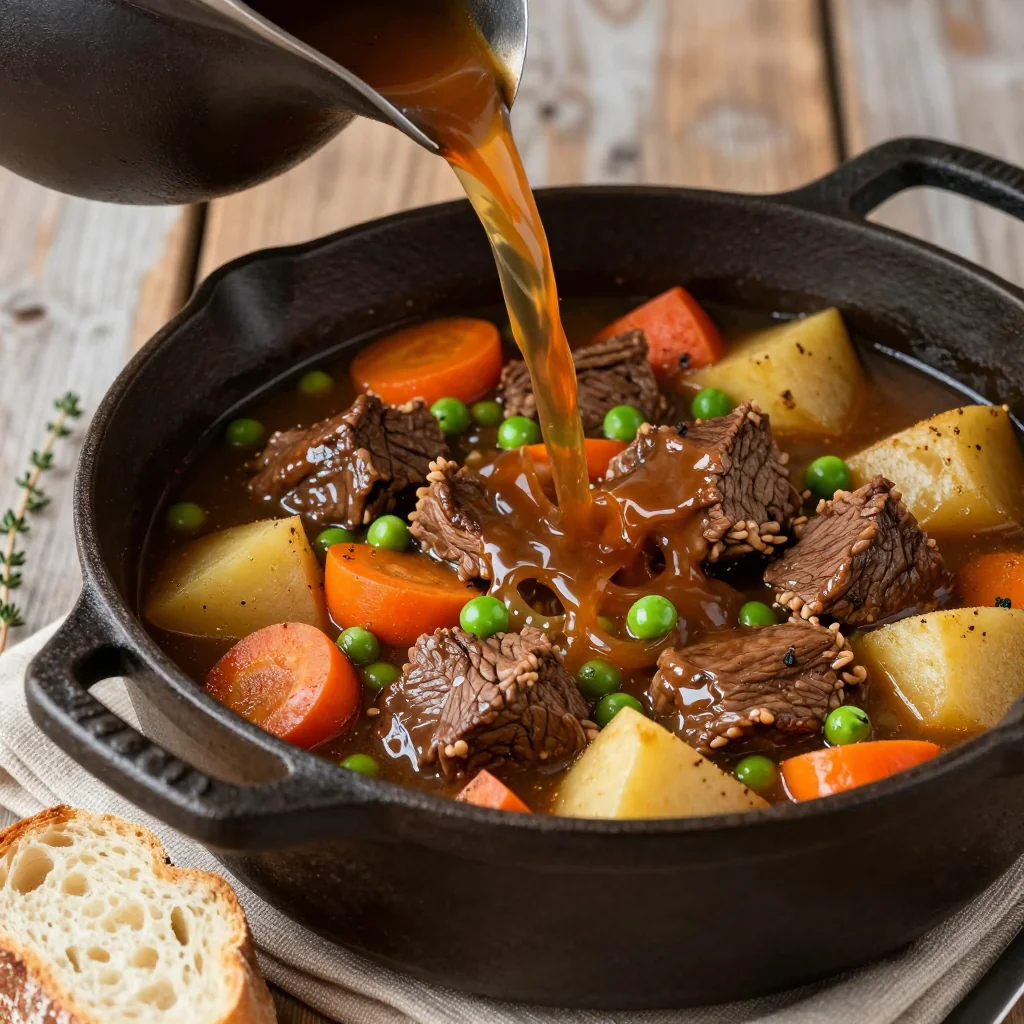
Love this? Pin it for later! 📌
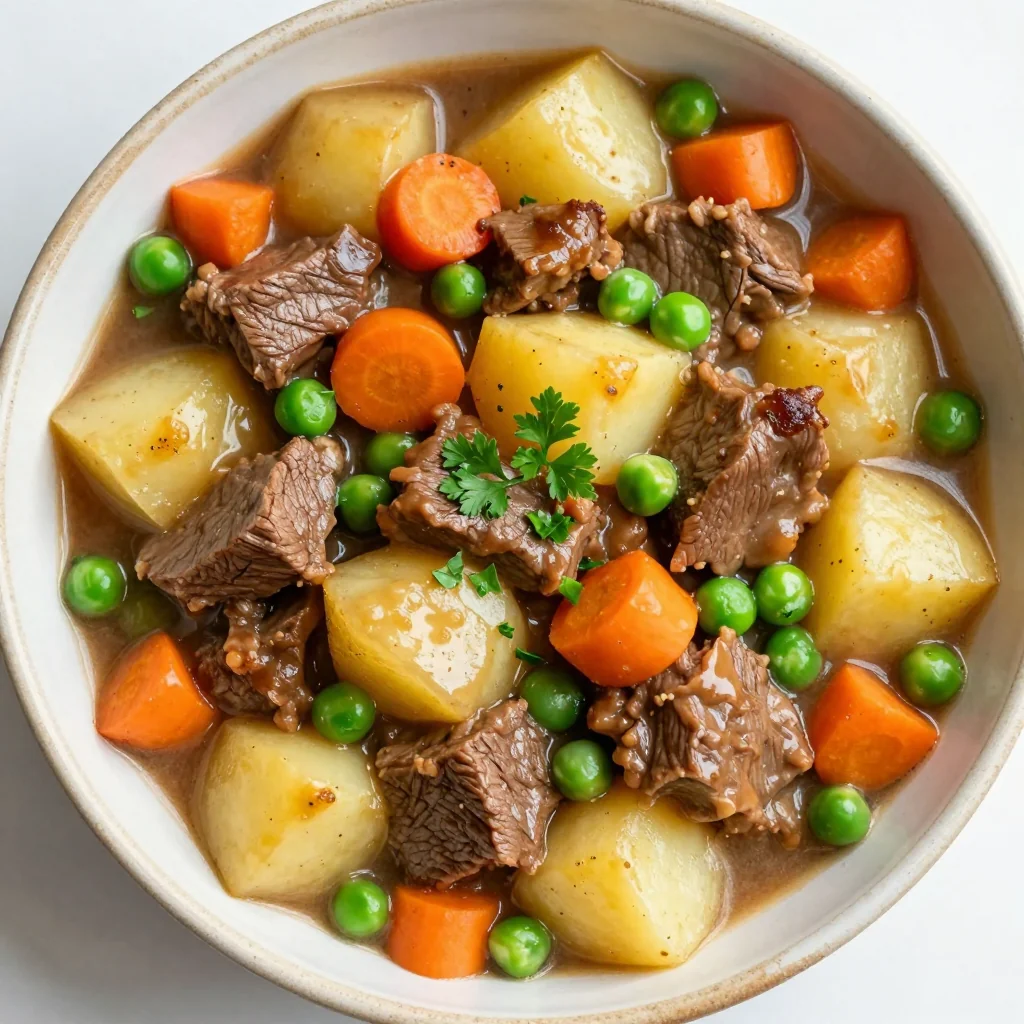
Batch-Cooking Slow-Cooker Beef & Vegetable Stew: The January Reset Your Freezer (and Family) Will Thank You For
January in New England smells like wood smoke, citrus-candle stubs from Christmas, and—if you open my back door at 5:30 a.m.—the perfume of onions hitting a hot slow-cooker insert. I started this ritual the year my daughter began kindergarten: dump, sear, deglaze, and done before the school bus arrived. Twelve Januarys later, the stew has accompanied us through new babies, cross-country moves, power outages, and pandemic lockdowns. It is the culinary equivalent of a weighted blanket—hearty but not heavy, familiar yet bright with tomatoes and herbs, and engineered for the deep freeze so that future-you can eat well on the nights when cooking feels impossible. If you, too, are craving food that tastes like a plan instead of a panic, pull out your biggest crock pot. We’re about to turn a humble chuck roast and a drawer of winter vegetables into ten future dinners that reheat like a dream.
Why This Recipe Works
- One-pot convenience: Everything from searing to serving happens in the same insert—no extra skillets to wash.
- Batch-cooking magic: One 6- to 7-pound roast yields 12–14 generous portions—enough for dinner tonight plus three foil pans for the freezer.
- January nutrition reset: Bone broth base, rainbow vegetables, and lean protein keep calories reasonable while still tasting indulgent.
- Dump-and-go friendly: Prep the night before; the cooker does the heavy lifting while you binge Tudor dramas.
- Freezer hero: Thaws overnight in the fridge and reheats on the stove in 12 minutes flat—no rubbery carrots or grainy sauce.
- Flavor insurance: Tomato paste caramelized into the beef + a whisper of balsamic at the end = restaurant depth without wine.
- Kid-approved vegetables: Dice them small and they disappear into the gravy—no negotiations required.
Ingredients You'll Need
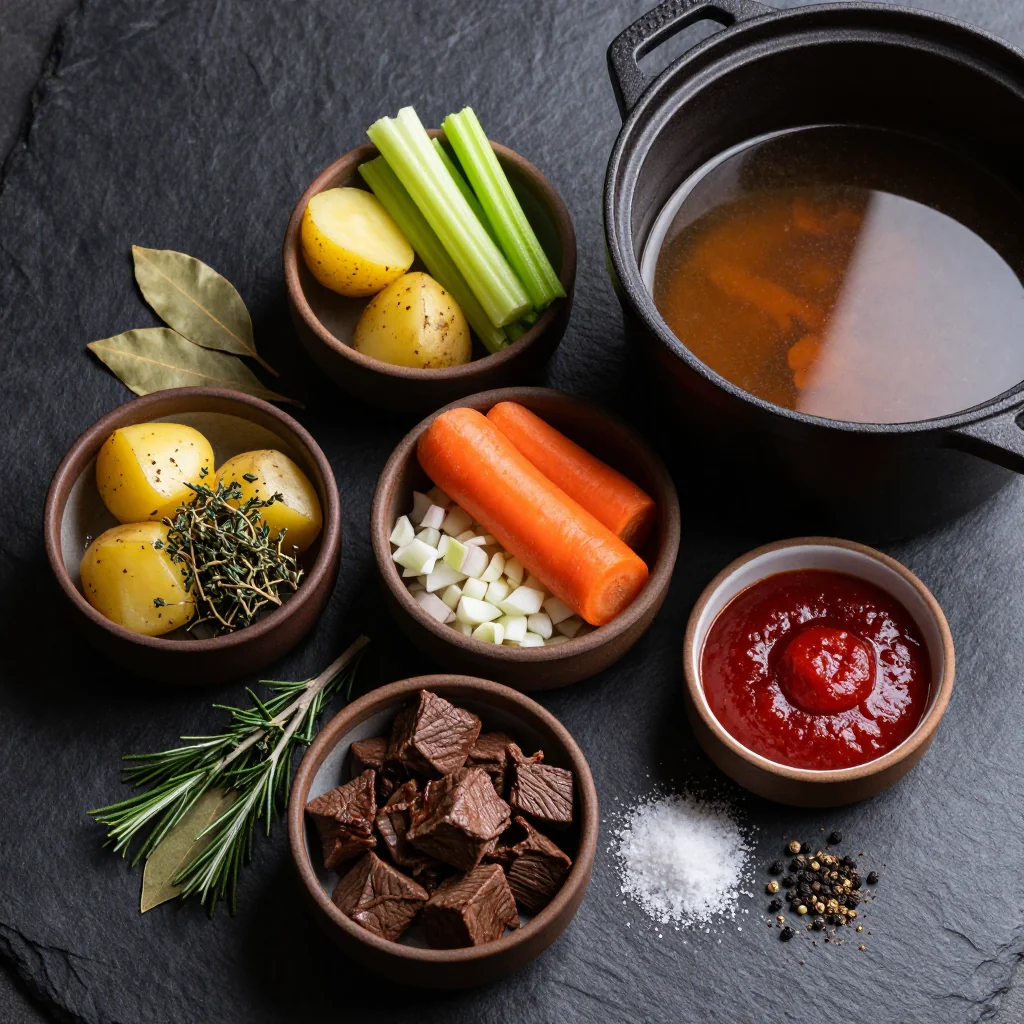
Great stew starts at the butcher counter, not the spice rack. Ask for “chuck roast, well-marbled, in one piece” and you’ll get collagen-rich meat that melts into fork-tender shards after eight hours. If grass-fed is in your budget, go for it—just plan on an extra hour of cook time because the meat is leaner.
Beef: A 6–7 lb chuck roast (also labeled “chuck roll” or “chuck shoulder”) is the gold standard. Skip pre-cubed “stew meat”; it’s often trim from random muscles that cook unevenly. Pat the roast dry and cut it yourself into 1½–2-inch chunks so every cube has a bit of fat cap attached.
Vegetables: January veg needs to stand up to long heat without turning to baby food. I use a ratio of 2 parts sturdy (carrots, parsnips, celery, halved baby potatoes) to 1 part tender (button mushrooms, green beans). Sweet potatoes disintegrate; butternut holds its shape and adds color.
Thickener: A light dredge of all-purpose flour gives body without pastiness. For gluten-free, swap in 2 tablespoons cornstarch whisked into ¼ cup cold broth at the end.
Umami boosters: Tomato paste + soy sauce + balsamic is the holy trinity. Vegemite or anchovy paste (½ teaspoon) is the stealth move if you have it.
Liquid: Equal parts low-sodium beef broth and chicken bone broth. The chicken broth keeps the flavor clean; beef broth gives depth. Water works in a pinch—just salt later.
How to Make Batch-Cooking Slow-Cooker Beef & Vegetable Stew Perfect for January
Tidy mise en place
Cut vegetables the night before; store carrots/parsnips submerged in cold water so they stay crisp. Pat beef cubes very dry with paper towels—moisture is the enemy of browning.
Season & sear
Toss beef with 2 tsp kosher salt, 1 tsp pepper, and ½ cup flour. Heat 2 Tbsp oil on the sauté setting (or a skillet) until it shimmers. Brown meat in two batches; 3 minutes per side builds the fond that flavors the whole stew.
Caramelize tomato paste
Add tomato paste to rendered fat; cook 90 seconds, scraping. The color will darken from scarlet to brick red—this concentrates sugars and banys any metallic taste.
Deglaze with broth
Pour in 1 cup broth while the insert is still on sauté. Use a wooden spoon to lift every brown bit—those are free flavor crystals. Transfer everything to the slow-cooker crock.
Load the veg
Add potatoes, carrots, parsnips, celery, mushrooms, bay leaves, thyme, rosemary, and remaining broth. Keep delicate veg (green beans/peas) out until the last 30 minutes.
Low & slow
Cook on LOW 8–9 hours or HIGH 5–6 hours. Resist peeking; each lift of the lid adds 20 minutes to your cook time. Meat is ready when a fork slides out with zero resistance.
Finish bright
Stir in frozen peas, green beans, and balsamic vinegar during the last 30 minutes. Taste; adjust salt and pepper. For thicker gravy, whisk 2 Tbsp cornstarch with ¼ cup cold broth; stir in and cook 10 minutes more.
Portion & chill
Ladle into shallow containers so the stew cools quickly and thaws evenly later. Refrigerate overnight; skim solidified fat before freezing if you want a leaner bowl.
Expert Tips
Winter veg swap
If parsnips look woody, substitute peeled turnips or celery root—both stay creamy, not mushy.
Overnight hold
Can’t start at 7 a.m.? Prep everything in the insert, refrigerate, then set the cooker to start on a programmable timer 8 hours before you wake.
Gravy gloss
For a silky sheen, swirl in 1 Tbsp cold butter just before serving—classic French mont au beurre magic.
Speed thaw
Forgot to defrost? Submerge a sealed freezer bag in a bowl of cold water; swap water every 15 minutes—stew is ready to reheat in 45 minutes.
Low-sodium hack
Replace 1 cup broth with plain water and add 1 tsp miso paste—umami without the salt bomb.
Color pop
Stir in a fistful of baby spinach at the end; it wilts instantly and photographs like spring in a bowl.
Variations to Try
- Irish twist: Swap potatoes for parsnips and add a 12-oz bottle Guinness in place of 1 cup broth; finish with chopped parsley.
- Moroccan vibe: Add 1 tsp each cinnamon and cumin plus a handful of dried apricots; garnish with toasted almonds and cilantro.
- Lighter spring version: Replace beef with boneless skinless chicken thighs; cook on LOW 5 hours; add asparagus tips for the last 15 minutes.
- Vegan comfort: Use 3 cups cooked green lentils and 1 lb mushrooms; substitute vegetable broth; stir in 1 Tbsp coconut aminos for depth.
Storage Tips
Refrigerate: Cool completely, then store in airtight containers 4 days.
Freeze: Fill quart-size freezer bags ¾ full, squeeze out air, label, and freeze flat on a sheet pan; once solid, stack vertically like books. Use within 3 months for peak flavor.
Reheat: Thaw overnight in fridge. Warm gently in a saucepan with a splash of broth, stirring occasionally; microwave works but can over-cook carrots.
Batch math: One full 8-quart recipe yields roughly 14 cups—enough for tonight’s dinner (6 cups) plus three 2-cup lunches and one 4-cup family reprieve later.
Frequently Asked Questions
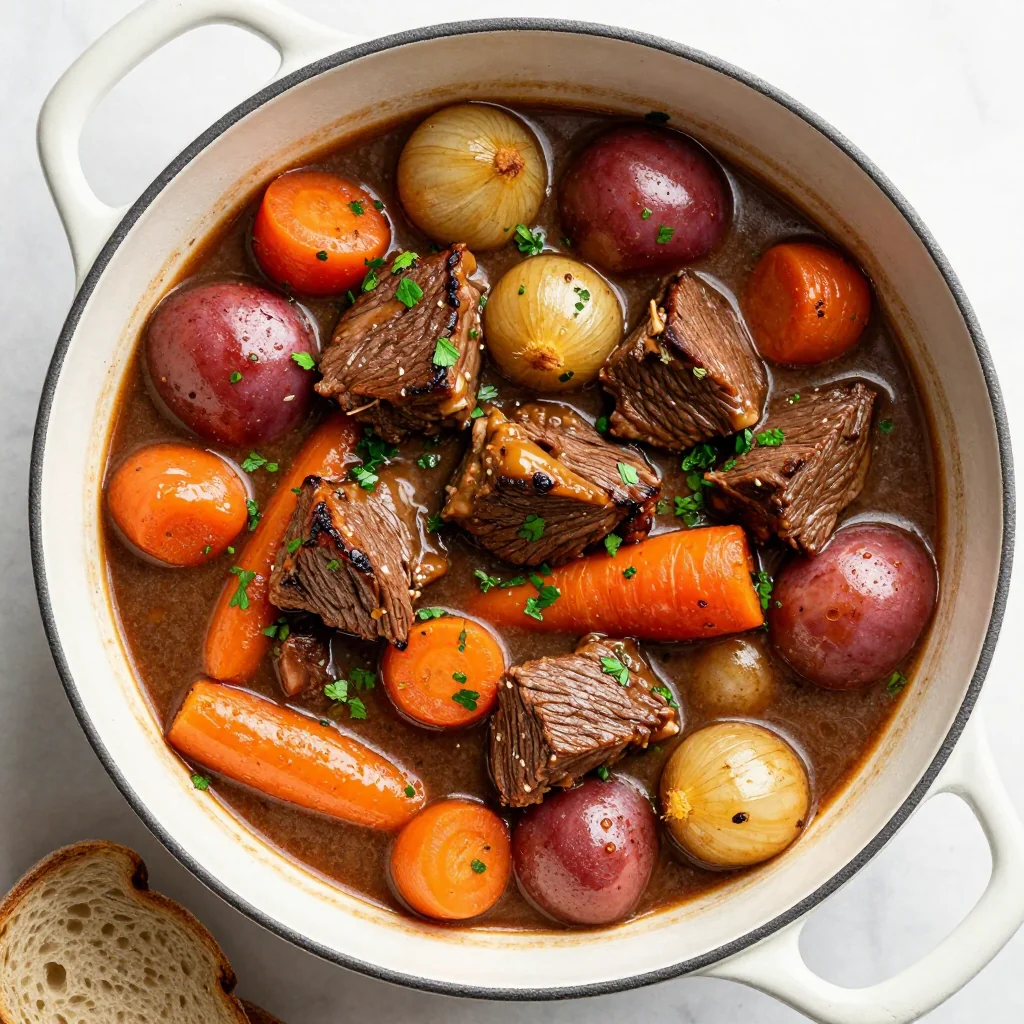
Batch-Cooking Slow-Cooker Beef & Vegetable Stew Perfect for January
Ingredients
Instructions
- Prep: Pat beef dry; season with salt and pepper; toss in flour.
- Sear: Heat oil in slow-cooker insert on sauté (or skillet). Brown beef in two batches; transfer to plate.
- Build fond: Add tomato paste; cook 90 seconds. Deglaze with 1 cup broth, scraping.
- Load: Return beef and accumulated juices; add remaining broth, potatoes, carrots, parsnips, celery, mushrooms, bay, thyme, rosemary.
- Cook: Cover; cook LOW 8–9 hr or HIGH 5–6 hr until beef shreds easily.
- Finish: Stir in peas and balsamic; cook 15 minutes more. Taste; adjust salt. Swirl in butter for silkiness.
- Store: Cool 30 minutes; portion into airtight containers. Refrigerate up to 4 days or freeze up to 3 months.
Recipe Notes
For gluten-free, skip flour dredge and thicken at the end with cornstarch slurry. Stew tastes even better the next day as flavors meld.