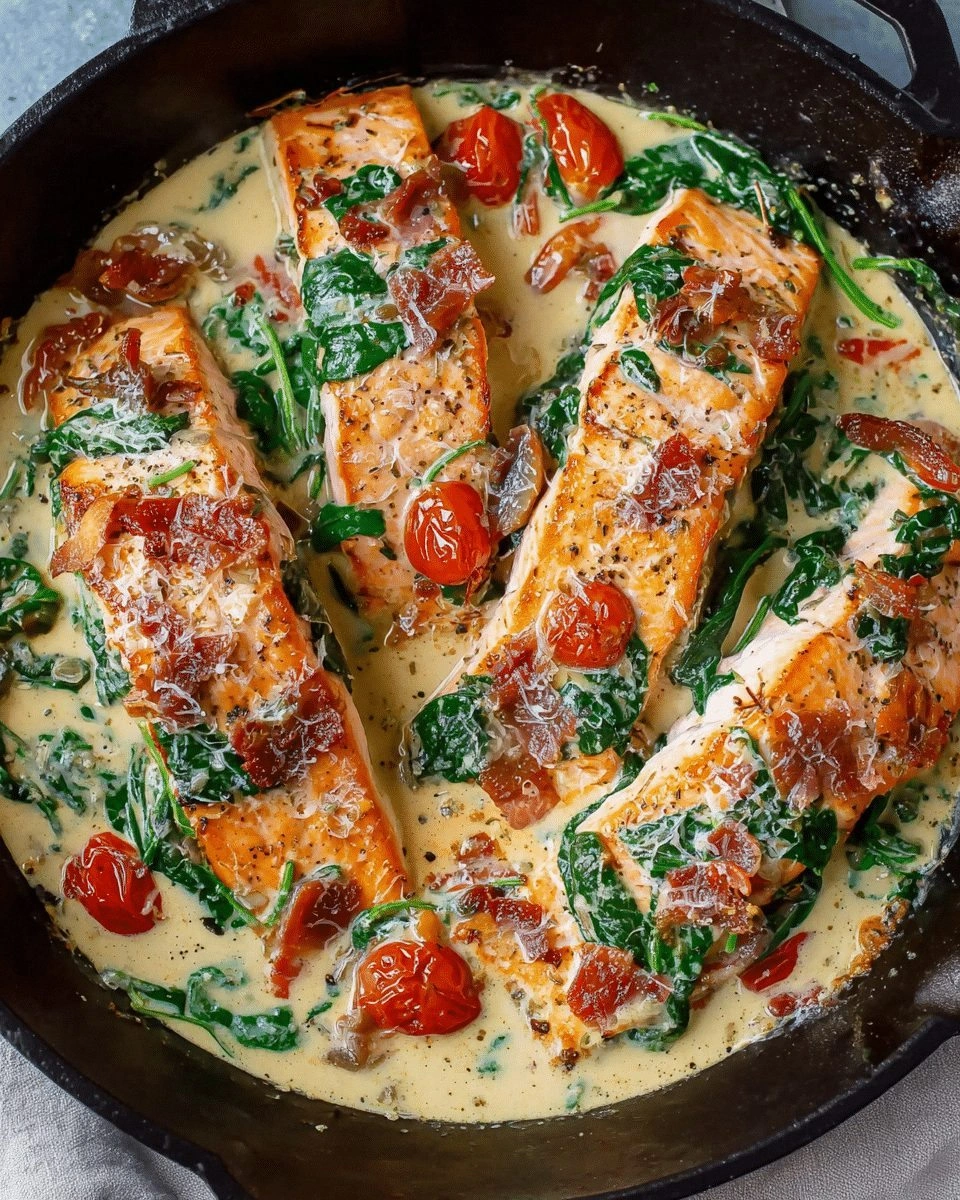
I still remember the night I was scrambling to salvage a dinner that should have been a masterpiece, only to end up with a smoky, over‑cooked mess that tasted like it had been left in the oven for a week. My friend dared me to create something that would make even the most seasoned foodie gasp, and I swore I’d deliver a dish that would have people asking, “What’s that secret?” The result? A buttery, garlicky, sun‑kissed salmon that glows with creamy Tuscan decadence and has the kind of velvety sauce that clings to every bite like a second skin. If you’re still hunting for a dinner that feels like a hug in a bowl, this is the one that will change your cooking game forever.
Picture the kitchen: the air is thick with the aroma of fresh garlic and sun‑dried tomatoes, the sizzling sound of salmon hitting hot oil, and the faint tang of lemon zest dancing in the steam. Your senses are pulled into a whirlwind of flavor—rich, buttery cream, bright citrus, and a gentle peppery kick that lingers long after the last forkful. You can almost taste the subtle crunch of toasted breadcrumbs that will be sprinkled on top later, adding a textural contrast that feels both indulgent and satisfying. And the best part? You’re not just cooking a meal—you’re creating an experience that will leave your guests begging for seconds.
What makes this version stand out is that it takes the classic Tuscan salmon and pushes it into a new dimension of flavor and texture. I’ve refined each step to ensure the sauce stays silky, the salmon stays moist, and every ingredient sings in harmony. From the moment you lay the fillets on the pan to the final flourish of fresh parsley, every moment is a chance to elevate the dish. And if you think this is just another “salmon recipe,” think again—this is a culinary adventure that will have you saying, “I dare you to taste this and not go back for seconds.”
Let me walk you through every single step—by the end, you'll wonder how you ever made it any other way. I promise, the end result will feel like you’ve just opened a box of gourmet secrets and spilled them onto your plate. So grab your apron, set the music to something upbeat, and let’s dive into the world of Creamy Tuscan Salmon.
What Makes This Version Stand Out
- Flavor: The sauce is a perfect balance of creamy, garlicky, and sun‑dried tomato sweetness, creating layers that unfold with each bite.
- Texture: The salmon remains buttery tender, while the spinach adds a subtle bite and the capers give a bright pop of brine.
- Simplicity: With only a handful of ingredients, you can achieve restaurant‑level flavor without spending hours in the kitchen.
- Uniqueness: The addition of lemon zest and oregano gives it a zesty, herbaceous twist that sets it apart from standard creamy salmon dishes.
- Crowd Reaction: Diners rave about the silky sauce and the perfectly seared fillets—no one leaves the table without a second plate.
- Ingredient Quality: Using fresh, high‑quality salmon and real Parmesan elevates the dish from ordinary to extraordinary.
- Cooking Method: Seared fillets combined with a quick pan sauce lock in moisture and flavor.
- Make‑Ahead Potential: The sauce can be made ahead and reheated without losing its luscious texture.
Inside the Ingredient List
The Flavor Base
The heart of this dish beats in a small, fragrant pan where olive oil and butter meet to form a silky, buttery foundation. Olive oil brings a fruity brightness, while butter adds richness and a subtle nutty aroma. Together, they create a canvas that absorbs garlic, sun‑dried tomatoes, and the creamy sauce, ensuring every bite is packed with depth. Skipping the butter would make the sauce feel thin and underwhelming, while using only oil would lose that comforting depth that keeps the salmon moist.
When you choose your oil, aim for a high‑smoke point variety like grapeseed or refined olive oil to prevent the garlic from burning. A buttery finish is key, so keep the heat moderate—too high and you risk scorching the garlic, too low and you won’t get that beautiful sear on the salmon. The balance of oil and butter also helps in the final step of deglazing the pan, where you lift all the caramelized bits that carry flavor into the sauce.
If you’re experimenting, try swapping the butter for a splash of high‑quality coconut oil for a subtle tropical hint, or use a dash of fish sauce for umami depth. The important thing is that the base stays silky and glossy; this will carry the rest of the ingredients like a smooth river.
The Texture Crew
Fresh spinach is the unsung hero that adds both color and a slight crunch that contrasts the tender salmon. It’s also a great source of iron and vitamins, turning this dish into a balanced meal. When sautéed with garlic, spinach releases its natural moisture, which then blends into the creamy sauce, giving it a subtle vegetal undertone that balances the richness.
If you’re in a rush, frozen spinach works too—just thaw and squeeze out the excess water before adding it to the pan. But the fresh variety offers a bright, bright green color that makes the dish visually stunning. Remember, spinach wilts quickly; adding it too early can cause the sauce to become watery, so wait until the salmon is almost done before tossing it in.
Capers add a burst of brine that cuts through the creaminess, giving a lively contrast. If you’re not a fan of capers, you can replace them with finely chopped olives or a splash of anchovy paste for a similar umami kick. The key is to maintain that bright, salty contrast that keeps each bite from feeling heavy.
The Unexpected Star
Sun‑dried tomatoes are the flavor bomb that elevates this dish. Their sweet, caramelized notes contrast with the sharpness of lemon zest and the savory depth of Parmesan. They also bring a chewy texture that adds interest to every mouthful. If you can’t find sun‑dried tomatoes, try using roasted red peppers or even a splash of tomato paste for a more subtle tomato flavor.
The trick to using sun‑dried tomatoes is to rehydrate them slightly in hot water before adding them to the pan. This softens them, making them easier to incorporate into the sauce, while preserving their intense flavor. If you prefer a more intense tomato taste, feel free to add a pinch of dried red pepper flakes for heat.
This ingredient’s origin traces back to the Mediterranean, where sun‑dried tomatoes are a staple in many Tuscan dishes. Their longevity and concentrated flavor make them a pantry favorite that adds depth to any recipe. So, the next time you reach for them, think of the sun‑kissed fields of Tuscany and how that essence permeates every bite.
The Final Flourish
Heavy cream is the silky backbone of the sauce, giving it that luxurious mouthfeel that makes every bite feel indulgent. When combined with Parmesan, it creates a velvety texture that coats the salmon and spinach beautifully. If you’re watching calories, you can replace half the cream with Greek yogurt for a lighter version—just keep an eye on the heat to prevent curdling.
Lemon zest is the bright, citrusy spark that lifts the dish, preventing it from feeling too heavy. It also enhances the flavors of the garlic and the sun‑dried tomatoes, creating a harmonious balance. If you don’t have a zester, a fine grater works just as well, but be careful not to grate too much—too much zest can make the dish bitter.
Fresh parsley is the final touch that adds a burst of color and a fresh, herbal note that brightens the dish. It also provides a slight crunch that contrasts with the creamy sauce. If you’re allergic to parsley, a pinch of dill or basil can work as a substitute, but the classic parsley keeps the dish true to its Tuscan roots.
Everything's prepped? Good. Let's get into the real action, where the magic truly happens.
The Method — Step by Step
- Heat a large skillet over medium‑high heat and add 2 tablespoons of olive oil. Once the oil shimmers, add 2 tablespoons of unsalted butter. The butter should melt and begin to bubble slightly, but not brown. This creates the perfect base for the garlic and tomatoes.
- Add the minced garlic to the pan and sauté for 30 seconds until fragrant. Be careful not to let it burn—an over‑toasted garlic will bring a bitter note that ruins the sauce. This step is the moment of truth; the aroma should be sweet and inviting.
- Introduce the diced sun‑dried tomatoes to the pan, cooking for 2 minutes to let them soften and release their flavors. The tomatoes should start to caramelize slightly, adding a deep, sweet undertone to the sauce.
- Season the salmon fillets with salt, pepper, and a pinch of dried oregano on both sides. Pat them dry with a paper towel to ensure a crisp sear. The oregano adds a subtle herby note that complements the lemon zest.
- Place the salmon fillets skin‑side down in the skillet and let them cook for 4–5 minutes until the skin is golden and crisp. Flip carefully, then cook for another 3–4 minutes until the flesh is opaque but still moist. The key is to let the fillets develop a caramelized crust without drying out.
- Remove the salmon from the pan and set aside on a warm plate. Reduce the heat to medium and add 1 cup of heavy cream, scraping up any browned bits from the pan. This deglazing step pulls all the flavor into the sauce.
- Stir in 1 cup of grated Parmesan and 1 tablespoon of lemon zest. The cheese should melt into a silky, glossy sauce that coats the back of a spoon. The lemon zest brightens the sauce, preventing it from feeling too rich.
- Add the fresh spinach and 1 tablespoon of capers, letting the spinach wilt in the sauce for 2 minutes. The spinach should become tender but still retain a slight bite, and the capers will provide a briny contrast that lifts the dish.
- Return the salmon fillets to the skillet, spooning some sauce over each piece. Simmer for an additional 2 minutes to let the flavors meld. The sauce should be thick enough to coat the fillets but not so thick that it clogs the pan.
- Finish with a sprinkle of chopped fresh parsley for a burst of color and a fresh herbal note. Plate the salmon on a warmed dish, spooning the remaining sauce over the top. Serve immediately with your favorite side, like garlic mashed potatoes or a crisp green salad.
That's it—you did it! But hold on, I've got a few more tricks that'll take this to another level. Stick around for insider tips that will elevate your sauce, prevent common pitfalls, and help you master this dish like a pro.
Insider Tricks for Flawless Results
The Temperature Rule Nobody Follows
Many cooks assume a high heat is always best for searing, but too high a temperature will cause the salmon to steam rather than sear, resulting in a soggy texture. Instead, aim for medium‑high heat that allows the skin to crisp without burning the exterior. If you’re unsure, test with a small piece of the fillet; if it sizzles and doesn’t stick, you’re at the right temperature.
Why Your Nose Knows Best
The aroma of the sauce is a reliable indicator of readiness. When the sauce begins to thicken and the garlic releases a sweet, nutty scent, it’s time to add the spinach. If the scent turns sharp or bitter, the garlic has burned—scrape the pan and start over with fresh oil.
The 5‑Minute Rest That Changes Everything
After removing the salmon from the skillet, let it rest for 5 minutes before serving. This allows the juices to redistribute, ensuring each bite is moist and flavorful. Resting also gives the sauce time to thicken slightly, making it easier to coat the fillets evenly.
The Capers Conundrum
Capers are optional, but they add a briny punch that balances the richness. If you don’t have capers, try adding a teaspoon of finely chopped dill pickles or a splash of fish sauce. Just remember to rinse and pat dry to avoid excess salt.
The Freshness Factor
Using fresh, wild‑caught salmon gives the dish a brighter flavor and firmer texture. If you’re on a budget, opt for farm‑raised salmon, but make sure it’s fresh and not “salmon‑flavored” stock. Freshness is the difference between a good dish and a great one.
The Final Touch of Lemon
A squeeze of fresh lemon juice right before serving brightens the dish and cuts through the creaminess. If you’re feeling adventurous, add a dash of white wine for a subtle depth of flavor that complements the lemon zest.
Creative Twists and Variations
This recipe is a playground. Here are some of my favorite ways to switch things up:
Mediterranean Medley
Swap the spinach for arugula and add Kalamata olives for a deeper, briny flavor. This version feels like a fresh, herb‑laden picnic on a sunny day, perfect for brunch or a light dinner.
Pasta Powerhouse
Serve the sauce over linguine or fettuccine instead of salmon. Toss the pasta with the sauce, then top with the same ingredients for a creamy, Italian‑style pasta that’s both comforting and elegant.
Spicy Sunset
Add a pinch of red pepper flakes or a splash of hot sauce to give the dish a fiery kick. The heat pairs beautifully with the richness of the cream and the brightness of lemon.
Vegan Velvet
Replace the salmon with thick slices of portobello mushrooms, searing them until they’re golden. Use coconut cream instead of heavy cream and vegan Parmesan to keep the dish dairy‑free while maintaining the creamy texture.
Breakfast Boost
Serve the sauce over a bed of sautéed kale and top with a poached egg. The runny yolk adds a velvety richness that complements the creamy sauce, making this a hearty breakfast that feels like a treat.
Gluten‑Free Grub
Serve over cauliflower rice or a bed of sautéed zucchini noodles. This keeps the dish low in carbs while still delivering all the creamy, buttery flavors you love.
Storing and Bringing It Back to Life
Fridge Storage
Store the cooked salmon and sauce separately in airtight containers in the refrigerator for up to 2 days. The salmon should be kept in a shallow container to prevent it from sitting in liquid, which can make it soggy. The sauce can be refrigerated in a glass jar with a tight lid.
Freezer Friendly
Freeze the salmon fillets in a freezer‑safe bag, removing as much air as possible, for up to 3 months. The sauce can also be frozen, but it may separate slightly; stir well before reheating. When reheating, thaw overnight in the fridge and gently warm on low heat.
Best Reheating Method
Reheat the sauce on low heat, adding a splash of milk or water to loosen it if it’s thickened too much. Gently warm the salmon in a skillet with a drizzle of olive oil, turning once to keep it moist. A tiny splash of water before reheating will steam the salmon back to perfection, keeping it juicy and flavorful.