I was in the middle of a frantic weekday dinner scramble when my roommate challenged me: “Make something that’s both a side and a snack, and it has to be ready in under an hour.” I laughed, I panicked, and then I remembered the dusty ramen packets hiding in the pantry. One quick boil later, I had a bowl of limp noodles, a handful of wilted veggies, and a lingering feeling that I’d just wasted a perfectly good instant‑noodle craving. That night, I vowed to turn that disappointment into a masterpiece, and after a few trial runs—some glorious, some downright disastrous—I finally nailed the version that makes my kitchen smell like a street market in Osaka.
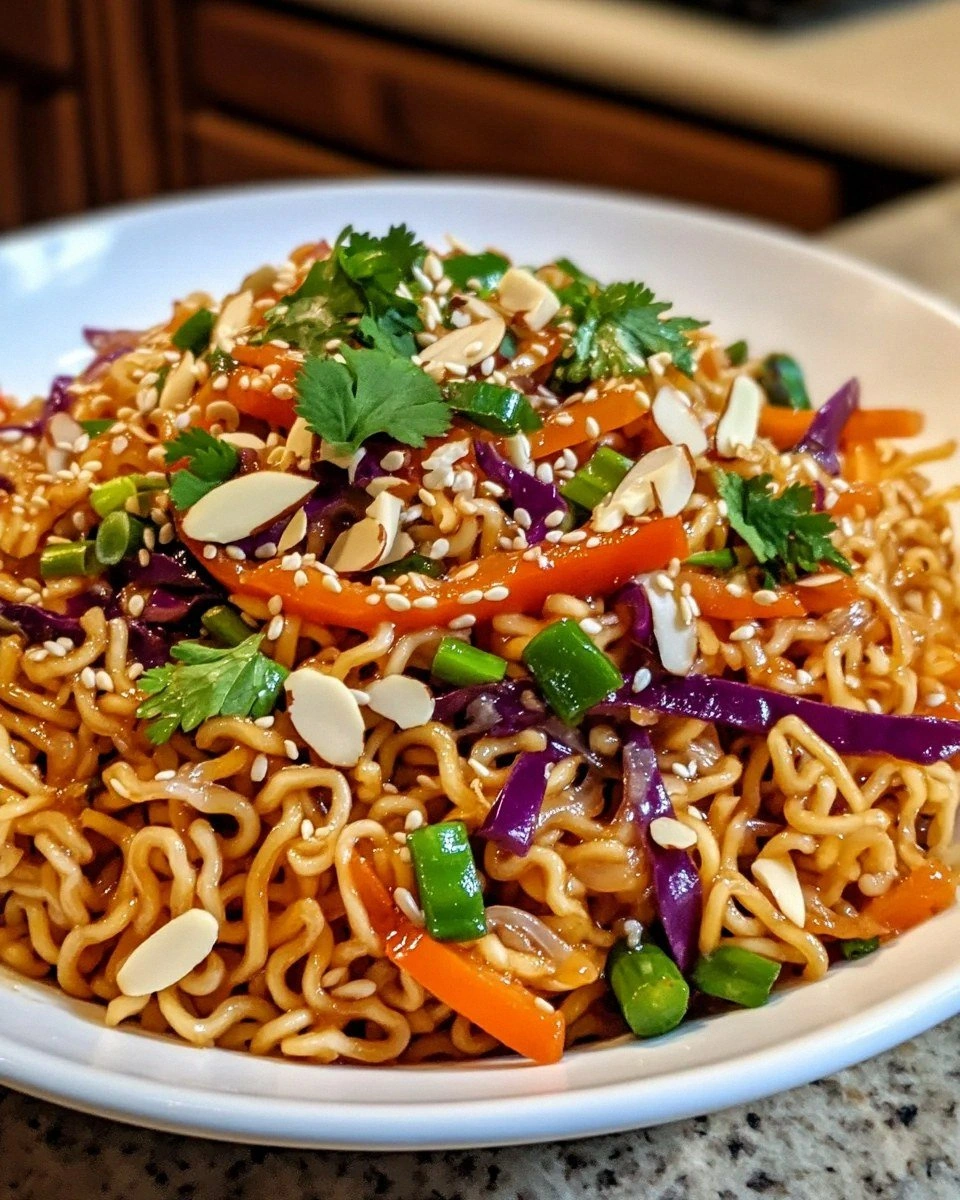
Picture this: a bowl that crackles with the sound of slivered almonds hitting the pan, the bright pop of red cabbage and bell pepper like fireworks on a summer night, and a silky, sesame‑kissed dressing that clings to each strand of ramen as if it were a silk scarf. The aroma? A heady mix of toasted sesame oil, fresh cilantro, and a whisper of soy that makes your nostrils do a little happy dance. When you take that first forkful, you’ll feel the crunch of the almonds, the snap of the veggies, and the subtle chew of the noodles—all in perfect harmony. It’s the kind of dish that makes you sit up straight, eyes wide, daring you to admit you’ve never tasted anything like it before.
Why does this version stand out from the sea of “ramen salads” out there? Most recipes treat ramen like a filler, tossing it in at the end without any love. I, on the other hand, toast the noodles first, giving them a golden, toasty edge that shatters like thin ice when you bite into them. Then I whisk a dressing that’s both tangy and sweet, balanced by the earthy depth of soy and the nutty whisper of sesame. The result is a salad that’s crunchy, refreshing, and surprisingly hearty—enough to be a main, yet light enough to serve as a side. Trust me, this is hands down the best version you’ll ever make at home.
And here’s the kicker: I’m about to reveal a secret ingredient that most people completely overlook—slivered almonds toasted in a splash of soy sauce. This tiny addition turns the whole thing from “good” to “wow, I could eat this every day.” I dare you to taste this and not go back for seconds. Let me walk you through every single step — by the end, you’ll wonder how you ever made it any other way.
What Makes This Version Stand Out
- Texture: The noodles are toasted until they have a crisp edge that shatters like glass, while the veggies stay crisp, creating a multi‑layered crunch that keeps you coming back for more.
- Flavor: A balanced dressing of soy, sesame oil, rice vinegar, and a touch of honey coats every strand like velvet, delivering sweet, salty, and umami notes in each bite.
- Crunch Factor: Slivered almonds and sesame seeds add a satisfying snap that most salads lack, turning the dish into a textural playground.
- Simplicity: Only eight core ingredients, all pantry‑friendly, and you’re done in under 45 minutes—no fancy equipment required.
- Freshness: Fresh cilantro and green onions bring a bright, herbaceous lift that cuts through the richness of the toasted noodles.
- Make‑Ahead Magic: This salad actually improves after a short rest, allowing the flavors to meld and the noodles to absorb the dressing without getting soggy.
- crowd‑pleaser: Whether you’re feeding a family, a potluck, or just yourself, the colors and flavors are so vibrant that people will ask for the recipe before they even take a bite.
- Versatility: It works as a side, a light lunch, or even a party appetizer—just scoop it onto small plates and watch the compliments roll in.
Inside the Ingredient List
The Flavor Base
The heart of this salad lives in the dressing. Soy sauce provides a salty backbone, while rice vinegar adds a bright acidity that lifts the whole dish. A splash of honey balances the tang with a gentle sweetness, and toasted sesame oil brings an earthy, nutty aroma that makes your kitchen feel like a Japanese izakaya. If you’re missing soy sauce, tamari works just as well and adds a slightly richer flavor. Remember, the dressing should be thin enough to coat the noodles without drowning them—think of it as a light rain, not a monsoon.
The Texture Crew
Here’s where the magic happens: the ramen noodles themselves, the slivered almonds, and the sesame seeds. Toasting the ramen turns it from a limp filler into a crunchy base that holds up under the dressing. The almonds, when briefly sautéed in a touch of soy, develop a caramelized crust that adds a buttery crunch. Sesame seeds, sprinkled at the end, give a subtle nutty finish and a visual pop of white against the colorful veggies.
The Fresh Burst
Shredded carrots, red cabbage, and bell pepper provide a rainbow of textures and flavors. Carrots bring a natural sweetness, red cabbage adds a slightly peppery bite, and the bell pepper (I prefer a bright red or sunny yellow) contributes a crisp snap that contrasts beautifully with the toasted noodles. Green onions and cilantro are the final herbaceous layer—cilantro’s citrusy notes are especially crucial for that authentic Asian vibe. If cilantro isn’t your thing, a handful of fresh mint can add a refreshing twist.
The Unexpected Star
You might think the seasoning packets from the ramen are essential, but they’re actually a flavor disaster in this dish. Discard them and replace with the homemade dressing for a cleaner, more nuanced taste. If you’re looking for an extra kick, a pinch of chili flakes or a drizzle of sriracha can turn the salad into a spicy adventure without overwhelming the other flavors.
Everything's prepped? Good. Let's get into the real action...
The Method — Step by Step
- Boil a large pot of water, add the two packs of ramen noodles, and cook for exactly 2 minutes—just enough to soften them without turning them mushy. Drain and rinse under cold water to stop the cooking process. While the noodles are still warm, spread them out on a large baking sheet and let them air‑dry for a minute. This little pause is crucial; it removes excess moisture that would otherwise steam the noodles later.
- Heat a dry non‑stick skillet over medium‑high heat. Add the noodles in a thin, even layer and let them sizzle. Stir constantly for about 5‑7 minutes until they turn a deep amber and start to smell toasted. You’ll hear a faint crackle—think of popcorn popping in a pan. Once they’re perfectly crisp, transfer them to a large mixing bowl and set aside.
- While the noodles toast, whisk together 3 Tbsp soy sauce, 2 Tbsp rice vinegar, 1 Tbsp honey, 2 tsp toasted sesame oil, 1 tsp grated ginger, and a pinch of crushed red pepper flakes. The mixture should be glossy and slightly thick—if it’s too runny, add a splash more honey; if too thick, thin it with a teaspoon of water. This dressing will cling to the noodles like a silk scarf, delivering flavor with every bite.
- In the same skillet, add a drizzle of sesame oil and toss the slivered almonds for 1‑2 minutes until they turn golden and release a nutty aroma. Then, quickly stir in the sesame seeds for another 30 seconds—watch them toast quickly, they can go from perfect to burnt in a flash. Transfer both to a small bowl and set aside for later sprinkling.
- Now, combine the shredded carrots, thinly sliced red cabbage, bell pepper strips, chopped green onions, and cilantro in the large mixing bowl with the toasted noodles. Toss gently to distribute the vegetables evenly—don’t over‑mix, or the noodles will lose their crispness.
- Pour the prepared dressing over the noodle‑vegetable mixture. Using two large spoons, fold the salad gently but thoroughly, ensuring every noodle strand is lightly coated. The dressing should shimmer across the noodles, coating them without pooling at the bottom. Taste and adjust: a splash more soy for salt, a drizzle more honey for sweetness, or a squeeze of lime for brightness.
- Just before serving, sprinkle the toasted almonds and sesame seeds over the top. Give the salad one final gentle toss to integrate the crunch. Let the salad sit for at least 10 minutes; this rest period lets the flavors meld and the noodles absorb a hint of the dressing while retaining their crunch.
That’s it — you did it. But hold on, I’ve got a few more tricks that’ll take this to another level. Stay with me here — this is worth it.
Insider Tricks for Flawless Results
The Temperature Rule Nobody Follows
Never toast the ramen on high heat. Medium‑high gives you control; the noodles brown evenly and develop that signature crunch without turning bitter. If you’re in a rush, keep the pan moving—constant motion distributes heat and prevents hot spots. I once tried “high‑heat flash” and ended up with a batch that tasted like burnt toast. Trust the slower route; the payoff is a golden, aromatic noodle that’s the foundation of the dish.
Why Your Nose Knows Best
Your sense of smell is the ultimate doneness gauge. When the noodles start to emit a nutty, toasted scent, you’re at the perfect moment. It’s that sweet‑earthy perfume that tells you the Maillard reaction is happening—those are the flavor‑building moments you want. If you can’t smell it, keep stirring a little longer; the aroma is the invisible timer that no kitchen clock can match.
The 5‑Minute Rest That Changes Everything
After tossing everything together, let the salad rest uncovered for five minutes. This short pause allows the dressing to seep into the noodles just enough to add depth without making them soggy. I’ve seen people skip this step and wonder why the salad feels “wet.” The rest is a silent flavor‑infusion that makes each bite more cohesive.
Almond Toasting Precision
When toasting almonds, add a pinch of sea salt and a splash of soy sauce right at the end. The salt draws out moisture, while the soy adds a caramelized glaze that deepens the crunch. A friend tried skipping the soy and ended up with bland almonds—let’s just say the dish lost its “wow” factor.
Cilantro Timing
Add cilantro at the very end, just before serving. Its delicate leaves wilt quickly, and if you mix them in early, they turn dark and lose their bright citrus note. The final sprinkle gives a fresh pop that lifts the entire salad.
Creative Twists and Variations
This recipe is a playground. Here are some of my favorite ways to switch things up:
Spicy Sriracha Kick
Add a tablespoon of sriracha to the dressing and sprinkle extra red pepper flakes on top. The heat pairs beautifully with the sweet carrots and the cooling cilantro, creating a balanced fire‑and‑ice experience.
Peanut‑Butter Fusion
Swap half the soy sauce for creamy peanut butter and add a splash of lime juice. This gives the salad a Thai‑style peanut flavor that’s rich, nutty, and tangy—all at once.
Mediterranean Mix
Replace the cilantro with fresh basil, add sliced olives, and use a drizzle of olive oil instead of sesame oil. The result is a cross‑cultural salad that feels both familiar and adventurous.
Vegan Protein Boost
Toss in a cup of cooked edamame or cubed tofu after the noodles are toasted. The extra protein makes the dish heartier, perfect for a post‑workout meal.
Fruit‑Infused Freshness
Add thin slices of mango or pineapple for a sweet‑tart contrast. The fruit’s juiciness pairs surprisingly well with the savory dressing, creating a tropical twist.
Storing and Bringing It Back to Life
Fridge Storage
Transfer the salad to an airtight container and store in the refrigerator for up to 3 days. Keep the toasted almonds and sesame seeds in a separate small jar; add them back just before serving to preserve crunch.
Freezer Friendly
While the noodles can become a bit softer after freezing, you can still freeze the bulk salad (minus the nuts) for up to 1 month. Thaw in the fridge overnight, then quickly re‑toast the noodles in a hot pan for 2 minutes to revive that crisp edge.
Best Reheating Method
When you’re ready to eat leftovers, place the salad in a skillet over medium heat, add a splash (about 1 Tbsp) of water, and stir‑fry for 2‑3 minutes. The water creates steam that re‑hydrates the noodles without making them soggy, while the quick heat restores the toasted aroma.