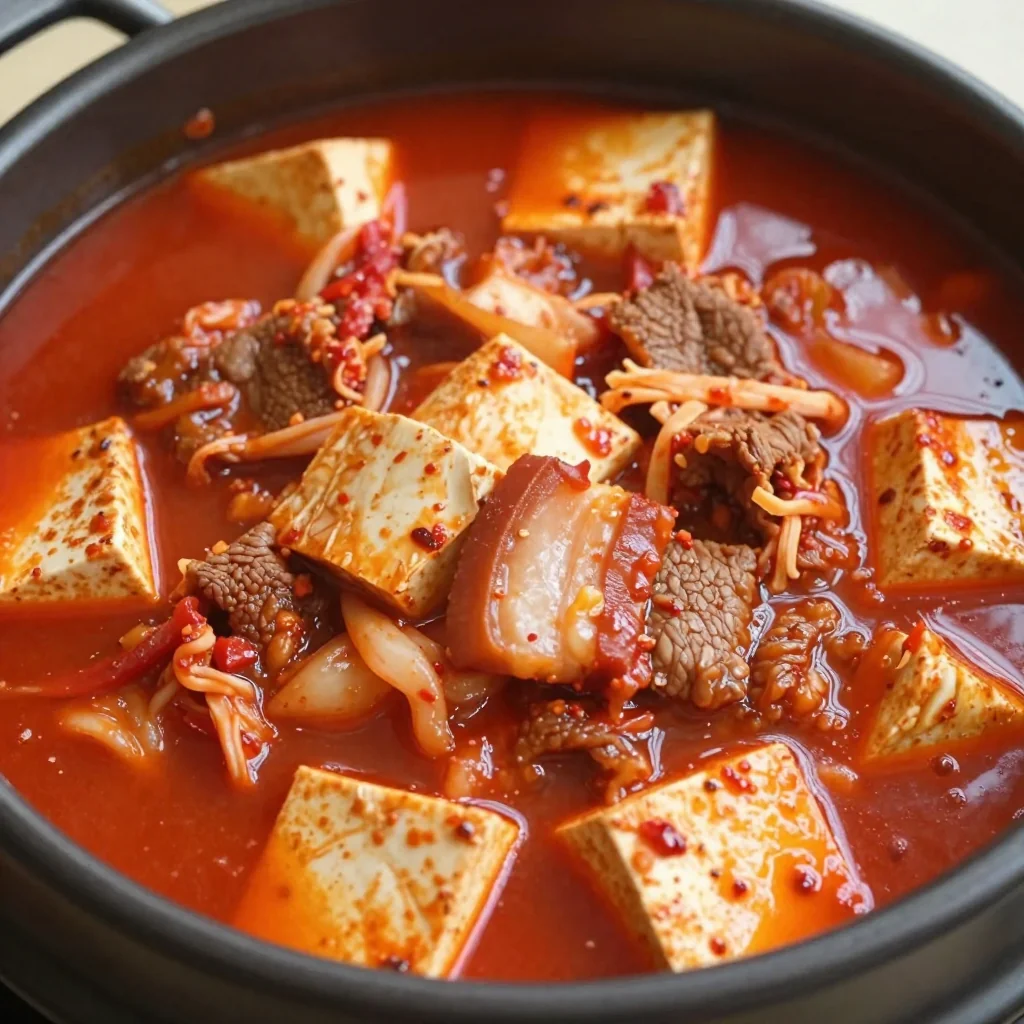
Love this? Pin it for later! 📌
Why This Recipe Works
- One-pot wonder: Everything from rendering the pork fat to softening the tofu happens in a single heavy pot, meaning fewer dishes and more couch time.
- Aged kimchi magic: Sour, bubbly kimchi that’s past its crunchy prime is actually preferred here; the longer fermentation adds layered umami and natural sweetness.
- Gochugaru glow-up: Korean chili flakes bloom in pork fat, releasing a smoky, fruity heat that supermarket chili can’t replicate.
- Silky tofu insurance: Adding tofu during the last 5 minutes keeps it pillowy, not rubbery, while still absorbing the spicy broth.
- Weeknight timing: Total clock time is 35 minutes—faster than delivery and twice as satisfying.
- Freezer-friendly: Make a double batch, freeze flat in zip bags, and reheat straight from frozen for instant comfort.
Ingredients You'll Need
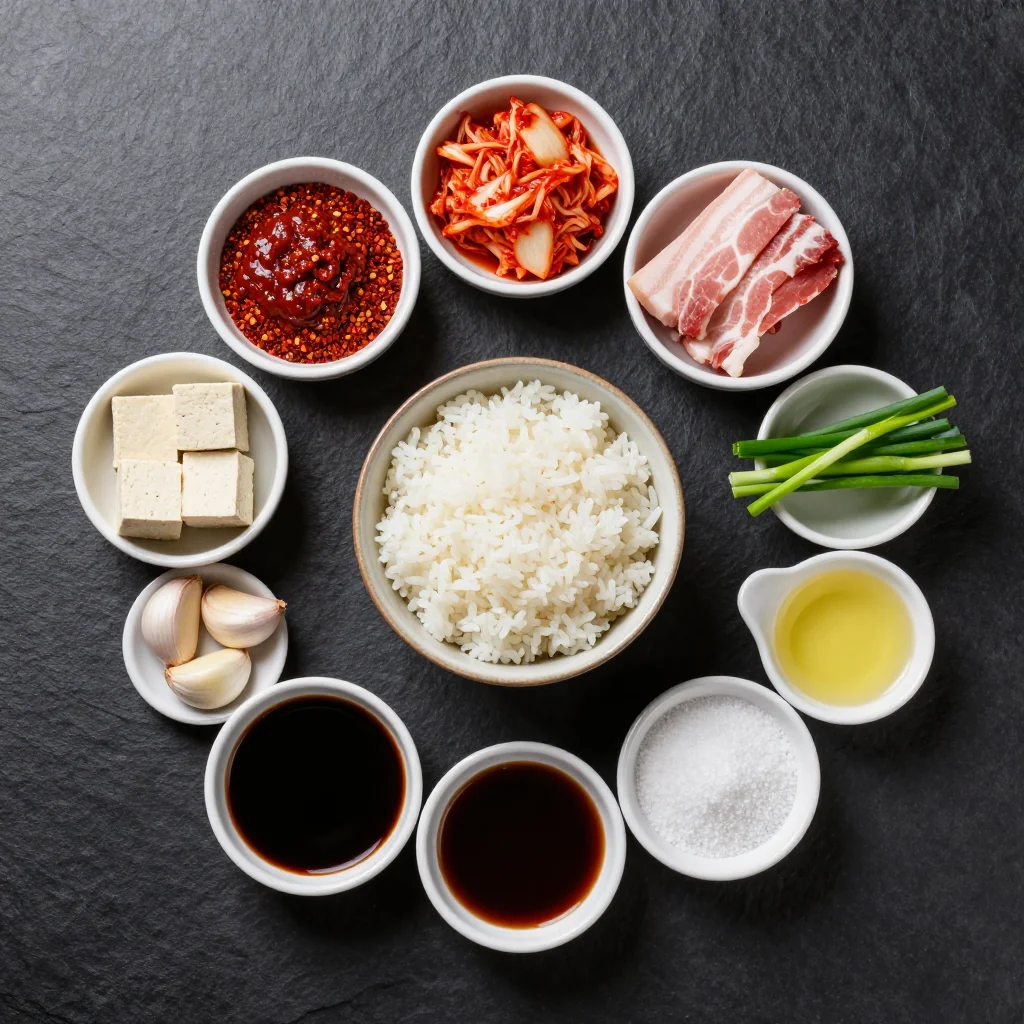
Great kimchi-jjigae starts with shopping smart. You’ll notice I don’t call for kimchi “juice.” Instead, you’ll add the entire jar—liquid, cabbage, carrots, chives, the works—because every drop is pre-seasoned gold. Look for kimchi sold in the refrigerated section (not shelf-stable) and check the date: 3–6 weeks old is the sweet spot for tang without overwhelming sourness. If yours is newer, leave the jar on the counter overnight; if older, balance with a pinch of sugar.
Pork: Shoulder/Boston butt delivers collagen that melts into silk, but if you’re in a hurry, thick-cut bacon or even Spam (yes, really) is common in Korean households. Slice it against the grain into ½-inch pieces so they curl into juicy nuggets.
Gochugaru: These sun-dried Korean chili flakes are coarser and milder than cayenne—more raisin than heat bomb. Buy from a Korean grocer or online; smoked paprika plus a pinch of cayenne is an emergency stand-in but lacks the bright fruitiness.
Tofu: Opt for “soft” or “silken” tofu sold in tubes or rectangular plastic tubs. Firm tofu works, but you’ll miss that quivering texture that contrasts the chili broth. If you’re soy-free, swap in king oyster mushrooms cut into ½-inch planks.
Stock: Anchovy or kelp stock is traditional, but chicken or even water is fine—kimchi carries so much flavor you’ll still end up with a complex stew. No stock? Dissolve ½ teaspoon dashi powder in 2 cups hot water.
How to Make Easy Korean Kimchi Stew with Tofu and Pork
Render the pork
Place a heavy-bottomed pot (Korean clay pot if you have one) over medium heat. Add 1 tablespoon sesame oil and the sliced pork. Let it sit undisturbed for 2 minutes so the underside caramelizes, then stir occasionally until the edges brown and the fat turns translucent, about 5 minutes total. You’re looking for golden, not crisp—those sticky bits (known as ganjang) will season the broth.
Bloom the gochugaru
Push pork to the perimeter, lower heat to medium-low, and add 2 tablespoons gochugaru into the exposed fat. Stir constantly for 30 seconds; the flakes should sizzle gently and turn a deep rouge without blackening. This step cooks out raw chili dust and infuses the fat.
Add aromatics
Stir in 1 tablespoon minced garlic, 1 teaspoon grated ginger, and 2 thinly sliced green onion whites. Cook until fragrant, 45 seconds. The garlic should just begin to color; any darker and it becomes bitter.
Introduce the kimchi
Scrape in 2 cups chopped kimchi along with all its juices. Increase heat to medium and sauté until the cabbage edges wilt and caramelize, about 3 minutes. Listen for a slight hiss—that’s moisture evaporating and flavors concentrating.
Deglaze with flavor
Splash in 1 tablespoon soy sauce and 1 teaspoon fish sauce. Use the liquid to loosen the browned bits on the pot bottom—this fond equals free glutamates, i.e., instant depth.
Pour in the stock
Add 2½ cups stock or water. Bring to a lively simmer, then reduce heat and let it bubble gently for 10 minutes so the pork finishes cooking and the kimchi relaxes.
Season and adjust
Taste. If your kimchi is mild, add up to 1 teaspoon more gochugaru. If it’s very sour, balance with ½ teaspoon sugar. The broth should be assertive—slightly too salty, spicy, and sour—because the tofu will dilute it.
Add tofu & finish
Slide in 12 oz soft tofu, large cubes or scoops. Simmer 3–4 minutes, spooning broth over the top so it heats through but doesn’t break apart. Garnish with green onion tops and serve boiling hot straight from the pot with steamed rice and perhaps a fried egg on the side.
Expert Tips
Control the heat
If you’re sensitive to spice, start with 1 tablespoon gochugaru; you can stir more in at the end. Conversely, for a Seoul-level kick, add ½ teaspoon gochujang for fermented sweetness.
Age your kimchi faster
Need sour kimchi tonight? Chop it, place in a bowl covered with plastic wrap, and microwave 30 seconds to jump-start fermentation. Cool before using.
Clay pot hack
No clay pot? Use a small Dutch oven, but preheat it with 1 cup water for 2 minutes, discard, then start the recipe—this prevents scorching and mimics the even heat of stone.
Egg drop trick
Crack an egg directly into the simmering stew during the last minute. The whites poach in the spicy broth and the yolk becomes a built-in sauce when broken over rice.
Freeze portions
Cool the stew completely, ladle into silicone muffin trays, and freeze. Pop out two “pucks,” microwave with ¼ cup water, and dinner is done in 3 minutes.
Texture upgrade
For chewy contrast, add a handful of rice cakes (tteok) or instant ramen noodles during the last 2 minutes. They soak up the broth and turn glossy.
Variations to Try
-
Tuna Kimchi Jjigae: Swap pork for 1 drained can of oil-packed tuna added at step 6. The omega-rich fish holds up beautifully and shortens cook time to 20 minutes.
-
Vegan Version: Use mushrooms and zucchini instead of pork, kelp stock, and 1 tablespoon white miso in place of fish sauce. Finish with sesame seeds and a drizzle of toasted sesame oil.
-
Cheesy Twist: Sprinkle ½ cup shredded mozzarella on top, cover for 1 minute off heat, and you’ve got a fusion “kimchi pizza stew” that teenagers inhale.
-
Seafood Medley: Add 6 peeled shrimp and 4 oz cleaned squid rings in step 7; they cook in the same 3-minute window as the tofu.
-
Extra Veg Boost: Fold in a handful of spinach or sliced zucchini during the last minute for color and nutrients without extra effort.
Storage Tips
Refrigerator: Cool completely, transfer to airtight glass container, and refrigerate up to 4 days. The flavors deepen overnight, so day-two stew is prized. Reheat gently; vigorous boiling breaks the tofu.
Freezer: Freeze without tofu for up to 2 months. Thaw overnight in the fridge, bring to a simmer, and add fresh tofu cubes before serving.
Meal-Prep: Portion cooled stew into 16-oz deli containers, top with a layer of plastic wrap directly on the surface to prevent ice crystals, seal, and freeze. Thaw individual portions in the microwave using 50% power for 6-7 minutes, stirring halfway.
Frequently Asked Questions
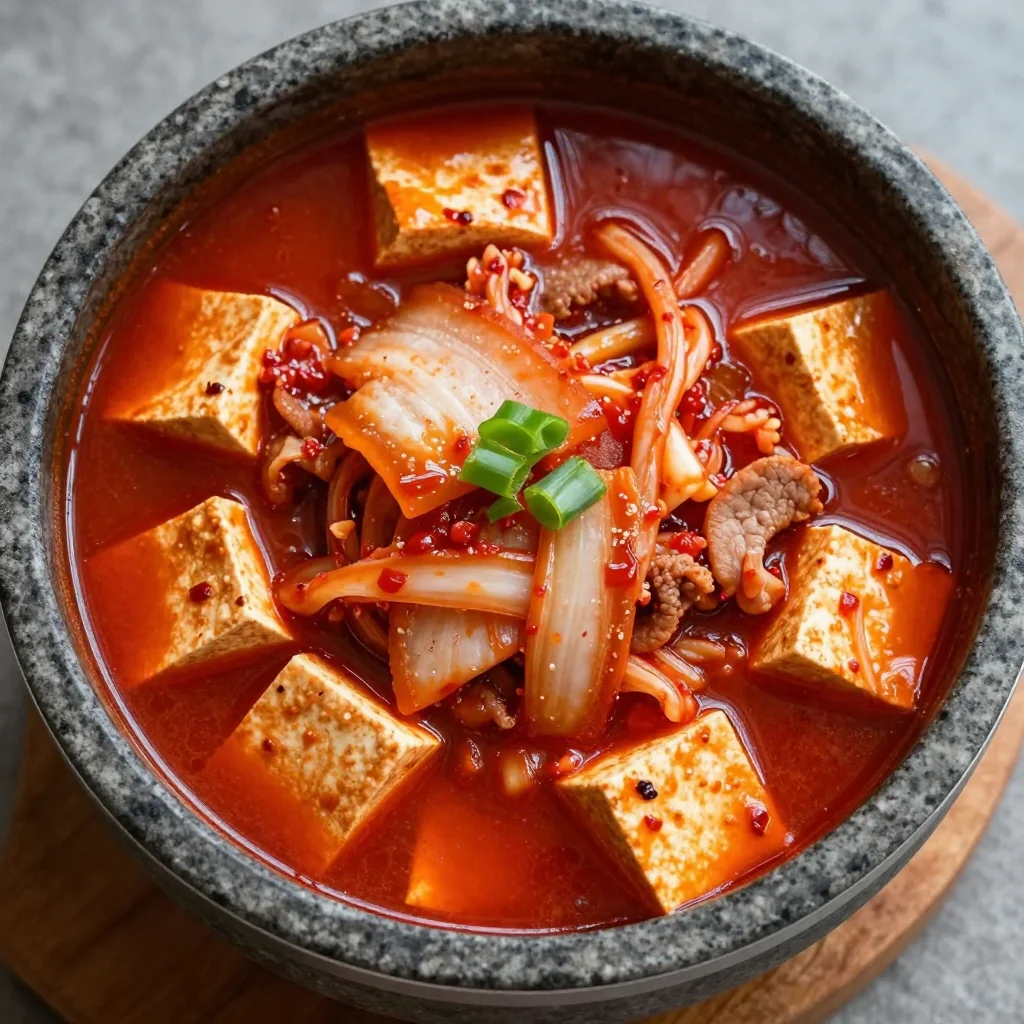
Easy Korean Kimchi Stew with Tofu and Pork
Ingredients
Instructions
- Render pork: Heat sesame oil in a heavy pot over medium. Add pork; cook 5 min until edges brown.
- Bloom gochugaru: Clear center, lower heat, add chili flakes; stir 30 seconds.
- Aromatics: Stir in garlic, ginger, and green onion whites; cook 45 seconds.
- Add kimchi: Mix in chopped kimchi plus juices; sauté 3 min.
- Deglaze: Add soy and fish sauces; scrape browned bits.
- Simmer: Pour in stock; simmer 10 min.
- Season: Taste; adjust spice or sweetness.
- Finish: Slide in tofu; simmer 3 min. Garnish with green tops; serve hot.
Recipe Notes
For deeper flavor, make the stew a day ahead and refrigerate; reheat gently. Do not freeze with tofu—add fresh tofu when reheating.