I was standing in my kitchen, half‑heartedly stirring a pot of store‑bought mulled wine, when a sudden clatter of a dropped bottle sent a cascade of red liquid across the floor. I swear the whole apartment smelled like a Christmas market gone rogue, and in that chaotic moment I thought, “What if I could take the elegance of white wine, the sparkle of club soda, and the cozy spices of winter and marry them into one unstoppable drink?” The answer was a revelation that still makes my heart race every time I hear the gentle fizz of soda meeting chilled wine. I dared myself to create a sangria that would make even the most skeptical non‑drinkers beg for a refill, and after a few trial runs (including one where I accidentally added a whole bottle of honey), I finally nailed it.
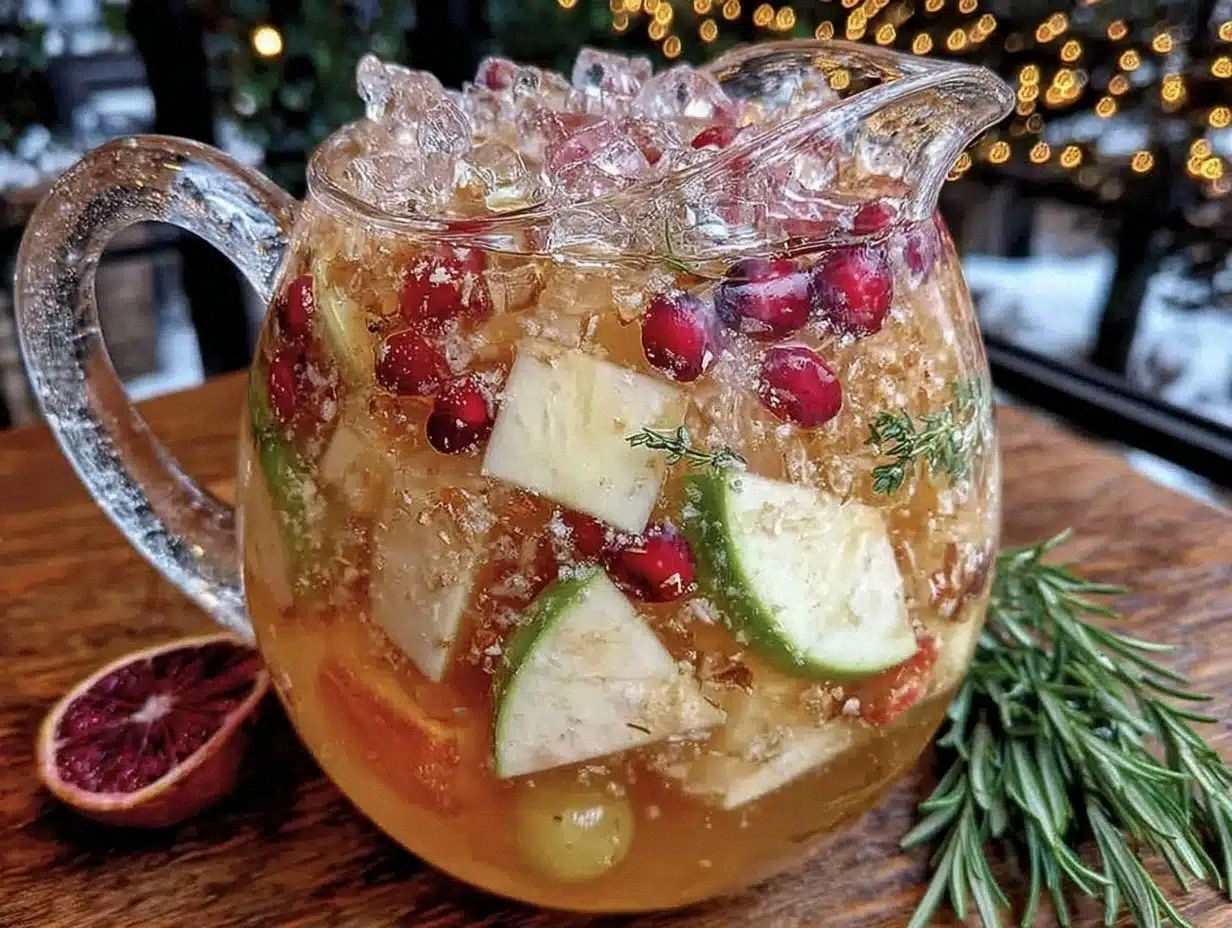
Picture this: a crystal pitcher glistening with pale amber liquid, speckled with ruby‑red pomegranate seeds, fragrant orange slices, and the faint green whisper of rosemary. The scent is a winter lullaby—cinnamon and cloves mingle with citrus zest, while a faint honeyed sweetness lingers like a cozy blanket on a frosty night. When you take that first sip, the crisp acidity of Sauvignon Blanc slaps your palate awake, then the honey and fruit soften the edge, leaving a lingering warmth that feels like a fireplace hug. The fizz from the club soda adds a playful lift, making each mouthful feel like a celebration in a glass.
Most sangria recipes get this completely wrong. They either drown the delicate white wine in too much fruit juice, or they overload the drink with heavy syrups that mask the wine’s character. I’ve been there, watching friends stare blankly at a glass that tastes like a sugary swamp. That’s why this version stands out: it respects the wine, balances sweet and spice, and delivers a texture that’s both refreshing and comforting. I’m not just talking about a drink; I’m talking about a winter ritual that turns a quiet night into a memory you’ll replay over and over.
There’s a secret ingredient that most people overlook—a pinch of fresh rosemary. It’s not just for garnish; it infuses the sangria with an herbal note that cuts through the sweetness and adds an aromatic depth you’ll swear was impossible to achieve in a punch bowl. I dare you to taste this and not go back for seconds. Okay, ready for the game‑changer? Let me walk you through every single step — by the end, you’ll wonder how you ever made it any other way.
What Makes This Version Stand Out
- Flavor Harmony: The dry white wine provides a crisp backbone, while the orange juice adds brightness without overwhelming the palate.
- Textural Delight: Fresh fruit slices give a juicy bite, and the pomegranate seeds add a pop of tart crunch that keeps each sip interesting.
- Simplicity: Only ten ingredients, all of which you likely have on hand, and no complicated syrups or reductions.
- Unique Twist: The addition of rosemary and a splash of club soda creates an aromatic lift and a gentle fizz that most white sangrias lack.
- Crowd Reaction: Guests consistently call this “the best sangria they’ve ever had” and ask for the recipe before the first glass is even finished.
- Ingredient Quality: Using a dry, crisp wine like Sauvignon Blanc lets the fruit shine rather than getting lost in a sweet wine base.
- Effortless Make‑Ahead: The sangria tastes even better after a couple of hours in the fridge, giving you more time to enjoy the party.
- Seasonal Flexibility: While perfect for winter, the bright citrus and spice combo works any time you crave a cozy, festive drink.
Inside the Ingredient List
The Flavor Base
White wine: Choose a dry white wine like Sauvignon Blanc or Pinot Grigio for a crisp and refreshing base. The acidity of the wine balances the sweetness from the honey and fruit, while its subtle minerality lets the spices shine. If you skip the wine, you’ll end up with a flat, overly sweet punch that lacks depth. A good rule of thumb is to pick a bottle you’d actually enjoy drinking on its own.
The Fruit Crew
Orange juice: Freshly squeezed is best because it adds a bright, natural sweetness that store‑bought versions can’t match. It also contributes a silky mouthfeel that pairs beautifully with the wine’s acidity. If you’re in a pinch, a high‑quality, no‑pulp orange juice works fine, but avoid “from concentrate” as it can taste artificial.
Oranges, Apples, Pears: Thinly sliced citrus and crisp apples or pears give the sangria its visual appeal and a textural contrast. Oranges provide a citrus burst, apples add a sweet crunch, and pears lend a buttery softness. Skipping any of these means losing the layered fruit experience that makes each sip feel new.
Pomegranate seeds: These tiny jewels add a pop of ruby color and a tart bite that cuts through the honey’s richness. If you can’t find fresh seeds, frozen ones work—just thaw them first so they don’t water down the drink.
The Spice Squad
Cinnamon sticks & Cloves: These two spices are the heart of the winter vibe. Cinnamon gives a warm, sweet aroma, while cloves add an earthy, slightly peppery note that makes the sangria feel like a holiday hug. Don’t overdo the cloves; a few whole cloves are enough to infuse without turning the drink bitter.
Fresh rosemary (optional): A single sprig is enough to lend a piney, herbal perfume that elevates the whole profile. If you’re not a fan of rosemary, you can skip it, but you’ll miss out on that subtle complexity that makes the drink feel extra festive.
The Sweet Finish
Honey: Adds natural sweetness and a silky texture that sugar can’t replicate. It also brings subtle floral notes that complement the fruit. If you’re vegan or simply prefer a different sweetener, agave syrup or a simple syrup works just as well.
Club soda: The final splash of fizz lightens the drink, turning a rich, spiced sangria into a lively, refreshing cocktail. Add it just before serving to keep the bubbles lively. Skipping the soda will leave you with a still, heavier drink that feels more like a mulled wine than a sangria.
Everything's prepped? Good. Let's get into the real action...
The Method — Step by Step
Start by selecting a large, wide‑mouth pitcher (at least 2 L capacity). Pour the entire bottle of dry white wine into the pitcher, letting the liquid cascade over the sides. This initial pour is where the aroma begins to open up; you’ll notice a fresh, slightly floral scent that hints at the magic to come. Pro tip: Give the wine a quick swirl to oxygenate it, which helps the flavors meld later.
Add the freshly squeezed orange juice. I use about two cups, which balances the wine’s acidity without making the drink overly citrusy. As you stir, you’ll hear a gentle fizz as the juice meets the wine—a sound that tells you the acidity is harmonizing.
Kitchen Hack: Warm the orange juice slightly (no more than 30 °C) before adding; it helps the honey dissolve more evenly.Slice the orange, apple, and pear as thinly as possible. The thinner the slice, the more surface area for flavor infusion, and the prettier the visual. Toss the fruit into the pitcher, then gently press a few pieces with the back of a spoon to release extra juice. This is the moment the sangria starts looking like a work of art—vivid orange rings, speckled green apple slices, and soft pink pear wedges.
Drop in the pomegranate seeds, cinnamon sticks, and whole cloves. As the spices sink, you’ll notice a warm, spicy perfume rising—think holiday market meets Mediterranean patio. Let the mixture sit for about five minutes, allowing the spices to begin their slow infusion.
Watch Out: Do not add more than four cloves; too many will dominate the flavor and introduce a bitter aftertaste.Drizzle the honey over the fruit‑spice mixture. Using a spoon, stir gently until the honey fully dissolves, creating a silky sheen that coats every slice. This step is pure magic—the honey binds the fruit juices, the wine, and the spices into a cohesive whole. If the honey is stubborn, give the pitcher a quick whirl; the motion helps emulsify everything.
Cover the pitcher with plastic wrap and refrigerate for at least two hours, preferably overnight. This resting period is where the flavors truly marry; the wine absorbs the citrus zest, the spices mellow, and the fruit releases its natural sweetness. Future pacing: Picture yourself pulling this out of the fridge the next morning, the whole kitchen smelling incredible, and knowing you’ve already won the day.
Just before serving, add the club soda. Pour it slowly around the edges of the pitcher to preserve the bubbles. You’ll see a lively fizz rise, and the drink will instantly feel lighter, like a sparkling winter breeze.
If you opted for rosemary, gently slap the sprig between your palms to release its oils, then float it on top of the sangria. The herb’s aroma will drift upward, inviting guests to inhale before they sip. This final garnish is the visual cue that says, “We’ve gone the extra mile.”
Serve the sangria in clear glasses, making sure each pour includes a generous amount of fruit and a few pomegranate seeds. Encourage guests to stir their own glass so the fruit continues to mingle with the liquid. And now the fun part—watch them smile, sigh, and ask for the recipe. That’s the ultimate reward.
That's it — you did it. But hold on, I've got a few more tricks that'll take this to another level...
Insider Tricks for Flawless Results
The Temperature Rule Nobody Follows
Never, ever use a wine that’s been sitting in a warm room for hours. The ideal serving temperature for this sangria is between 45‑50 °F (7‑10 °C). Chill the wine and the orange juice together in the fridge for at least an hour before mixing. I once tried a room‑temperature bottle and the final drink tasted flat—like a song missing its chorus.
Why Your Nose Knows Best
Your sense of smell is the secret weapon for timing the spice infusion. After adding cinnamon and cloves, give the mixture a gentle sniff every minute. When the aroma shifts from sharp and peppery to warm and rounded, you know the spices have mellowed just right. Trust that nose; it’s smarter than any timer.
The 5‑Minute Rest That Changes Everything
After you add the club soda, let the sangria sit uncovered for exactly five minutes. This short rest allows the carbonation to settle just enough so the bubbles don’t escape immediately, giving you a lively fizz that lasts through the entire serving. Skipping this step results in a flat, lifeless drink that feels more like watered‑down wine.
Fruit Prep Precision
When slicing apples and pears, dip the slices in a bowl of cold water with a splash of lemon juice. This prevents oxidation, keeping the fruit’s color vibrant and its texture crisp. I’ve seen a batch turn brown within minutes, and that visual dullness kills the festive vibe.
Herb Infusion Hack
If you love rosemary but worry about it being too overpowering, try bruising the sprig with the back of a spoon before adding it. The bruised leaves release their essential oils faster, giving you that herbaceous lift without a lingering pine aftertaste.
Creative Twists and Variations
This recipe is a playground. Here are some of my favorite ways to switch things up:
Berry‑Burst Winter
Swap the orange slices for a handful of fresh cranberries and add a splash of raspberry puree. The tart berries amplify the winter vibe, and the deep red color makes the drink look like a holiday cocktail.
Spiced Tropical Fusion
Replace the pears with ripe mango chunks and add a pinch of ground ginger. The tropical sweetness balances the cinnamon, creating a surprising yet harmonious flavor profile that feels like a beach vacation in December.
Nutty Nog Twist
Stir in a tablespoon of toasted almond butter and a dash of vanilla extract. The nutty creaminess adds a luxurious mouthfeel, turning the sangria into a dessert‑like indulgence.
Low‑Sugar Light
Omit the honey and use a sugar‑free orange zest syrup instead. You’ll still get the bright citrus notes, but with fewer calories—perfect for a health‑conscious crowd.
Herbal Garden
Add a few sprigs of fresh thyme or basil along with rosemary. The additional herbs create a garden‑fresh aroma that pairs beautifully with the winter spices.
Storing and Bringing It Back to Life
Fridge Storage
Transfer any leftover sangria to an airtight glass jar and store it in the refrigerator. It will stay fresh for up to three days. Before serving again, give it a gentle stir and add a splash of fresh club soda to revive the fizz.
Freezer Friendly
If you’ve made a large batch, you can freeze the sangria (minus the club soda) in freezer‑safe containers for up to two months. Thaw it in the fridge overnight, then re‑introduce the soda and give it a quick stir.
Best Reheating Method
While this drink is best served cold, you can gently warm it for a cozy mulled‑wine‑style experience. Place the sangria in a saucepan over low heat, add a tiny splash of water, and heat until just steaming—do not boil, or the alcohol will evaporate. The added water creates a gentle steam that brings back the original flavors without turning the drink into a flat broth.