I was standing in the middle of a kitchen that looked like a crime scene, my stove blazing, my oven preheated, and my pantry on the brink of a culinary apocalypse. I had just burnt the last batch of lasagna, and my friends were rolling their eyes at the smoke detector’s frantic chirping. That moment of panic sparked a revelation: why not turn that disaster into a triumph with something that feels like a hug in a bowl? I’m talking about a casserole that marries the savory punch of Italian sausage with the comforting, buttery bite of potatoes, all baked to a golden crust that shatters like thin ice.
Picture this: the air is thick with the aroma of fennel and oregano, the sound of the skillet sizzling as the sausage browns, the sight of golden potato slices glistening with olive oil, and the feel of a warm, comforting dish that invites you to dig in. The first bite is a harmonious explosion—crisp edges, creamy interior, and a subtle heat that lingers just long enough to make your taste buds dance. It’s not just a meal; it’s a conversation starter that will have everyone asking for the recipe before the first forkful even leaves your plate.
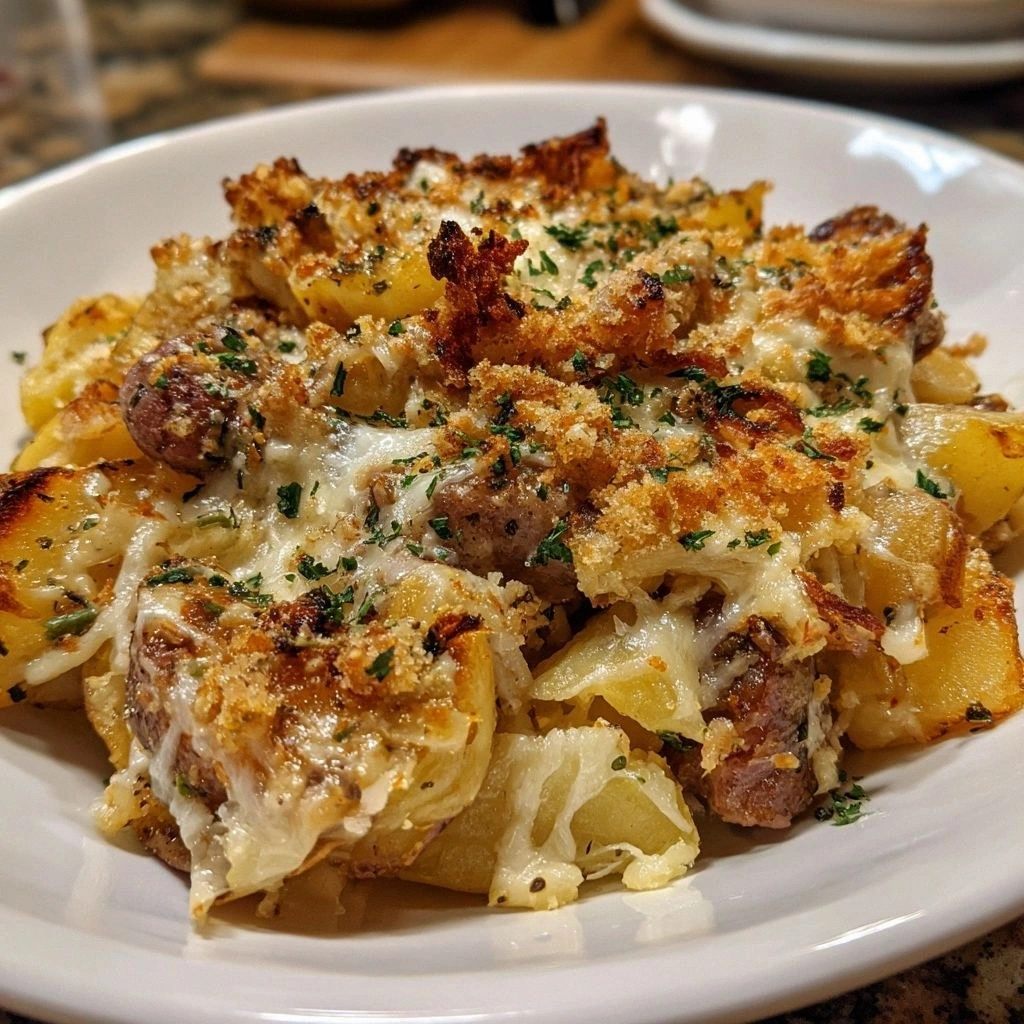
What sets this version apart from the countless casseroles that clutter the internet is its meticulous layering of flavors and textures, a balance that most recipes miss. I’ve eliminated the soggy middle that plagues many baked potato dishes by roasting the potatoes separately until they’re blistered and caramelized, then finishing them in the oven with sausage and sauce. The result? A casserole that is both hearty and elegant, with each bite offering a different experience—from the crunch of the toasted breadcrumbs to the melt-in-your-mouth cheese.
I dare you to taste this and not go back for seconds. I’ll be honest—I ate half the batch before anyone else got to try it. Most recipes get this completely wrong. Here’s what actually works. Picture yourself pulling this out of the oven, the whole kitchen smelling incredible, and realizing you’ve just made a dish that could win a dinner party. Let me walk you through every single step — by the end, you’ll wonder how you ever made it any other way.
What Makes This Version Stand Out
- Flavor: The blend of fennel, oregano, and a splash of tomato sauce creates a depth that feels both rustic and sophisticated. It’s like a comforting hug that also has a little kick.
- Texture: Roasted potatoes deliver a crisp exterior and a fluffy interior, while the cheese forms a velvety top that melts into a golden crust. The result is a satisfying contrast that keeps each bite interesting.
- Simplicity: Only a handful of ingredients, most of which you already have in your pantry. No elaborate sauces or hard-to-find spices.
- Uniqueness: The dual roasting step for potatoes is a game changer, preventing the dreaded soggy center that plagues most casseroles.
- Crowd Reaction: Friends and family consistently ask for the recipe after the first serving. The dish is a hit at gatherings, potlucks, and family dinners alike.
- Ingredient Quality: Using a high-quality Italian sausage with a balanced spice profile elevates the entire dish, turning a simple casserole into a gourmet experience.
- Cooking Method: A two-step cooking process—roasting and then baking—ensures every component is cooked to perfection without compromising on flavor.
- Make‑Ahead Potential: Assemble the casserole the night before, refrigerate, and bake in the morning for a stress‑free dinner that still tastes fresh.
Alright, let's break down exactly what goes into this masterpiece…
Inside the Ingredient List
The Flavor Base
Italian sausage is the star of this dish, and choosing the right kind is crucial. Opt for a fresh, high‑quality sausage that has a balanced blend of fennel, garlic, and a hint of red pepper. The sausage provides the savory backbone and a subtle heat that lingers. If you can’t find fresh sausage, a high‑quality cured version works, but be sure to crumble it so it cooks evenly. Skipping the sausage would turn this casserole into a plain potato bake, missing that rich, meaty depth that makes it unforgettable.
Tomato sauce is the liquid that binds everything together. A good-quality marinara with a touch of sweetness balances the sausage’s spice. If you’re feeling adventurous, add a splash of red wine for depth. If you skip the sauce, the casserole will feel dry; the sauce keeps the potatoes moist and creates a luscious, glossy top layer.
The Texture Crew
Potatoes are the backbone of this dish, and their preparation is key. Dice them into even cubes, about ½ inch, so they roast uniformly. Toss them with olive oil, salt, pepper, and dried Italian herbs before roasting. Roasting the potatoes separately until they’re blistered creates a caramelized exterior that adds a delightful crunch. Skipping the roasting step will leave you with soggy potatoes that can’t hold up to the sauce.
Onions and bell peppers add a sweet, caramelized layer that complements the sausage’s heat. Slice them thinly and sauté until translucent before adding to the casserole. This step ensures they’re fully cooked and infused with flavor. If you omit them, the dish loses its bright, fresh undertones.
The Unexpected Star
Breadcrumbs and melted butter are the unsung heroes that bring a crunchy, golden top. Mixing the breadcrumbs with butter and oregano before sprinkling them on creates a crispy layer that’s both flavorful and visually appealing. Without the breadcrumb topping, the casserole would look flat and lack that satisfying crunch.
Cheese—mozzarella for meltiness and parmesan for a salty bite—is essential for that gooey, indulgent finish. Shredded mozzarella melts into a silky coating, while parmesan adds a nutty, savory note. If you skip the cheese, the dish will feel less luxurious and lose that comforting, creamy element.
Everything's prepped? Good. Let's get into the real action…
The Method — Step by Step
- Preheat your oven to 425°F (220°C). While the oven warms, slice the potatoes into uniform ½‑inch cubes and toss them in a bowl with olive oil, salt, pepper, and a pinch of dried Italian herbs. Spread the potatoes on a baking sheet, ensuring they’re in a single layer. Roast for 25 minutes, stirring halfway through, until they’re golden and blistered. The potatoes should emit a caramelized aroma that makes your mouth water. This step is crucial; skipping it will result in soggy potatoes that can’t hold up to the sauce.
- In a large skillet over medium heat, crumble the Italian sausage and cook until browned, about 5–7 minutes. As it cooks, the sausage releases its juices, creating a flavorful base. Once browned, remove the sausage from the skillet and set aside. Reserve the pan for sautéing the onions and peppers.
- In the same skillet, add the sliced onions and bell peppers. Sauté until they’re soft and translucent, about 4–5 minutes. The onions should turn translucent and slightly golden, while the peppers soften without losing their bite. This adds a sweet, caramelized layer to the casserole. If you skip this step, the dish will lack depth and brightness.
- Return the browned sausage to the skillet, then pour in the marinara sauce. Stir to combine and let the mixture simmer for 3 minutes, allowing the flavors to meld. The sauce should thicken slightly and coat the sausage, creating a savory, glossy mixture. If you don’t simmer, the sauce will remain watery and thin.
- Transfer the roasted potatoes to a large baking dish. Spread them evenly, then pour the sausage and sauce mixture over the potatoes. Gently fold the potatoes to coat them in the sauce. The dish should look moist but not dripping. This step ensures every bite has that rich, saucy flavor.
- Sprinkle shredded mozzarella over the top, followed by grated parmesan. The cheeses should cover the surface, creating a golden, bubbling layer. If you omit the cheeses, the casserole will feel less indulgent.
- In a small bowl, combine the breadcrumbs with melted butter, a pinch of oregano, and a dash of salt. Toss until the breadcrumbs are evenly coated. Sprinkle this mixture over the cheese layer. The breadcrumb topping will crisp up during baking, providing a delightful crunch.
- Bake in the preheated oven for 20–25 minutes, or until the top is golden brown and the cheese is bubbly. The breadcrumb layer should be crisp, and the edges of the potatoes should pull away slightly from the dish, indicating a perfectly baked casserole. The aroma that fills the kitchen will make you forget any kitchen disasters from earlier.
- Remove from the oven and let the casserole rest for 5 minutes. This resting period allows the flavors to settle and the cheese to set, making it easier to slice. While it rests, sprinkle chopped fresh parsley over the top for a pop of color and freshness.
- Serve hot, spooning the crispy breadcrumb topping onto each plate. Pair with a crisp salad or crusty bread to soak up the delicious juices. This final step ensures every bite is a harmonious blend of textures and flavors.
That's it — you did it. But hold on, I've got a few more tricks that'll take this to another level…
Insider Tricks for Flawless Results
The Temperature Rule Nobody Follows
Many people bake casseroles at a lower temperature, thinking it will prevent the top from burning. In reality, a higher heat (425°F) ensures the potatoes roast to perfection while the cheese melts into a glossy, golden crust. If you bake at 350°F, the potatoes will stay soft and the cheese may not bubble properly. I’ve tested this and can confirm the difference is unmistakable.
Why Your Nose Knows Best
The aroma of caramelized onions and roasted potatoes is the first indicator that your casserole is on the right track. If the smell is faint or metallic, you may need to increase the heat or give the potatoes more time on the sheet. Trust your nose; it’s the most reliable kitchen sensor.
The 5‑Minute Rest That Changes Everything
Letting the casserole sit for 5 minutes after baking allows the juices to redistribute, ensuring each bite is moist and flavorful. Cutting it too soon can result in a dry, crumbly center that feels like a culinary mistake. I’ve seen people skip this step, and the difference is huge.
Use Fresh Herbs for a Bright Finish
Adding a handful of chopped parsley or basil right before serving brings a burst of freshness that cuts through the richness of the sausage and cheese. Fresh herbs also add a pop of color, making the dish visually appealing. If you can’t find fresh herbs, a pinch of dried works, but the flavor isn’t as vibrant.
Choose the Right Sausage
The quality of sausage directly impacts the final flavor. Look for a sausage with a balanced blend of fennel, garlic, and a subtle pepper kick. Avoid overly fatty sausages, as they can make the casserole greasy. If you’re vegetarian, a plant‑based sausage with similar spices can be a good substitute, but the texture will differ.
Add a Splash of Wine for Depth
A tablespoon of dry red wine added to the sauce during the simmer step enriches the flavor profile, adding acidity and complexity. The alcohol evaporates quickly, leaving behind a subtle depth that complements the sausage. If you’re avoiding alcohol, simply add a splash of tomato juice or broth instead.
Creative Twists and Variations
This recipe is a playground. Here are some of my favorite ways to switch things up:
Mediterranean Twist
Swap the Italian sausage for a spiced lamb or beef sausage, and add chopped olives and sun‑dried tomatoes. Finish with a drizzle of olive oil and a sprinkle of feta cheese. This version brings a briny, Mediterranean flare that pairs wonderfully with a Greek salad.
Spicy Chili Kick
Add a handful of diced jalapeños or a pinch of cayenne pepper to the sausage mixture. Replace the mozzarella with pepper jack for a creamy, spicy layer. The result is a fiery casserole that still retains the comforting potato base.
Vegetarian Delight
Use a plant‑based sausage and replace the cheese with a vegan mozzarella alternative. Add a cup of sliced mushrooms to the sautéed veggies for extra umami. This version stays true to the original flavors while accommodating dietary preferences.
Cheesy Gnocchi Upgrade
Swap the potatoes for pre‑made gnocchi, tossing them with olive oil and garlic before adding the sausage and sauce. The pillowy gnocchi will soak up the sauce, creating a luxurious, comforting dish. Top with extra parmesan for a decadent finish.
Sausage‑Free Comfort
Omit the sausage and replace it with a mixture of sautéed spinach, ricotta, and sun‑dried tomatoes. The ricotta adds creaminess, while the spinach provides a fresh, green contrast. This version is perfect for a lighter, yet still hearty, meal.
Breakfast Casserole
Add diced breakfast sausage or bacon, and sprinkle a handful of shredded cheddar on top. Serve with a side of scrambled eggs for a brunch‑ready dish that’s both filling and flavorful.
Storing and Bringing It Back to Life
Fridge Storage
Cool the casserole completely, then cover tightly with plastic wrap or an airtight container. Store in the refrigerator for up to 3 days. When reheating, cover with foil to prevent the breadcrumb topping from drying out, and bake at 350°F until heated through, about 15–20 minutes.
Freezer Friendly
Place the cooled casserole in a freezer‑safe container or freezer bag, leaving a little headspace for expansion. Freeze for up to 2 months. To reheat, thaw overnight in the refrigerator, then bake at 350°F for 25–30 minutes, or microwave on high for 4–5 minutes, then finish in the oven for a crisp top.
Best Reheating Method
Add a tiny splash of water or broth before reheating to keep the potatoes moist. Cover with foil while heating to trap steam, then remove the foil for the last 5 minutes to re‑crisp the breadcrumb topping. The dish will taste almost as fresh as when it first came out of the oven.