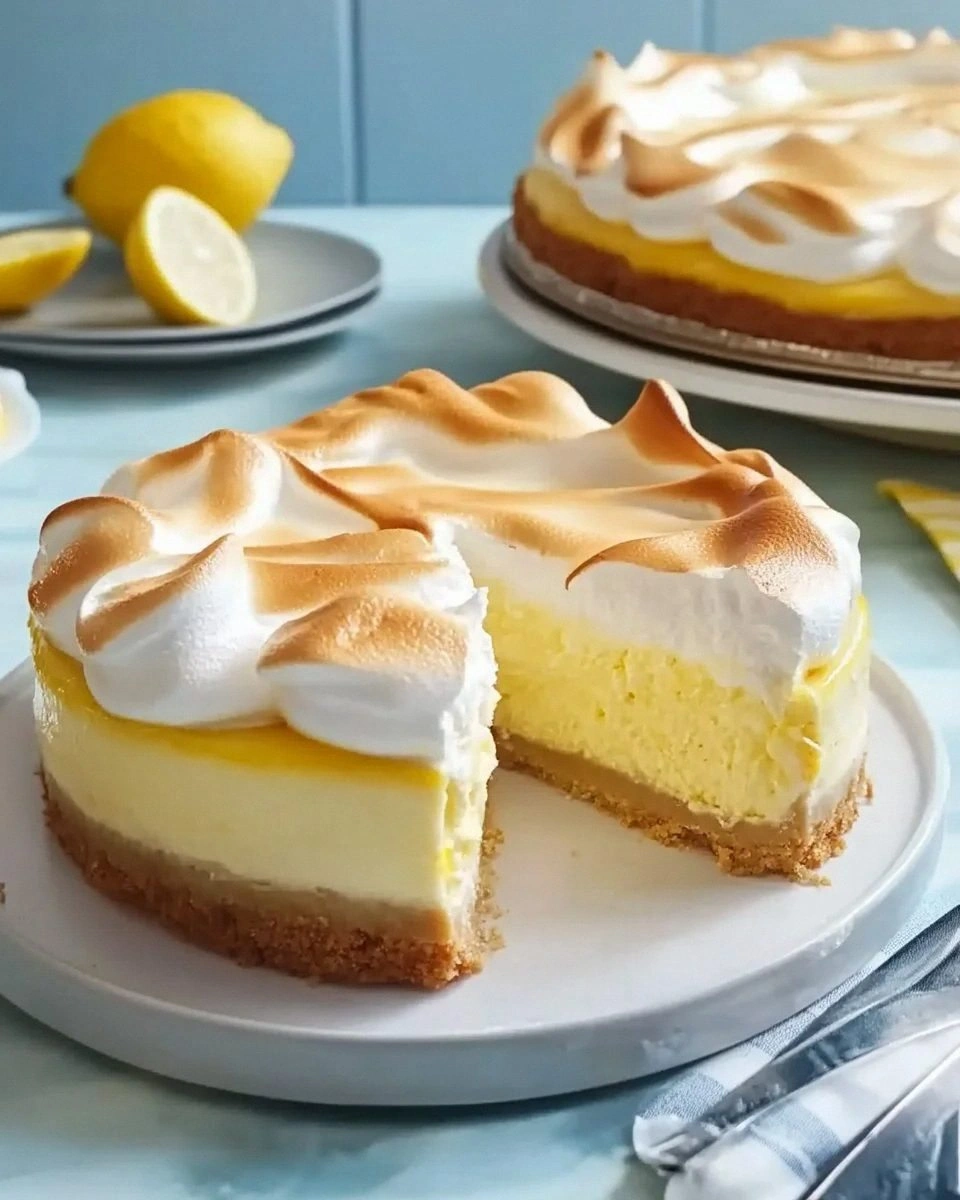
I still remember the day I nearly set my kitchen on fire trying to make a lemon meringue pie while simultaneously nursing a serious cheesecake craving. There I was, whisking egg whites like my life depended on it, when it hit me — why choose between two beloved desserts when you could mash them into one spectacular showstopper? That fateful afternoon of culinary chaos birthed what I firmly believe is the most irresistible dessert hybrid known to humankind: the Lemon Meringue Cheesecake. Picture this: a buttery graham cracker base that shatters like golden glass under your fork, giving way to a cloud-soft lemon cheesecake filling so bright and zingy it practically sings opera, all crowned with a torched meringue that looks like edible sunshine. The first bite is pure revelation — that tangy-sweet dance on your tongue, the way the meringue dissolves like sweet air while the cheesecake stays luxuriously creamy, the tiny pop of lemon zest that catches you by surprise like a secret handshake.
I've spent three years perfecting this recipe, testing it on unsuspecting dinner guests, skeptical food bloggers, and one particularly picky pastry chef who claimed fusion desserts were culinary crimes. Each time, the result was the same: plates scraped clean, requests for the recipe before they'd even swallowed their last bite, and that blissful silence that falls over a table when everyone's too busy experiencing dessert nirvana to speak. The magic lies in the contrast — most lemon desserts are either too tart or too sweet, but this beauty hits that perfect equilibrium where your taste buds can't decide whether to pucker or purr. The meringue isn't just for show either; it creates this ethereal barrier that keeps the cheesecake filling impossibly moist while adding a marshmallow-like sweetness that makes traditional whipped cream feel like a sad, limp handshake.
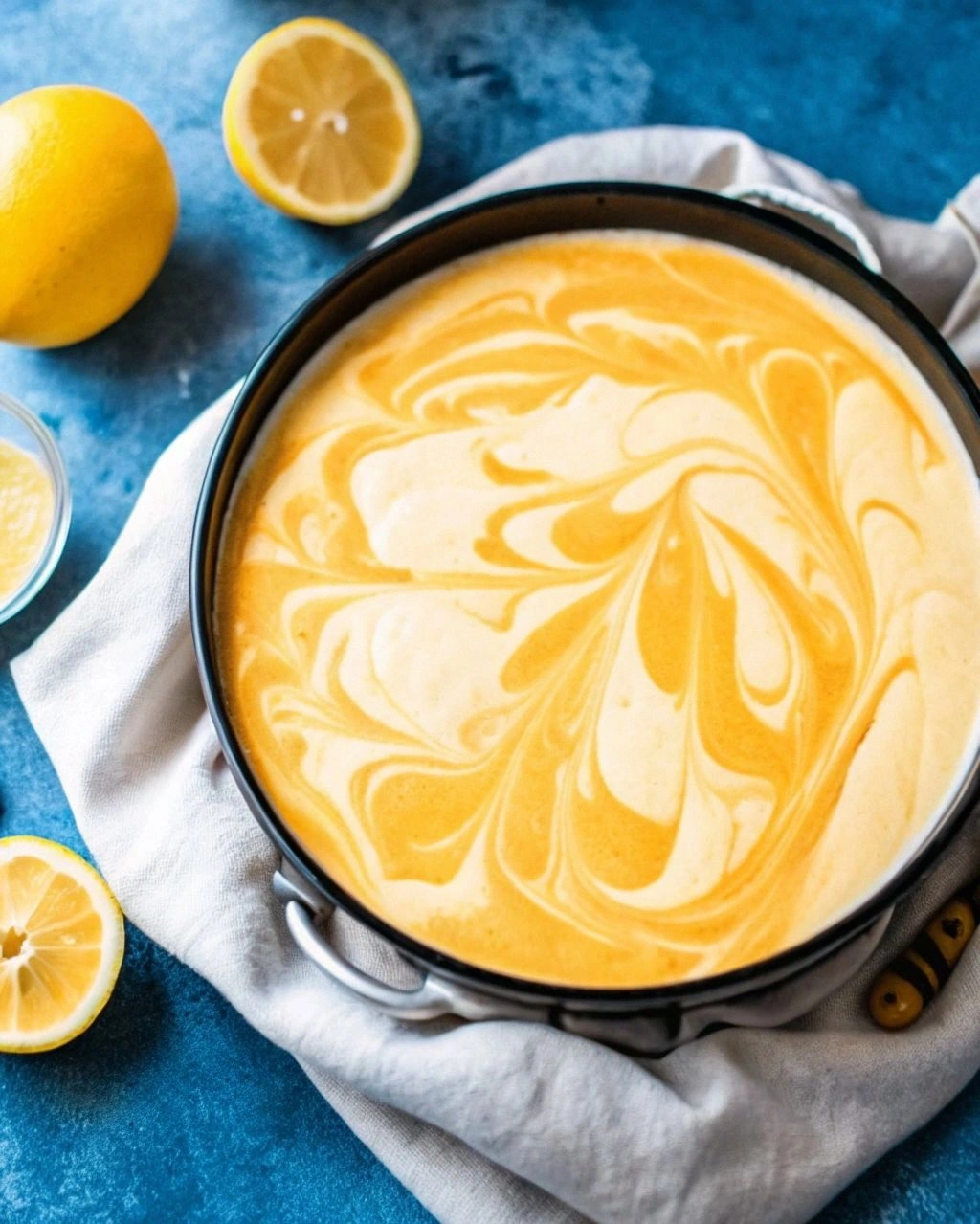
What really sets this apart from every other cheesecake recipe cluttering the internet is the technique I stumbled upon by complete accident (the best discoveries always happen when you're supposed to be doing something else). Instead of folding lemon juice directly into the cheesecake batter — which can cause curdling and that weird grainy texture — we create a concentrated lemon curd that gets swirled through the cheesecake in ribbons of pure citrus gold. The result? Intense lemon pockets that burst like flavor bombs rather than a muted, milky lemon that leaves you wondering if someone just waved a lemon near the mixing bowl. Combined with the Italian meringue that gets torched to that perfect campfire-toast color, this isn't just dessert — it's a full sensory experience that'll have you planning your next slice before you've finished your first.
Let me walk you through every single step — by the end, you'll wonder how you ever made it any other way.
What Makes This Version Stand Out
Flavor Explosion: This isn't your grandmother's subtle lemon dessert. We're talking about face-puckering, eye-widening lemon intensity that gets balanced by the cloud-sweet meringue in a way that'll make your taste buds do backflips. The secret lies in using both lemon juice and zest, plus a touch of lemon oil that amplifies everything without adding extra liquid.
Texture Paradise: Where do I even start? The base delivers that satisfying crunch that gives way to the silkiest cheesecake filling you've ever encountered — I'm talking smoother than a jazz saxophone solo. Then the meringue adds this ethereal lightness that makes the whole thing feel like you're eating lemon-scented air. It's like if a cloud and a lemon had a baby, and that baby grew up to be a supermodel.
Foolproof Technique: Listen, I've failed at enough cheesecakes to know where the landmines are hiding. This recipe uses a water bath (don't roll your eyes, it's easier than you think) and a temperature gradient that prevents those dreaded cracks. Plus, the meringue covers any imperfections, so even if your cheesecake looks like the surface of Mars, it'll still be Instagram-ready.
Crowd-Wowing Presentation: When you torch that meringue and it turns into golden peaks that look like a mountain range at sunset, people lose their minds. I've had dinner parties where guests actually applauded when I brought this out. One guy proposed marriage. I'm not even kidding.
Make-Ahead Magic: Here's the kicker — this dessert actually gets better if you make it a day ahead. The flavors meld and intensify, and the texture sets into this perfect sliceable consistency. You can make the cheesecake base up to three days ahead, then just add the meringue before serving. Try getting that kind of flexibility from a regular lemon meringue pie.
Ingredient Quality Flexibility: While I love using organic Meyer lemons when they're in season, this recipe works beautifully with regular supermarket lemons, bottled lemon juice in a pinch, and even that sad lemon that's been rolling around your produce drawer for two weeks. The technique elevates humble ingredients into something extraordinary.
Seasonal Versatility: Light enough for summer entertaining but impressive enough for holiday dinners, this cheesecake doesn't discriminate. I've served it at beach picnics (kept cold in a cooler) and Christmas dinners with equal success. It's like the little black dress of desserts — appropriate everywhere.
Alright, let's break down exactly what goes into this masterpiece...
Inside the Ingredient List
The Flavor Foundation
Cream cheese is obviously the star here, but not all cream cheese is created equal. I'm loyal to the full-fat Philadelphia blocks — skip the whipped stuff or low-fat imposters that'll leave you with a sad, dense cheesecake that tastes like diet disappointment. Let it come to room temperature properly (I'm talking at least two hours on the counter), because cold cream cheese creates lumps that no amount of mixing will smooth out. The graham crackers need to be the real deal too — not those honey-flavored or chocolate ones that'll muddle our lemon spotlight. We're building a lemon cathedral here, people.
Your lemons should feel heavy for their size and have smooth, thin skins — thick-skinned lemons are older and less juicy. I always buy six lemons for this recipe even though I only need four, because lemon juice has a sneaky way of disappearing when you're not looking. The zest is where the magic lives, so grab yourself a microplane if you don't have one. That bright yellow outer layer contains essential oils that'll make your kitchen smell like sunshine and happiness, while the white pith underneath tastes like bitter regret — avoid it like that ex who still texts you at 2 AM.
The Texture Crew
Eggs are the unsung heroes of cheesecake, providing structure without making it taste like an omelet. Use large eggs that aren't super fresh — slightly older eggs whip better for the meringue and create more stable foam. The sugar isn't just for sweetness; it helps stabilize the meringue and creates that gorgeous glossy finish that'll make you look like a pastry wizard. Heavy cream adds richness without weighing things down, like wearing cashmere instead of wool — same warmth, way more luxurious.
Butter for the crust should be properly melted but not hot — think warm bath temperature. Too hot and it'll make your crust greasy and sad. Too cool and it won't bind properly, leaving you with a crumbly mess that falls apart faster than my resolve during sample day at Costco. The cornstarch in the lemon curd prevents weeping and keeps everything stable, because nobody wants a cheesecake that cries more than you did during the last episode of "The Crown."
The Unexpected Star
Tahini might seem like a weird addition, but trust me on this one. Just a teaspoon adds this subtle nuttiness that makes people ask "what is that amazing flavor?" without being able to place it. It's like adding a secret ingredient that makes everyone think you're a culinary genius. Vanilla extract might seem basic, but splurge on the real stuff — imitation vanilla tastes like sadness and broken dreams. The pinch of salt isn't optional; it amplifies all the flavors and prevents your cheesecake from tasting flat, like adding highlights to your hair.
Everything's prepped? Good. Let's get into the real action...
The Method — Step by Step
- Start with your crust because it needs to cool completely before adding the filling. Blitz your graham crackers in a food processor until they look like golden sand — we're talking beach vacation fine, not playground chunky. Mix in the melted butter until it resembles wet sand that holds together when squeezed. Press this mixture firmly into your springform pan, using the bottom of a measuring cup to create an even layer that climbs slightly up the sides. This isn't the time to be dainty — really pack it in there like you're trying to win a compaction contest. Bake at 325°F for 8-10 minutes until it smells like a graham cracker factory exploded in the best possible way.
- While the crust cools, tackle the lemon curd because it needs time to chill and thicken. Whisk together lemon juice, zest, sugar, and eggs in a heatproof bowl set over simmering water — this double boiler method prevents scrambled egg disasters that'll make you question your life choices. Stir constantly with a rubber spatula, scraping the bottom and sides, until it thickens enough to coat the back of a spoon. This takes about 8-10 minutes, during which you cannot leave the stove even for a second unless you enjoy lemon-flavored scrambled eggs. Remove from heat and whisk in butter piece by piece until you have sunshine in liquid form that'll make you want to eat it with a spoon.
- Now for the cheesecake filling, and here's where things get serious. Beat room temperature cream cheese until it's smoother than a pickup artist at last call — about 3 minutes on medium speed, scraping down the bowl religiously. Add sugar gradually while beating, then incorporate eggs one at a time, mixing just until combined. Overmixing incorporates too much air, leading to a cheesecake that puffs up like a proud pigeon then collapses into sadness. Stir in the lemon juice, vanilla, and that secret teaspoon of tahini until the batter looks like clouds flavored with lemon dreams.
- Assembly time! Pour half the cheesecake batter over your cooled crust, then dollop spoonfuls of lemon curd randomly across the surface. Use a knife to create beautiful swirls — think marble cake but fancier. Add the remaining batter and repeat the curd swirling. Don't overdo it or you'll lose those distinct lemon rivers that make each bite surprising. The goal is Jackson Pollock, not muddy brown.
- Water bath preparation might seem like overkill, but it's the difference between a crack-free masterpiece and something that looks like the Grand Canyon. Wrap your springform pan in three layers of heavy-duty foil, making sure no water can sneak in like a dessert assassin. Place the pan in a larger roasting pan and pour hot water halfway up the sides. This creates steam that keeps the top from drying out and cracking like your hands in winter.
- Bake at 325°F for 55-65 minutes until the edges are set but the center still jiggles like a gentle wave when you shake the pan. This is crucial — overbaking is the enemy of creamy cheesecake. Turn off the oven and let it cool inside with the door cracked for an hour. This gradual cooling prevents the dramatic temperature drop that causes cracks wider than your aunt's gossip network.
- While the cheesecake cools, make the Italian meringue because it needs to go on a completely cool cheesecake. Combine sugar and water in a saucepan and heat to 240°F — use a candy thermometer unless you enjoy playing Russian roulette with sugar stages. Meanwhile, beat egg whites with cream of tartar until soft peaks form. Slowly pour the hot sugar syrup down the side of the bowl while beating on high. Continue beating until the bowl feels cool and you have glossy, stiff peaks that look like a shampoo commercial.
That's it — you did it. But hold on, I've got a few more tricks that'll take this to another level...
Insider Tricks for Flawless Results
The Temperature Rule Nobody Follows
Room temperature ingredients aren't just a suggestion — they're the difference between a lumpy disaster and dessert nirvana. I set everything out the night before and arrange it like I'm staging a photoshoot. Cold cream cheese creates lumps that'll haunt your dreams, cold eggs don't incorporate properly, and cold lemon juice can cause curdling that'll make you cry into your mixing bowl. If you're impatient (I see you), cut cream cheese into cubes and microwave for 10-second bursts, stirring between each one. But really, just plan ahead — your cheesecake will thank you by being smoother than a jazz saxophone solo.
Why Your Nose Knows Best
Don't underestimate the power of your sense of smell during baking. When the crust smells like a graham cracker factory and the edges of your cheesecake just barely start to pull away from the pan, you're in the golden zone. The lemon curd is ready when it suddenly thickens and coats your spatula with a glossy sheen — you'll smell the sharp lemon mellowing into something more complex. Trust these olfactory cues more than the timer, because every oven has personality quirks like that friend who always shows up late but brings the best snacks.
The 5-Minute Rest That Changes Everything
After you turn off the oven, resist every urge to peek or poke or otherwise disturb your creation. That hour of gradual cooling is like meditation for cheesecake — it prevents the dramatic temperature shock that causes cracks deeper than your last breakup. Use this time to clean your kitchen (ha!), make coffee, or practice your humble acceptance speech for when everyone asks for the recipe. The cheesecake will continue cooking gently from residual heat, so that slightly jiggly center will set into perfect creaminess.
The Torch Technique That Impresses
When torching the meringue, hold the flame about 2 inches away and keep it moving in small circles. Think of it like spray painting — you want even coverage without scorching any spots. The sugar will caramelize in stages: first it gets glossy, then golden patches appear, and finally you get those gorgeous brown peaks. Stop before it gets too dark because the sugar continues cooking from residual heat. A friend once described properly torched meringue as looking like "a sunset you can eat," which is weirdly accurate.
The Overnight Advantage
This cheesecake reaches peak deliciousness after 24 hours in the fridge. The flavors meld and intensify, the texture firms up perfectly, and somehow it gets even more lemony without becoming tart. I always make it two days ahead for dinner parties — one day for proper setting, and the second day because I'm inevitably too frazzled the day of the party to deal with dessert. Plus, having dessert handled early means you can focus on important things like wine selection and practicing nonchalant acceptance of compliments.
Creative Twists and Variations
This recipe is a playground. Here are some of my favorite ways to switch things up:
Meyer Lemon Luxury
Swap regular lemons for Meyer lemons when they're in season (November through March). They're sweeter and more floral, like regular lemons that went to finishing school. Reduce the sugar in the curd by 2 tablespoons to compensate for their natural sweetness. The resulting cheesecake tastes like sunshine filtered through silk scarves — elegant and somehow more sophisticated than the original.
Lavender Lemon Dreams
Add 1 teaspoon of culinary lavender to the crust mixture and reduce the lemon zest by half. The lavender adds this haunting floral note that makes people ask "what am I tasting?" in the best way. It's like eating cheesecake in a Provence garden while wearing a flowing white dress, even if you're actually in a studio apartment wearing sweatpants.
Coconut Cloud Version
Replace half the graham crackers with toasted coconut flakes and add 2 tablespoons of coconut cream to the filling. Top the meringue with a sprinkle of toasted coconut before torching. Suddenly you're transported to a tropical beach where the lemons grow on palm trees and calories don't count.
Ginger Snap Base
Replace graham crackers with crushed ginger snaps for a spicy kick that plays beautifully with the lemon. Add 1 teaspoon of ground ginger to the filling too. It's like lemon cheesecake wearing a cozy ginger sweater — warming and bright at the same time, perfect for holiday gatherings when you want something different but not too out there.
Mini Individual Cheesecakes
Make these in a muffin tin lined with parchment paper for adorable individual servings. Reduce baking time to 18-22 minutes. They're perfect for potlucks because everyone gets their own little cheesecake with perfect meringue distribution. Plus, no sharing unless you're feeling particularly generous (and let's be honest, when it comes to this cheesecake, generosity is overrated).
Berry Swirl Beauty
Add a raspberry or blueberry swirl by heating 1 cup of berries with 2 tablespoons of sugar until jammy, then dolloping it along with the lemon curd. The berries add gorgeous color and a sweet-tart counterpoint that makes the lemon sing even louder. It's like a berry lemonade in cheesecake form, and somehow even more Instagram-worthy than the original.
Storing and Bringing It Back to Life
Fridge Storage
This cheesecake keeps beautifully for up to 5 days in the refrigerator, though I've never seen it last more than 2 days before disappearing. Cover loosely with plastic wrap or store in an airtight container — the meringue will gradually soften but stays delicious. The flavors actually intensify over the first 24-48 hours, so making it ahead is strategic, not lazy (though let's be honest, we're all a little lazy and that's okay). If the meringue weeps a little, just blot gently with paper towel before serving.
Freezer Friendly
Here's a game-changer: make the cheesecake base and freeze it (without meringue) for up to 2 months. Wrap tightly in plastic wrap then foil, and thaw overnight in the refrigerator. Add fresh meringue and torch just before serving. It's like having a secret weapon in your freezer for emergency dessert situations, which in my experience, happen more often than actual emergencies. The texture remains perfect because cheesecake is basically freezer-proof magic.
Best Reheating Method
While this cheesecake is best served cold, if you need to refresh it after refrigeration, let it sit at room temperature for 30 minutes before serving. This takes the chill off and allows the flavors to bloom. Never microwave cheesecake — it's like putting a cashmere sweater in a hot dryer. If your meringue has deflated, you can pipe fresh meringue on top and torch it, though honestly, I've served slightly deflated meringue and nobody complained because they were too busy making happy food noises.