Everything's prepped? Good. Let's get into the real action.
The Method — Step by Step
- Preheat the oven to 425°F (220°C) and line two baking sheets with parchment paper. Let the sheets cool slightly to avoid scorching the dough as it bakes. This temperature ensures a crisp exterior and a tender interior. Keep an eye on the pastries; they should be golden but not burnt.
- In a medium saucepan, combine 1 cup water, 1/4 cup melted butter, 1/4 cup granulated sugar, and 1/4 tsp salt. Bring the mixture to a rolling boil, then remove from heat and stir in 2 cups all‑purpose flour all at once, whisking vigorously until the dough pulls away from the pan. Return to low heat and stir until the dough forms a smooth ball. Let the dough cool slightly before adding the eggs.
- Add the eggs one at a time, beating well after each addition. The dough should be glossy and pull back from the sides of the pan. Transfer the dough to a piping bag fitted with a ½‑inch tip. Pipe 4‑inch long ribbons onto the prepared baking sheets, spacing them 2 inches apart. The ribbons should be even to ensure uniform baking.
- Bake the éclairs for 15 minutes at 425°F, then reduce the heat to 375°F (190°C) and bake for an additional 10–12 minutes until golden and puffed. The pastries should have a firm crust but remain soft inside. Turn off the oven and leave the éclairs in the door to cool slightly; this prevents the dough from collapsing. Cool completely on a wire rack before filling.
- While the pastries cool, prepare the coffee custard. In a saucepan, whisk together 1 cup whole milk, 1/4 cup granulated sugar, 1 tbsp cornstarch, 2 tbsp espresso powder, and 1 tsp vanilla extract. Heat over medium heat, stirring constantly, until the mixture thickens and starts to bubble. Remove from heat and stir in 2 tbsp melted unsalted butter until smooth.
- Let the custard cool to room temperature, then refrigerate for at least 30 minutes so it firms up. The custard should be thick enough to pipe but not so firm that it cracks the pastry. A smooth, velvety texture will enhance the overall experience. If the custard thickens too much, whisk in a splash of milk to reach the desired consistency.
- Using a piping bag fitted with a small tip, fill each éclair halfway with the cooled custard. Gently tap the bottom of each pastry to release any air bubbles. The custard should cascade into the shell without spilling over. Once filled, place the éclairs on a parchment‑lined tray to keep them from sticking.
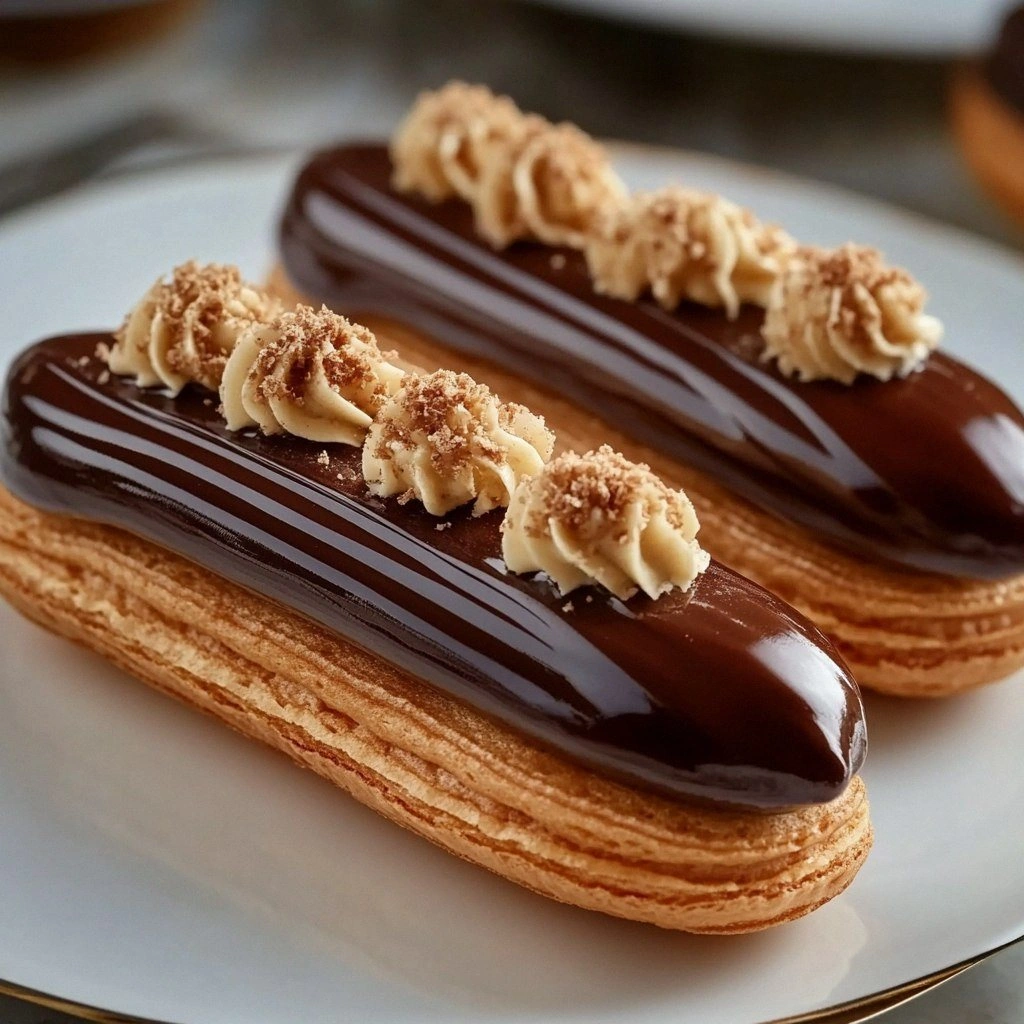
- Melt 1 cup dark chocolate with 1 tbsp espresso powder and 1 tbsp unsalted butter in a heat‑proof bowl set over a pot of simmering water, stirring until smooth. Let the glaze cool slightly until it thickens but remains pourable. Dip the filled éclairs into the glaze, allowing excess to drip off. Place them back on the parchment to set; the glaze will form a glossy, chocolatey coat.
- Let the glazed éclairs set at room temperature for 10 minutes, then dust lightly with powdered sugar for a subtle crunch. Serve immediately or store in an airtight container for up to two days. For best flavor, keep them refrigerated and reheat briefly in a 350°F oven for 5 minutes before serving. Each bite will deliver a harmonious blend of chocolate, coffee, and buttery pastry.
Insider Tricks for Flawless Results
The Temperature Rule Nobody Follows
The oven temperature is the secret to achieving the perfect puff. Many bakers overheat their éclairs, causing the dough to burn on the outside while remaining undercooked inside. I discovered that starting at 425°F for the first 15 minutes and then dropping to 375°F for the remainder allows the steam to escape slowly, creating a crisp shell. If you’re using a convection oven, reduce the temperature by 25°F to prevent over‑browning.
Why Your Nose Knows Best
A properly baked éclair will emit a warm, buttery scent that’s unmistakably inviting. If the pastries smell more like burnt sugar, you’ve over‑baked them. On the other hand, a faint, raw dough smell indicates under‑baking. Trust your nose; it’s the most reliable indicator of doneness. A well‑baked éclair will also feel firm to the touch, not spongy.
The 5‑Minute Rest That Changes Everything
After filling, let the éclairs rest for 5 minutes before glazing. This short pause allows the custard to settle, preventing it from sliding out during glazing. It also gives the glaze a chance to set slightly, reducing the risk of a sticky surface. If you’re making a large batch, use this time to prepare the next set of pastries.
The Espresso‑Infused Dough Trick
Adding espresso powder to the dough not only flavors the pastry but also helps the chocolate glaze adhere better. The coffee’s acidity balances the sweetness of the dough, creating a more complex flavor profile. I found that 2 tablespoons of espresso powder per batch works well, but you can adjust to taste. This trick is a game‑changer for coffee lovers.
The Final Glaze Finish
After dipping the éclairs, place them on a parchment‑lined tray and let them rest for 10 minutes. This allows the glaze to set into a glossy, firm coating. Dusting with powdered sugar just before serving adds a subtle crunch and visual appeal. The glaze should be smooth, not streaky; if it’s too runny, let it sit a bit longer before dipping again.
Creative Twists and Variations
This recipe is a playground. Here are some of my favorite ways to switch things up:
Nutty Espresso Crunch
Swap the powdered sugar dusting for chopped toasted almonds. The nuts add a satisfying crunch and a nutty undertone that complements the coffee. They also provide a subtle contrast to the smooth custard. This version is perfect for those who love a bit of texture in their desserts.
Citrus‑Zest Surprise
Add a teaspoon of orange zest to the custard for a bright, citrusy note. The zest balances the richness of the chocolate and the depth of the espresso. It’s an unexpected twist that elevates the overall flavor profile. Serve with a drizzle of honey for extra brightness.
Vegan Delight
Replace the dairy milk with oat milk and the butter with coconut oil. Use a vegan dark chocolate that’s free from dairy. The custard will be slightly lighter, but the coffee flavor remains strong. This version is great for plant‑based guests.
Salted Caramel Twist
Drizzle a thin layer of salted caramel over the glazed éclairs before dusting with powdered sugar. The caramel adds a sweet‑salty contrast that pairs beautifully with the coffee. Keep the caramel thin so it doesn’t overpower the chocolate. This variant is a crowd‑pleaser for dessert parties.
Minty Mocha Fusion
Incorporate a splash of peppermint extract into the custard for a refreshing minty undertone. The mint cuts through the richness and adds a fresh finish. Use a light hand; too much mint can overwhelm the coffee flavor. This is ideal for holiday celebrations.
Storing and Bringing It Back to Life
Fridge Storage
Store the filled and glazed éclairs in an airtight container in the refrigerator for up to 48 hours. Keep them on a parchment‑lined tray to prevent sticking. The glaze will stay firm, and the custard will remain creamy. For best flavor, consume within 24 hours.
Freezer Friendly
To freeze, place the éclairs on a parchment sheet and freeze until solid, then transfer to a freezer bag. They can be stored for up to two weeks. When ready to serve, thaw at room temperature for 30 minutes. This method preserves the texture and flavor.
Best Reheating Method
Reheat frozen or refrigerated éclairs in a 350°F oven for 5 minutes, or until warmed through. If reheating, add a tiny splash of water to the glaze to create steam, which helps restore its glossy sheen. Avoid microwaving, as it can make the pastry soggy. Serve immediately for the best experience.