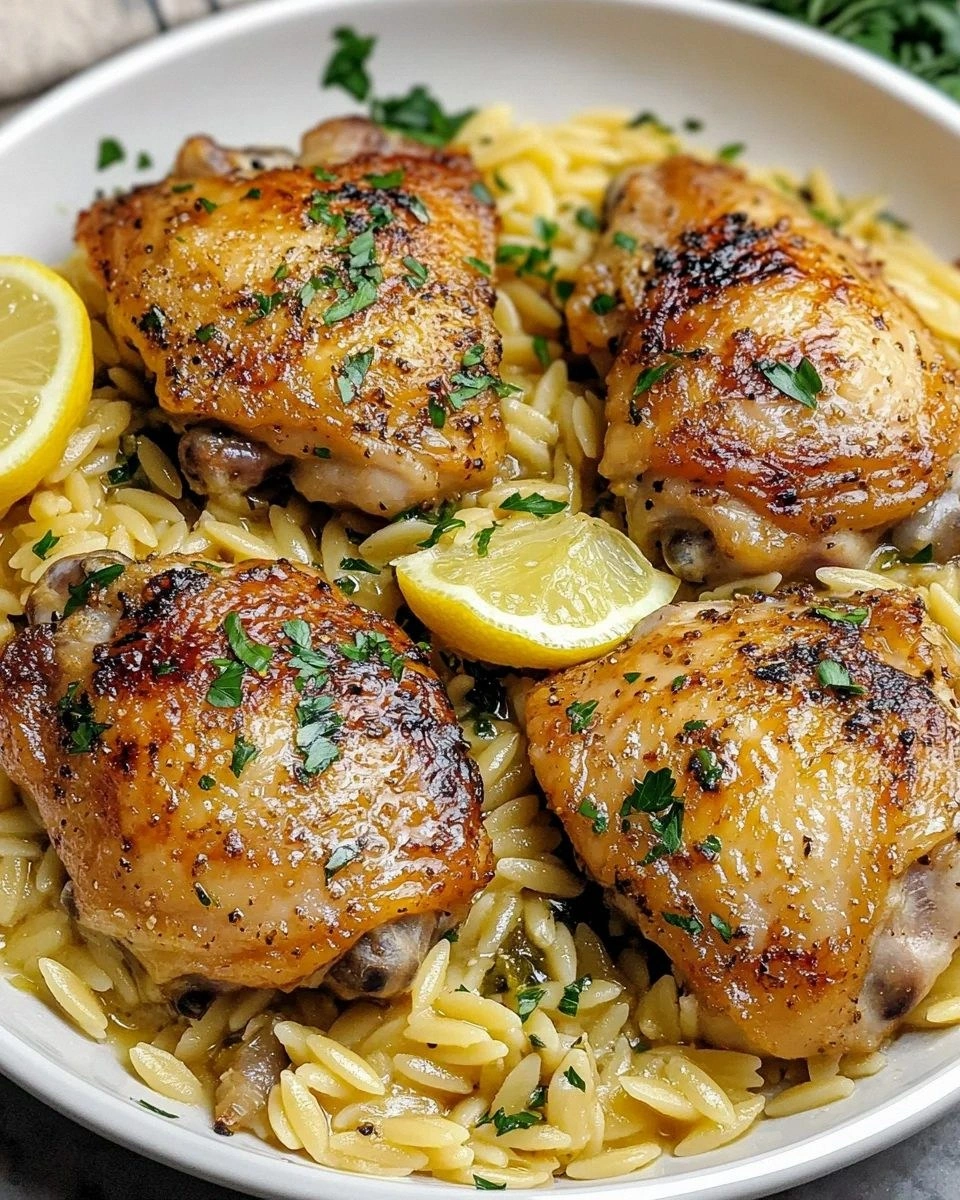
I swear, the first time I tried to make a lemon‑garlic chicken dish, the kitchen smelled like a chemistry lab gone rogue—burnt butter, over‑cooked garlic, and a chicken that looked like it had been through a tornado. I was ready to throw in the towel, but then a friend dared me: “Make it in one pan and prove me wrong.” I accepted the challenge, grabbed the biggest skillet I owned, and set out to create something that would make even the most skeptical palate sing. The result? A buttery, citrus‑kissed chicken thigh that sits proudly atop a fluffy, lemon‑infused orzo, all cooked together in a single pan so you never have to wash more than one dish.
Picture this: the moment the chicken hits the hot skillet, you hear a sizzle that’s louder than a summer thunderstorm, and the aroma of garlic and lemon bursts out like fireworks in a night sky. The skin crisps to a golden‑brown that shatters like thin ice when you press it, while the meat stays juicy enough to make a grown‑up weep with joy. As the orzo soaks up the pan juices, it transforms into a silky, slightly al dente cloud that clings to the sauce like a lover refusing to let go. Every bite is a harmonious duet of bright citrus, savory herbs, and that buttery richness that makes you wonder how you ever survived without it.
Most recipes I’ve seen either drown the chicken in a swamp of sauce or leave the orzo dry and sad. This version flips the script by using a precise balance of broth, wine, and lemon juice that evaporates just enough to coat the orzo without turning it soggy. The secret weapon? A splash of white wine that adds depth, and a quick deglaze that lifts the caramelized bits stuck to the pan—those bits are pure flavor gold. I’m confident this is the best version you’ll ever make at home, and I dare you to taste it and not go back for seconds.
Okay, ready for the game‑changer? I’m about to walk you through every single step—by the end, you’ll wonder how you ever made this dish any other way. From the moment you season the chicken to the final flourish of fresh parsley, we’ll cover technique, timing, and a few mischievous hacks that will turn your kitchen into a five‑star restaurant. Stay with me here — this is worth it.
What Makes This Version Stand Out
- Flavor Explosion: The lemon‑garlic broth is reduced until it becomes a glossy glaze that clings to every bite, delivering a punch of brightness that never overwhelms.
- Texture Harmony: Crispy skin, tender meat, and orzo that’s buttery yet firm—each component plays its part like a perfectly tuned orchestra.
- Simplicity: One pan, under 45 minutes, and minimal cleanup—perfect for busy weeknights when you still crave something special.
- Ingredient Quality: Using bone‑in, skin‑on thighs gives you that extra flavor depth that boneless breasts can never achieve.
- Crowd Reaction: Guests often ask for seconds before the plate even hits the table, and the leftovers taste just as good, if not better.
- Make‑Ahead Potential: This dish reheats beautifully, and the flavors meld even more after a night in the fridge.
- Cooking Method: The pan‑sear followed by a gentle simmer ensures the chicken stays juicy while the orzo absorbs every nuance of the sauce.
- Unique Twist: A splash of white wine adds acidity and depth, a step most recipes skip, leaving their sauce flat.
Inside the Ingredient List
The Flavor Base
Lemon zest and juice are the heart of this dish. The zest provides aromatic oils that sit on the surface, while the juice adds acidity that balances the richness of the butter and chicken fat. If you skip the zest, you’ll lose that bright, citrusy perfume that makes the dish feel fresh. A good quality, thin‑skinned lemon is ideal; avoid those with thick, bitter pith.
Garlic, minced finely, releases a sweet, nutty flavor once it’s gently sautéed. Over‑cooking garlic turns it bitter, so keep the heat moderate and watch it turn golden, not brown. If you’re allergic to garlic, try shallots—they give a milder, sweeter note.
The Texture Crew
Orzo is the star carb here. Its rice‑like shape lets it absorb the pan sauce while still holding a pleasant bite. Over‑cooking will turn it mushy, so timing is crucial. If you can’t find orzo, try pearl couscous; it behaves similarly and adds a slightly nuttier flavor.
Chicken thighs, bone‑in and skin‑on, are chosen for their flavor and moisture. The bone conducts heat, keeping the meat juicy, while the skin renders fat that flavors the entire pan. If you only have boneless, skinless thighs, add a tablespoon of olive oil and a splash of butter to mimic the richness.
The Unexpected Star
A splash of dry white wine is the secret weapon. It deglazes the pan, lifting caramelized bits (fond) that are pure umami, and then evaporates, leaving behind a subtle depth that lemon alone can’t provide. Choose a wine you’d actually drink—nothing too sweet.
Butter, added at the end, creates a glossy finish that coats the orzo like velvet. If you’re dairy‑free, substitute with a good quality olive oil, but the silkiness will be slightly less luxurious.
The Final Flourish
Fresh parsley, chopped just before serving, adds a pop of color and a herbaceous lift that cuts through the richness. It also contributes a subtle peppery bite that brightens the whole plate. If you’re not a parsley fan, try fresh basil or dill for a different aromatic profile.
Seasonings like dried oregano, thyme, smoked paprika, salt, and pepper are the backbone of flavor layering. Each herb contributes its own nuance: oregano’s earthiness, thyme’s piney notes, and smoked paprika’s gentle warmth. Feel free to adjust the quantities to suit your palate, but remember that the balance is what makes this dish sing.
Everything's prepped? Good. Let's get into the real action...
The Method — Step by Step
Pat the chicken thighs dry with paper towels, then season both sides generously with salt, pepper, smoked paprika, dried oregano, and dried thyme. The seasoning should cling like a light dusting of snow. Let the thighs rest for five minutes—this allows the salt to start drawing out moisture, which later translates into crispier skin.
Kitchen Hack: Sprinkle the seasoning on both sides and then give the thighs a gentle press with your hand; this helps the spices adhere better.Heat a large, oven‑safe skillet over medium‑high heat and add 2 tablespoons of olive oil. Once the oil shimmers, place the thighs skin‑side down. You should hear a sizzle that’s louder than a subway train—this is the sound of flavor forming.
Cook without moving them for about 5‑6 minutes, or until the skin turns a deep golden‑brown and releases easily from the pan. If the skin sticks, give it another minute; the natural fats need time to render.
Flip the thighs and add the minced garlic to the pan, stirring quickly to prevent burning. The garlic should turn a light golden hue within 30 seconds, releasing a sweet, nutty aroma that makes your kitchen feel like a Mediterranean bistro.
Deglaze the pan with ½ cup of dry white wine, scraping the browned bits (fond) from the bottom with a wooden spoon. Those caramelized bits are flavor gold; the wine will dissolve them, creating a silky base.
Let the wine reduce by half, which should take about 2‑3 minutes. You’ll notice the sauce thickening and the alcohol scent evaporating, leaving behind a subtle, fruity undertone.
Watch Out: If you add the lemon juice now, the wine won’t reduce properly and you’ll end up with a watery sauce.Add the juice and zest of one large lemon, then pour in 2 cups of low‑sodium chicken broth. The liquid should come up to about halfway the height of the thighs. This is the moment where the pan transforms into a mini‑saucepan.
Stir in the orzo, making sure each grain is submerged. The orzo will begin to absorb the broth immediately, turning a pale gold as it softens.
Reduce the heat to a gentle simmer, cover the skillet with a tight‑fitting lid, and let everything cook for 12‑15 minutes. You’ll hear a faint bubbling—listen for it, because that’s the sign the broth is being absorbed without boiling away.
Check the orzo after 10 minutes; it should be al dente, with a slight bite. If the liquid evaporates too quickly, add a splash more broth or water.
Kitchen Hack: Use a glass lid or a foil tent if your skillet lid isn’t tight; this traps steam and cooks the orzo evenly.Once the orzo is tender and the sauce has thickened to a glossy coating, remove the skillet from heat. Stir in 2 tablespoons of cold butter, letting it melt into the sauce for that luxurious finish.
Give the dish a gentle toss to coat every piece of chicken and orzo. The butter will give the sauce a sheen that looks restaurant‑ready.
Finish with a generous handful of freshly chopped parsley, sprinkling it over the top like confetti at a celebration. Taste and adjust salt or pepper if needed—remember, a pinch more salt can elevate the flavors dramatically.
Serve immediately, letting the steam rise and fill the room with citrusy, garlicky perfume. Picture yourself pulling this out of the pan, the whole kitchen smelling incredible, and the first bite delivering that perfect balance of tang, savory, and buttery richness.
That's it — you did it. But hold on, I've got a few more tricks that'll take this to another level...
Insider Tricks for Flawless Results
The Temperature Rule Nobody Follows
Most home cooks start the chicken on high heat, which can scorch the skin before the interior cooks through. The secret is to begin at medium‑high, then drop to medium once the skin is golden. This gradual heat reduction ensures the meat stays juicy while the skin reaches that perfect crackle. I once tried the “full blast” method and ended up with burnt edges and a raw center—lesson learned.
Why Your Nose Knows Best
Your sense of smell is a more reliable indicator than a timer when it comes to deglazing. When the wine evaporates, you’ll notice a sweet, slightly nutty aroma; that’s the cue that the fond is fully lifted. If you rely solely on minutes, you risk a thin sauce or a burnt taste.
The 5‑Minute Rest That Changes Everything
After you finish cooking, let the skillet sit, uncovered, for five minutes. This rest period allows the juices to redistribute within the chicken and the orzo to finish absorbing any remaining liquid. Skipping this step is like cutting a steak too early—everything spills out and the texture suffers.
Butter Finish, Not Melt
Add butter at the very end, off the heat. The residual heat is enough to melt it, creating an emulsion that coats the orzo without separating. If you melt butter in the pan earlier, it can break and leave a greasy film.
Seasoning Layers, Not One Shot
Season the chicken, then season the broth, and finally finish with a pinch of salt after plating. Each layer builds depth, preventing the dish from tasting flat. A friend once tried to skip the final pinch, and the whole plate felt muted—don’t make that mistake.
Creative Twists and Variations
This recipe is a playground. Here are some of my favorite ways to switch things up:
Mediterranean Olive & Feta
Add a handful of Kalamata olives and crumble feta over the finished dish. The salty brine and creamy cheese introduce a tangy contrast that pairs beautifully with the lemon.
Spicy Harissa Heat
Stir in a tablespoon of harissa paste with the broth. The North‑African chili‑pepper blend adds smoky heat, turning the dish into a bold, comforting meal for colder evenings.
Herb‑Infused Coconut
Swap half the chicken broth for coconut milk and add a sprig of fresh cilantro. This gives the dish a tropical twist, perfect for a summer dinner on the patio.
Mushroom Medley
Sauté sliced cremini and shiitake mushrooms with the garlic before adding the wine. The earthy mushrooms soak up the sauce, adding a meaty umami layer that even vegetarians love.
Parmesan Crust
After the chicken is cooked, sprinkle grated Parmesan over the top and broil for 2 minutes. The cheese melts and forms a golden crust that adds a delightful crunch.
Storing and Bringing It Back to Life
Fridge Storage
Allow the dish to cool to room temperature (no more than 2 hours), then transfer to an airtight container. It will keep fresh for up to 4 days. When reheating, add a splash of chicken broth or water and gently warm on the stovetop over low heat.
Freezer Friendly
Portion the chicken and orzo into freezer‑safe bags or containers. Freeze for up to 3 months. Thaw overnight in the fridge, then reheat in a skillet with a tablespoon of broth, stirring until the sauce regains its glossy sheen.
Best Reheating Method
The stovetop is king. Heat a non‑stick pan over medium‑low, add a teaspoon of olive oil, and place the leftovers in. Cover for 2‑3 minutes, then uncover and stir. The added liquid creates steam that revives the orzo’s bite, while the chicken skin re‑crispes slightly.