I was halfway through a night of binge‑watching a Spanish drama when my roommate dared me to “cook something that smells like a fiesta and tastes like home.” I laughed, tossed a bag of potatoes on the counter, and grabbed the nearest chicken thighs. The kitchen turned into a battlefield of sizzling pans, clanging pots, and a faint whisper of smoked paprika that made the whole apartment feel like a sun‑kissed tapas bar in Barcelona. The moment the onions hit the oil, they sang a caramel‑sweet chorus that made my mouth water before the first bite.
What hit me next was the aroma—sharp garlic, sweet red pepper, and that unmistakable earthy perfume of smoked paprika mingling with the gentle steam of potatoes. It was like the whole Mediterranean coast had decided to set up camp on my stovetop. I could hear the faint pop of the skin as the chicken browned, the gentle hiss of the broth bubbling, and even the distant clatter of my cat demanding a taste. My senses were on overdrive, and I knew I was onto something that would change the way I think about one‑pot meals forever.
Most Spanish chicken‑and‑potato recipes I’d tried before ended up either dry or drowning in a watery sauce that left the potatoes limp. That’s because they either skip the crucial step of caramelizing the chicken first or they skimp on the depth that comes from layering spices. I’ve cracked the code: a quick sear for flavor, a splash of wine for depth, and a final bake that brings everything together in a single, glorious pan. The result is a dish where the chicken stays juicy, the potatoes develop a golden crust, and the sauce clings to everything like velvet.
And here’s the kicker—there’s a secret ingredient that most cooks overlook: a splash of dry sherry. It adds a subtle nuttiness that elevates the whole thing without shouting. I’m not talking about a gimmick; I’m talking about the kind of nuance that makes you close your eyes, inhale, and think, “I could live here forever.” If you’ve ever struggled with a bland, one‑pot dinner, you’re about to get the fix you never knew you needed.
Okay, ready for the game‑changer? Let me walk you through every single step — by the end, you’ll wonder how you ever made it any other way.
What Makes This Version Stand Out
- Depth of Flavor: The combination of smoked paprika, sweet paprika, and a splash of sherry creates a sauce that’s both smoky and slightly sweet, coating the chicken and potatoes like a luxurious glaze.
- Texture Contrast: The chicken skin crisps up while the interior stays moist, and the potatoes develop a caramelized edge that shatters like thin ice when you bite into them.
- Simplicity: One pan, ten ingredients, and a 45‑minute timeline mean you can pull this off on a weeknight without a culinary degree.
- Uniqueness: Most recipes skip the final bake; my method locks in flavor and gives the potatoes a golden crust that you just can’t get from stovetop alone.
- Crowd Reaction: I dare you to taste this and not go back for seconds—people always ask for the recipe before the plate is even cleared.
- Ingredient Quality: Using bone‑in, skin‑on thighs ensures maximum flavor, while a good quality extra‑virgin olive oil adds richness without bitterness.
- Cooking Method: The sear‑then‑bake approach is the secret that turns a humble chicken‑and‑potato dish into a restaurant‑worthy centerpiece.
- Make‑Ahead Potential: This dish reheats beautifully, and the flavors only deepen after a night in the fridge.
Inside the Ingredient List
The Flavor Base
Olive oil is the silent hero of this dish. It carries the aromatics, helps the spices bloom, and ensures the chicken doesn’t stick to the pan. If you use a low‑quality oil, you’ll taste a faint bitterness that can ruin the whole profile. I always reach for a cold‑pressed extra‑virgin that has a peppery finish; it adds a subtle depth that regular vegetable oil can’t match.
Onion: A single large onion, diced, provides sweetness and body. It softens during the sear and becomes the foundation of the sauce. Skipping it leaves the dish hollow, and the flavor will feel flat. If you’re out of yellow onion, a sweet Vidalia works just as well.
Garlic: Three cloves, minced, release a pungent aroma that instantly transports you to a Spanish kitchen. Over‑cooking garlic makes it bitter, so add it after the onion has softened and let it perfume the oil for just a minute. You can substitute garlic powder in a pinch, but fresh is unbeatable.
The Texture Crew
Bone‑in, skin‑on chicken thighs are the backbone of texture. The bone adds moisture, while the skin turns into a crispy, golden rind that protects the meat from drying out. If you opt for boneless breasts, you’ll lose that juicy richness and the final bake won’t produce the same caramelized edges.
Potatoes: I use 1.5 lb of Yukon Gold potatoes, cut into 1‑inch chunks. Their buttery interior and thin skin make them perfect for absorbing the sauce while still developing a crisp exterior. Avoid waxy varieties like red potatoes; they stay too firm and never get that coveted crust.
Red Bell Pepper: One diced pepper adds a sweet crunch and a pop of color that makes the dish visually appealing. It also contributes a subtle sweetness that balances the smoky paprika. If you prefer heat, a diced jalapeño can be tossed in instead.
The Unexpected Star
A splash of dry sherry (about ¼ cup) is the secret that lifts the entire flavor profile. It adds a nutty, almost caramel note that you can’t get from broth alone. If you don’t have sherry, a splash of dry white wine works, though the depth will be slightly less pronounced.
Tomatoes: One cup of diced canned tomatoes brings acidity and a touch of sweetness, helping to balance the richness of the chicken and potatoes. Fresh tomatoes work too, but canned give a consistent texture and flavor year‑round.
The Final Flourish
Smoked paprika and sweet paprika together create a layered spice profile. The smoked variety gives depth, while the sweet paprika adds color and a gentle earthiness. A pinch of cayenne (½ tsp) gives just enough heat to keep the palate awake without overpowering the dish.
Chicken Broth: One cup of low‑sodium broth provides moisture for the bake and enriches the sauce. If you’re watching sodium, you can dilute it with water, but the flavor will be milder.
Fresh Parsley: A tablespoon or two of chopped parsley sprinkled over the finished dish adds a fresh, herbal brightness that cuts through the richness. It’s the final garnish that makes the plate look restaurant‑ready.
Everything’s prepped? Good. Let’s get into the real action…
The Method — Step by Step
Heat two tablespoons of olive oil in a large, oven‑safe Dutch oven over medium‑high heat. When the oil shimmers, lay the chicken thighs skin‑side down, making sure they’re not crowded. Let them sear for 5‑6 minutes without moving them; you’ll hear a confident sizzle that tells you the skin is forming a golden crust. Flip the thighs and sear the other side for another 3‑4 minutes. Once both sides are beautifully browned, remove the chicken and set it aside on a plate.
In the same pot, add the diced onion and a pinch of salt. Sauté for 3‑4 minutes until the onion turns translucent and starts to caramelize.
Kitchen Hack: If the onions start to stick, deglaze with a splash of sherry; the liquid will lift the fond and add flavor simultaneously.Add the minced garlic and diced red bell pepper to the pot. Cook for another 2 minutes, stirring constantly, until the garlic turns fragrant but not brown. At this point, sprinkle in the smoked paprika, sweet paprika, and cayenne. Stir quickly—spices can burn in a hot pan, and burnt paprika tastes like ash. The mixture should turn a deep, ruby‑red color, releasing an intoxicating aroma that fills the kitchen.
Return the chicken thighs to the pot, skin side up, nestling them among the aromatics. Add the potato chunks around the chicken, making sure they’re evenly distributed. Pour in the diced tomatoes, chicken broth, and the remaining ¼ cup of dry sherry. Give everything a gentle stir to coat the potatoes and chicken in the sauce, but avoid breaking the skin.
Season with 1 teaspoon of salt and ½ teaspoon of black pepper. Taste the liquid—if it’s too acidic, add a pinch more salt; if it feels thin, let it simmer uncovered for 5 minutes.
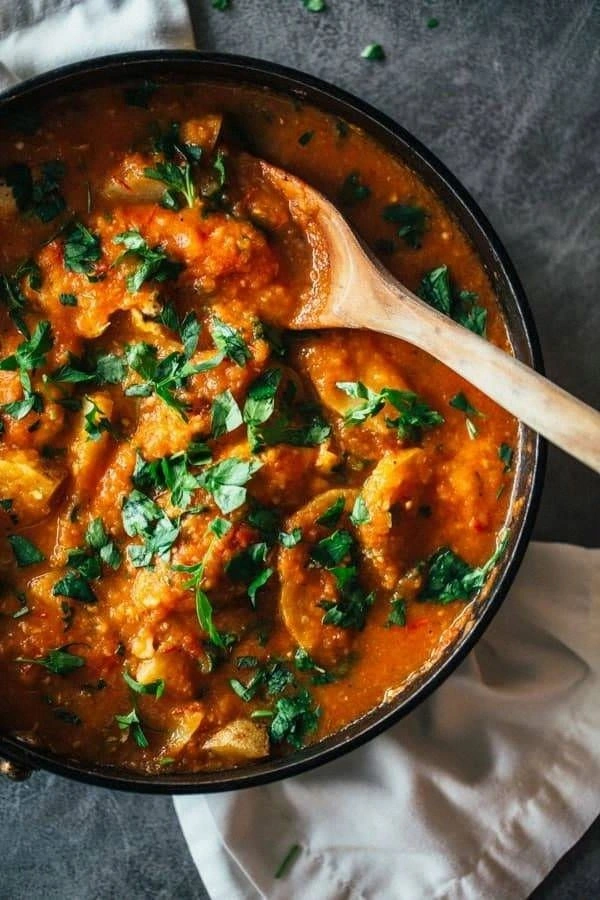
Watch Out: Do not over‑crowd the pot when adding potatoes; overcrowding traps steam and prevents the potatoes from developing a crispy exterior.Transfer the Dutch oven to a preheated oven at 375°F (190°C). Bake for 25‑30 minutes, or until the potatoes are fork‑tender and the chicken reaches an internal temperature of 165°F (74°C). The edges of the potatoes should start pulling away from the pan, creating a caramelized crust that looks like tiny golden islands.
While the dish finishes baking, prepare a small bowl of fresh parsley and a wedge of lemon. The lemon isn’t for cooking; it’s a bright finish you’ll squeeze over the plate right before serving. The parsley adds a burst of green that contrasts the deep reds and golds of the dish.
When the timer dings, remove the pot from the oven and let it rest for 5 minutes. This short rest allows the juices to redistribute, making the chicken even juicier. Then, garnish generously with chopped parsley and a quick squeeze of lemon. Serve straight from the pot, and watch your guests dive in without a second thought.
That’s it — you did it. But hold on, I’ve got a few more tricks that’ll take this to another level…
Insider Tricks for Flawless Results
The Temperature Rule Nobody Follows
Never start with a cold pan. Pre‑heat your Dutch oven for at least two minutes before adding oil. This ensures an instant sear that locks in juices. I once tried to save time by adding the chicken to a cold pan; the result was soggy skin and a broth that tasted like boiled chicken. Trust the heat, and the flavor will follow.
Why Your Nose Knows Best
Your sense of smell is the ultimate doneness gauge. When the onions turn golden and the paprika releases its smoky perfume, you’re on the right track. If you can’t smell the sherry’s nutty note after deglazing, give it another 30 seconds; the flavor compounds need a moment to evaporate and mingle.
The 5‑Minute Rest That Changes Everything
After the bake, let the pot sit uncovered for five minutes. This pause lets the sauce thicken slightly and the skin re‑crisp as steam escapes. I’ve seen dishes served immediately where the sauce is too thin and the skin loses its crunch. Patience is a tiny step that makes a massive difference.
Don’t Skip the Sherry Deglaze
When you add sherry to the onions, you’re not just adding flavor—you’re also lifting the caramelized bits stuck to the bottom of the pot. Those bits, called fond, are flavor gold. If you skip this step, the sauce will lack that deep, umami backbone that makes the dish sing.
Season in Layers, Not All at Once
Season the chicken before searing, then add a second pinch of salt after the broth is in the pot. This layered seasoning builds depth and prevents the final dish from tasting flat. I once under‑salted the broth and ended up with a bland plate; adding a final dash solved the problem instantly.
Creative Twists and Variations
This recipe is a playground. Here are some of my favorite ways to switch things up:
Chorizo Boost
Add ½ cup sliced Spanish chorizo to the pot after the onions soften. The cured meat releases its own smoky oil, making the sauce richer and the dish heartier. Perfect for those who love a little extra punch.
Mediterranean Veggie Mix
Swap half the potatoes for artichoke hearts and black olives. The briny olives and tender artichokes introduce a tangy contrast that brightens the dish. This variation works well as a lighter, vegetarian‑friendly version (just omit the chicken).
Herb‑Infused Finish
Stir in a tablespoon of fresh thyme or rosemary during the final bake. The herbs infuse the broth with aromatic notes that complement the paprika beautifully. A hint of rosemary adds an almost piney nuance that’s unexpected but delightful.
Spicy Andalusian
Increase the cayenne to 1 tsp and add a diced serrano pepper for a fiery kick. The heat amplifies the smoky paprika, creating a bold flavor profile that’s perfect for cooler evenings.
Citrus Zest Twist
Add the zest of one lemon to the broth before baking. The citrus oils brighten the sauce without overpowering the smoky base. It’s a subtle lift that makes the dish feel fresher and more vibrant.
Storing and Bringing It Back to Life
Fridge Storage
Let the dish cool to room temperature, then transfer it to an airtight container. It will keep for up to four days. Reheat gently on the stove over low heat, adding a splash of water or broth to revive the sauce.
Freezer Friendly
Portion the chicken and potatoes into freezer‑safe bags, removing as much air as possible. It freezes beautifully for up to three months. Thaw overnight in the fridge, then reheat in a covered skillet with a few extra tablespoons of broth.
Best Reheating Method
For the crispiest skin, reheat in a preheated oven at 350°F (175°C) for 15‑20 minutes, uncovered. If you’re in a hurry, a microwave works, but the skin will lose its crunch. Adding a tiny splash of water before reheating creates steam that brings the potatoes back to their fluffy interior.