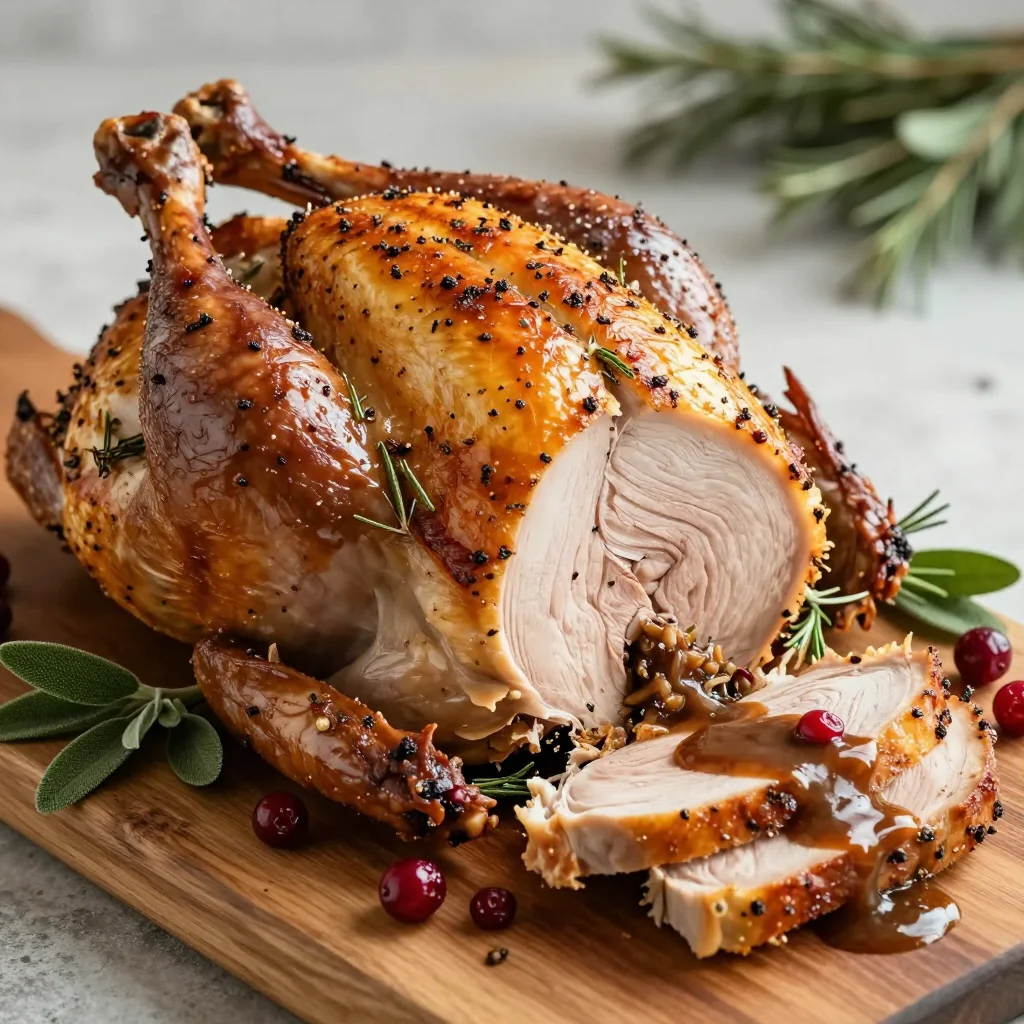
Love this? Pin it for later! 📌
Why This Recipe Works
- Perfectly Portioned: A 3–4 lb bone-in breast feeds 4–6 guests—ideal for a small New Year’s gathering without mountains of meat.
- Speedy Roast: No need to wake up at dawn; the breast cooks in roughly 90 minutes, freeing you for mimosas and board games.
- Crispy Skin Guaranteed: A dry-brine plus buttered cheesecloth yields crackling skin that rivals any full bird.
- Make-Ahead Friendly: Brine the night before, pop it in the oven while you set the table, and still have time for a pre-dinner dance.
- Flavor-Packed Leftovers: Should you end up with extras, sliced turkey elevates salads, sandwiches, and post-NYE detox bowls.
- One-Pan Wonder: Surround the breast with seasonal vegetables for an effortless side dish that caramelizes in the savory drippings.
Ingredients You'll Need
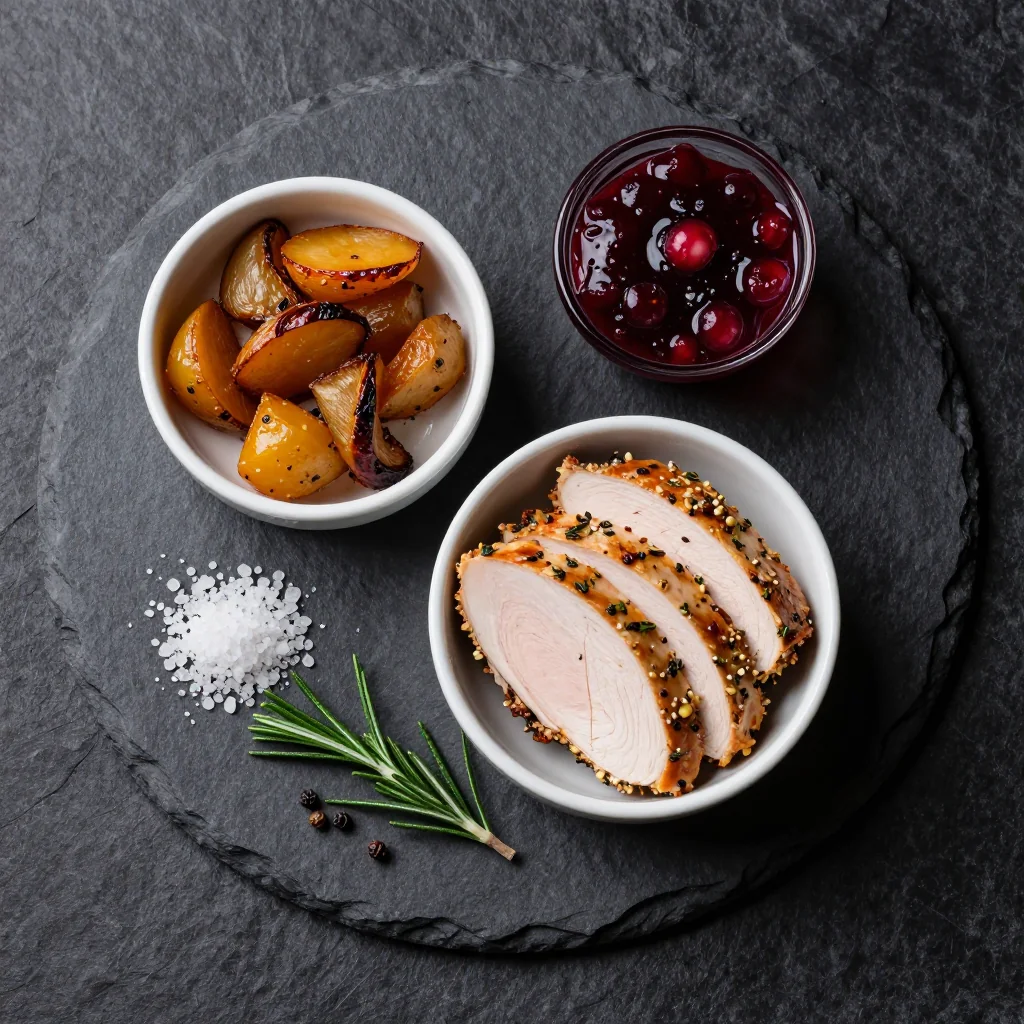
Quality matters when your ingredient list is short. Start with a fresh, never-frozen turkey breast if possible; the texture is noticeably silkier. Look for one that’s plump and pale pink, with skin that appears hydrated, not dry or translucent.
Turkey Breast: A 3–4 lb bone-in, skin-on breast is the sweet spot for four to six servings. Bone-in equals flavor insurance; the ribs help the meat stay moist and create a self-basting effect.
Kosher Salt: For the dry brine. The larger flakes draw moisture out, then dissolve into a concentrated brine that gets reabsorbed, seasoning the meat from the inside out. Table salt is too fine and can over-cure.
Fresh Herbs: I use a trio of rosemary, thyme, and sage. They’re classic for a reason: woodsy, piney, and gently astringent, cutting through the richness of turkey and butter.
Unsalted Butter: A must for the cheesecloth baste. Softened butter bastes gradually as it melts, acting like a self-timer moisture release.
Garlic: Smash three cloves to infuse the butter without burning. Burnt garlic turns bitter and will sabotage your otherwise perfect pan juices.
Lemon Zest: Brightens the long-cooking aromatics and balances the salt.
Black Pepper: Freshly cracked, please. Pre-ground tastes dusty and lacks the volatile oils that perfume the kitchen.
White Wine or Chicken Stock: Added to the roasting pan to keep the ambient environment humid, preventing the dreaded arid-oven effect.
Seasonal Vegetables (optional but smart): Think baby potatoes, rainbow carrots, and Brussels sprouts. They roast in the same pan, soaking up turkey schmaltz.
How to Make Oven Roasted Turkey Breast for a Small New Year
Dry-Brine the Night Before
Pat turkey breast very dry with paper towels. Mix 2 tablespoons kosher salt, 1 tablespoon freshly cracked black pepper, and the zest of 1 lemon. Gently lift the skin from the meat with your fingers and rub half the mixture directly onto the flesh. Season the exterior, including under the wings if attached. Place on a wire rack set inside a rimmed baking sheet, uncovered, in the refrigerator 12–24 hours. The skin will feel tacky by morning—that’s the pellicle, your insurance policy for crispy skin.
Soften & Season the Butter
Remove 4 tablespoons unsalted butter from the fridge 30 minutes before you plan to roast. Combine it with 1 tablespoon finely chopped rosemary, 1 tablespoon thyme leaves, 1 teaspoon sage (rubbed between palms to release oils), and 1 smashed garlic clove. Let it sit so the butter absorbs the aromatics.
Preheat & Prep Pan
Move oven rack to lower-middle position; preheat to 425 °F (220 °C). Toss prepared vegetables with olive oil, salt, and pepper. Scatter them in a 12-inch cast-iron or heavy roasting pan. Pour ½ cup white wine or low-sodium chicken stock into the pan—just enough to cover the bottom without drowning the veg.
Truss & Butter
Remove turkey from fridge 30 minutes before roasting (cold meat cooks unevenly). Slip half the herbed butter under the skin, spreading gently so it covers the breast in an even layer. Tuck wingtips under and tie the breast with kitchen twine at 1-inch intervals to create a uniform shape that cooks evenly. Smear remaining butter over the exterior. Soak a 12×12-inch piece of cheesecloth in melted butter and drape it over the breast; this prevents over-browning while still allowing the skin to breathe.
Roast High, Then Low
Place turkey breast breast-side-up on a small rack nestled over the vegetables. Roast 20 minutes at 425 °F to jump-start browning. Without opening the door, reduce temperature to 350 °F (175 °C). Continue roasting approximately 10–12 minutes per pound, or until the thickest part registers 160 °F on an instant-read thermometer. Expect 70–80 more minutes for a 4 lb breast.
Baste Strategically
Every 30 minutes, quickly baste with the buttery pan juices. Remove and discard the cheesecloth during the final 20 minutes so the skin can turn crackly and deeply bronzed. If areas threaten to burn, tent loosely with foil.
Check Doneness Accurately
Insert thermometer into the thickest part of the breast, away from bone. At 160 °F, pull the pan. Carry-over cooking will raise the internal temperature to the USDA-recommended 165 °F while the bird rests. Overcooking by even 5 degrees can mean the difference between juicy and chalky.
Rest & Collect Juices
Transfer turkey to a carving board, tent loosely with foil, and rest 20–30 minutes. Meanwhile tilt the pan to pool the juices; spoon off excess fat, leaving the flavorful fond. You should have about ¼ cup concentrated drippings—liquid gold for your gravy or to drizzle over carved meat.
Carve Like a Pro
Remove twine. Steady the breastbone with a carving fork. Slice straight down alongside the bone to free the entire breast lobe in one piece. Lay it skin-side-up on the board and slice across the grain into ¼-inch medallions. Arrange on a platter atop the roasted vegetables; drizzle with a spoonful of pan juices for shine.
Expert Tips
Don’t Skip the Fridge Fan
Leaving the turkey uncovered overnight acts like a mini convection current, drying the skin so it browns faster while keeping the interior moist.
Add Steam, Not Spray
A shallow layer of wine in the pan produces gentle steam, but never mist the skin itself—water is the enemy of crispiness.
Set Two Timers
One for total cook time, one for 30-minute basting intervals. Out of sight in the oven, turkey can go from bronze to burnt quickly.
Spatchcock for Speed
If you’re truly pressed for time, remove the backbone with kitchen shears and flatten the breast; it cooks 25% faster.
Rest Over a Warm Spot
Place the carving board atop a rimmed sheet pan filled with warm (not hot) water to keep the meat toasty without further cooking.
Gravy Without Flour
Whisk 1 tsp arrowroot into your pan juices for a glossy, gluten-free gravy that won’t mask the herb notes.
Variations to Try
- Citrus-Ginger Glaze: Swap lemon zest for orange and whisk 1 tablespoon grated fresh ginger into the butter. Brush lightly during the last 10 minutes for an Asian-fusion twist.
- Smoky Paprika Rub: Add 1 teaspoon smoked paprika and ½ teaspoon ground cumin to the salt blend. It lends a subtle campfire note reminiscent of a Southern pit roast.
- Maple-Mustard Sheen: Combine 2 tablespoons maple syrup with 1 tablespoon whole-grain mustard; brush on after removing cheesecloth for a lacquered, sweet-savory finish.
- Truffle Butter Upgrade: Replace half the butter with black-truffle butter for an ultra-lux NYE centerpiece. A little goes a long way.
- Low-Carb Side Swap: Trade potatoes for cauliflower florets tossed in olive oil and grated Parmesan; they roast in the same pan and develop crisp cheesy edges.
Storage Tips
Refrigerate: Cool leftover turkey to room temperature within 2 hours. Store slices in an airtight container with a spoonful of pan juices to keep them moist; refrigerate up to 4 days.
Freeze: For longer storage, wrap individual portions in parchment, then foil, and freeze up to 3 months. Thaw overnight in the fridge and reheat gently in a 275 °F oven with a splash of broth.
Gravy Make-Ahead: Prepare a double batch of gravy and freeze flat in zip-top bags. Break off what you need and warm slowly—no last-minute scrambling.
Second-Act Ideas: Dice leftovers for turkey pot pie, shred for enchiladas, or slice thin for a next-day turkey Reuben with sauerkraut and Swiss.
Frequently Asked Questions
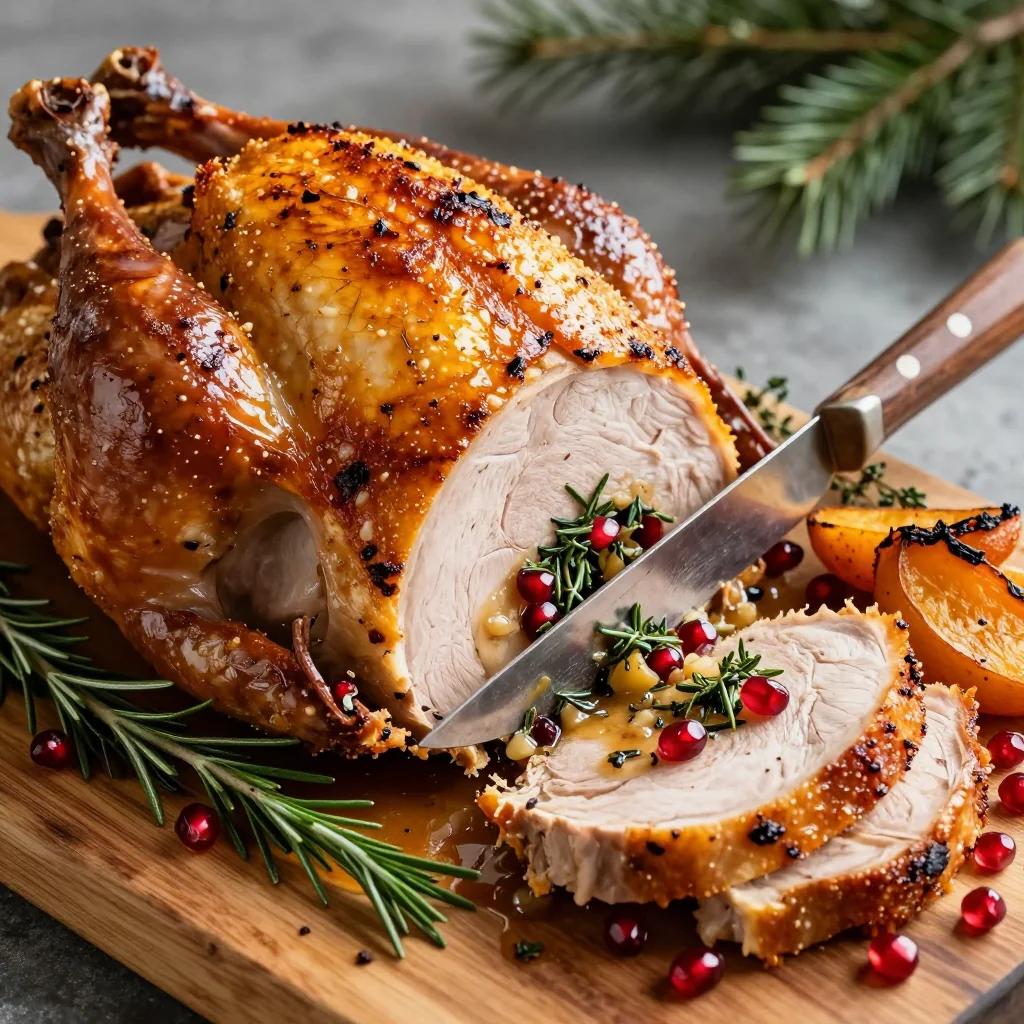
Oven Roasted Turkey Breast for a Small New Year
Ingredients
Instructions
- Dry-brine: Pat turkey dry. Mix salt, pepper, and lemon zest; rub under skin and over exterior. Refrigerate uncovered on a rack 12–24 hours.
- Season butter: Stir together butter, herbs, and garlic; let stand 30 minutes.
- Preheat oven: Set rack to lower-middle; heat to 425 °F. Toss vegetables with oil, salt, and pepper in a roasting pan; add wine.
- Truss & butter: Slip herbed butter under skin, tie breast with twine, then spread remaining butter on outside. Drape butter-soaked cheesecloth over top.
- Roast: Roast 20 minutes at 425 °F. Reduce to 350 °F and continue 70–80 minutes, basting every 30 minutes. Discard cheesecloth for last 20 minutes.
- Rest & serve: When thermometer reads 160 °F, transfer to board; tent 20–30 minutes. Carve and serve with pan vegetables and juices.
Recipe Notes
Leftovers keep 4 days refrigerated or 3 months frozen. Reheat gently with broth to maintain moisture.