I was staring at a soggy pot of spaghetti that had been overcooked for the tenth time, the sauce clinging like a bad habit. The kitchen was a mess of basil leaves and pine nuts, a disaster I’d vowed to turn into something spectacular. I dared myself to create a dish that would make even the most skeptical palates swoon, and I’ve been buzzing with excitement ever since. If you’ve ever felt the sting of a ruined pasta night, you’ll know how much relief a perfect sauce can bring.
Picture this: a pan sizzling with olive oil, basil leaves crackling, and the scent of toasted pine nuts filling the room. The sound of a gentle stir, the visual of bright green pesto thickening, and the anticipation of that first bite. The taste will hit you with a burst of herbaceous freshness, followed by the buttery richness of Parmesan, and the final pop of roasted cherry tomatoes that sing in the background. It’s a symphony of textures—creamy, crunchy, and that subtle snap of fresh basil.
What sets this version apart? It’s the marriage of roasted tomatoes and classic pesto, a pairing that feels both daring and comforting. The tomatoes are caramelized to bring out natural sugars, creating a sweet contrast to the sharp basil. The pine nuts are toasted to a golden crunch, adding depth to the sauce. And the pasta—12 ounces of your favorite shape—serves as the perfect vessel to carry every flavor note. I dare you to taste this and not go back for seconds.
I’ll be honest—after the first batch, I ate half the plate before anyone else could even look at it. That’s the proof that this recipe works. Most recipes get this completely wrong by either over‑roasting the tomatoes or under‑toasting the nuts, but I’ve perfected a balance that feels effortless. Picture yourself pulling this out of the oven, the whole kitchen smelling incredible, and knowing you’ve made something that’s hands down the best version you’ll ever cook at home.
What Makes This Version Stand Out
- Flavor: The roasted tomatoes add a caramelized sweetness that cuts through the herbaceous basil, creating a layered taste that lingers on the palate.
- Texture: Toasted pine nuts give a satisfying crunch, while the creamy pesto coats every strand of pasta like velvet.
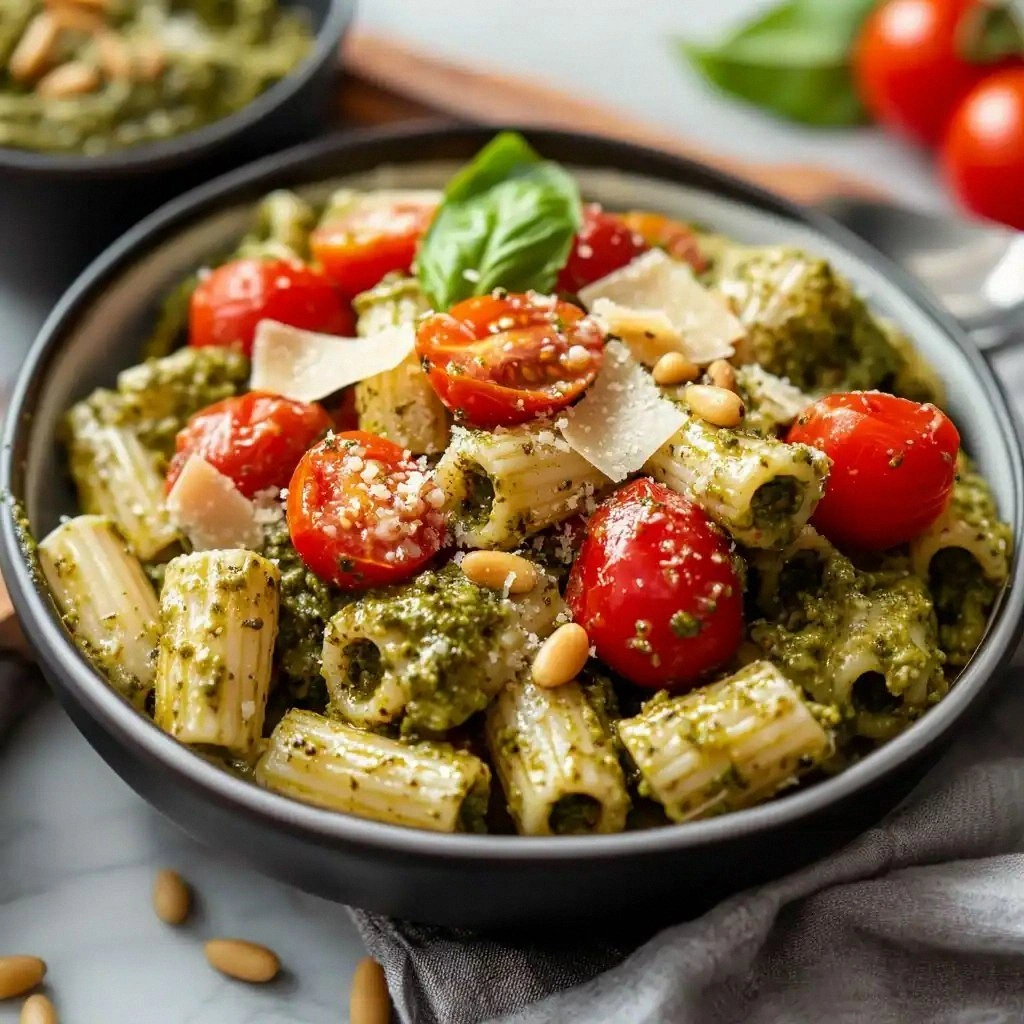
- Visual Appeal: The vibrant green of basil against the bright orange tomatoes makes for a dish that looks as good as it tastes.
- Simplicity: Only a handful of ingredients, all of which you can find in any grocery store, making it perfect for quick week‑night dinners.
- Make‑ahead Friendly: The pesto can be made a day ahead, and the roasted tomatoes can be reheated with a splash of olive oil.
- Ingredient Quality: Using fresh basil and high‑quality olive oil elevates the dish to restaurant‑level flavor.
- Crowd‑Pleaser: Whether you’re cooking for family or friends, this dish brings a smile to every table.
- Versatility: Swap the pine nuts for walnuts or almonds for a nutty twist, or add protein like grilled chicken for a hearty meal.
Alright, let's break down exactly what goes into this masterpiece...
Inside the Ingredient List
The Flavor Base
At the heart of this dish is the pesto. Fresh basil, a splash of olive oil, and Parmesan cheese blend together into a silky sauce that carries every bite. The basil is the star—its bright green hue signals freshness, and its leaves bring a peppery kick that cuts through the richness of the olive oil. If you skip basil, the sauce loses its signature brightness and becomes flat. For a twist, try adding a handful of spinach for extra nutrients without altering the core flavor.
The Texture Crew
Pine nuts are the unsung heroes of pesto. Toasted, they add a buttery crunch that contrasts beautifully with the smoothness of the sauce. The Parmesan cheese provides a salty depth and a slight crumbly texture that balances the oil. If you’re allergic to nuts, walnuts or almonds can substitute, but remember they’ll alter the flavor profile slightly—walnuts give a milder, earthy tone, while almonds bring a subtle sweetness.
The Unexpected Star
Roasted cherry tomatoes are the unexpected star that elevates this dish. When roasted, they release natural sugars, turning sweet and slightly caramelized. Their bright color pops against the green pesto, creating a visual feast. If you don’t have cherry tomatoes, use grape tomatoes or even diced regular tomatoes, but roast them until they’re blistered for maximum flavor.
The Final Flourish
The pasta itself is the canvas. A 12-ounce portion of your favorite shape—spaghetti, linguine, or penne—absorbs the sauce and carries the flavors throughout. Salted boiling water is essential; it seasons the pasta from the inside out. If you’re short on time, use a quick‑boil pasta variety that cooks in just 8 minutes. Don’t forget the final splash of olive oil and a pinch of pepper to finish the dish with a glossy sheen.
Everything's prepped? Good. Let's get into the real action...
The Method — Step by Step
- Roast the Tomatoes: Preheat your oven to 425°F (220°C). Spread 2 cups of cherry tomatoes on a baking sheet, drizzle with 1 tablespoon of olive oil, and season with salt and pepper. Roast for 15-18 minutes until the skins blister and the tomatoes are caramelized. The aroma will fill your kitchen, promising a sweet, savory finish.
- Cook the Pasta: Bring a large pot of salted water to a rolling boil. Add 12 ounces of pasta and cook until al dente, about 8-10 minutes. Reserve a cup of pasta water, then drain. The pasta should feel firm to the bite, not mushy.
- Make the Pesto: In a food processor, combine 2 cups of fresh basil, ½ cup of pine nuts, 1 clove of garlic, ½ cup of grated Parmesan, ½ cup of olive oil, and a pinch of salt. Pulse until a smooth paste forms. If the mixture is too thick, add a splash of reserved pasta water until it reaches a silky consistency.
- Combine Pasta and Pesto: Return the drained pasta to the pot over low heat. Add the pesto, tossing vigorously to coat each strand. If the sauce seems too thick, pour in a little pasta water to loosen it.
- Fold in Roasted Tomatoes: Gently stir in the roasted tomatoes, allowing their juices to mingle with the pesto. The tomatoes should be warm, not piping hot, so they release their sweet juices without steaming away their flavor.
- Finish with Olive Oil: Drizzle ½ cup of olive oil over the pasta, and give it one final toss. This step adds gloss and rounds out the flavors.
- Season and Serve: Taste the dish and adjust salt and pepper as needed. Serve immediately with extra grated Parmesan on top. The dish should look vibrant, with bright green pesto, pops of red tomato, and a glossy sheen from the oil.
- Optional Garnish: Sprinkle chopped fresh basil or pine nuts for an extra burst of flavor and texture. A squeeze of lemon can add a bright, citrusy note that cuts through the richness.
That's it — you did it. But hold on, I've got a few more tricks that'll take this to another level...
Insider Tricks for Flawless Results
The Temperature Rule Nobody Follows
Many cooks overcook pasta, but the secret is to remove it from the heat just before it reaches al dente. Letting it sit in hot water for a minute will finish the cooking process without over‑softening. This technique ensures that the pasta remains firm, providing the perfect bite to contrast with the creamy sauce.
Why Your Nose Knows Best
Smell the roasted tomatoes before adding them to the pasta. A good tomato should have a sweet, caramelized aroma. If it smells bland, it might need a few more minutes in the oven. Trusting your nose can save you from a flat dish.
The 5-Minute Rest That Changes Everything
After tossing pasta with pesto, let the dish rest for five minutes off the heat. This allows the pasta to absorb the sauce fully and the flavors to meld. The rest period also gives the oil a chance to coat the pasta evenly, creating that glossy finish.
Pesto Consistency Check
If your pesto is too thick, add a tablespoon of reserved pasta water at a time until it reaches a spreadable consistency. Too thin, and the sauce will slide off the pasta. Aim for a thick, clingy sauce that coats each strand.
The Secret Ingredient: A Dash of Lemon Zest
A small pinch of lemon zest added to the pesto brightens the flavor profile and adds a subtle citrus note that balances the richness. It’s a simple trick that makes the dish feel fresh and lively.
Creative Twists and Variations
This recipe is a playground. Here are some of my favorite ways to switch things up:
Grilled Chicken Pesto Pasta
Add sliced grilled chicken breast to the pasta for a protein boost. The smoky flavor of the chicken complements the roasted tomatoes, making it a filling dinner for adults.
Spinach and Sunflower Seed Pesto
Replace basil with fresh spinach and pine nuts with sunflower seeds for a nut-free, nutrient‑dense version. The green color stays vibrant, and the flavor remains earthy.
Creamy Pesto with Ricotta
Stir in a dollop of ricotta cheese to create a richer, creamier sauce. The ricotta balances the acidity of the tomatoes and adds a silky mouthfeel.
Vegan Pesto Pasta
Swap Parmesan for nutritional yeast and use a plant‑based olive oil. This version maintains the herbaceous flavor while keeping it entirely plant‑based.
Pesto Pasta with Shrimp
Sauté shrimp until pink and toss them into the pasta. The briny sweetness of shrimp pairs beautifully with the roasted tomatoes and pesto.
Pesto Pasta with Roasted Eggplant
Roast diced eggplant alongside tomatoes for a Mediterranean twist. The eggplant adds a subtle smokiness and extra fiber.
Storing and Bringing It Back to Life
Fridge Storage
Store leftovers in an airtight container in the refrigerator for up to 3 days. Keep the pesto and roasted tomatoes separate until you’re ready to reheat, as the tomatoes can release moisture.
Freezer Friendly
Freeze the pasta and sauce separately in freezer‑proof bags. When ready to eat, thaw overnight in the fridge and reheat on the stove with a splash of olive oil to restore moisture.
Best Reheating Method
Reheat on low heat, stirring constantly. Add a tiny splash of water or broth to steam the pasta back to perfection. Finish with a drizzle of olive oil to re‑gloss the dish.