I was standing in my kitchen, half‑asleep, when the smell of a forgotten loaf from last night slammed into me like a neon sign on a rainy street. My roommate had dared me to turn that sad, flat sourdough into something that would make even the most skeptical Instagram foodie gasp. I stared at the bland crust, imagined a burst of cotton‑candy pink, and thought, “What if I could actually make sourdough look like a dessert without sacrificing the chew?” That night I grabbed a jar of dragon fruit powder I’d bought on a whim, and the rest was pure alchemy. I’ll be honest — I ate half the batch before anyone else got a chance to try it, but the remaining loaves turned every brunch into a runway show.
Picture yourself pulling a loaf out of the oven, the whole kitchen smelling like a tropical sunrise, the crust crackling as you tap it and hearing that faint, satisfying pop. The interior is a soft pink marble, speckled with tiny flecks of powder that look like sunrise clouds frozen in dough. When you slice it, the crumb is airy, with a subtle sweetness that whispers rather than shouts, while the crust remains buttery‑crisp, pulling away like thin ice on a lake. That first bite? It’s a blend of tangy sourdough tang, a hint of floral fruit, and a buttery finish that makes your taste buds do a happy dance.
Most sourdough recipes get this completely wrong. They either ignore the visual impact or they drown the natural flavor with too much sugar or artificial coloring. This version, however, respects the wild yeast’s character while giving it a show‑stopping makeover. The secret isn’t a gimmick; it’s a precise balance of high‑protein bread flour, a living starter, and that magical dragon fruit powder that adds both color and a whisper of natural sweetness. I dare you to taste this and not go back for seconds, because once you’ve experienced this pink perfection, ordinary bread will feel like a culinary crime.
Okay, ready for the game‑changer? I’m about to walk you through every single step — from feeding your starter to mastering the perfect bake temperature — and I promise you’ll finish this post with the confidence of a baker who’s just unlocked a secret level. Stay with me here — this is worth it.
What Makes This Version Stand Out
- Taste: The dragon fruit powder adds a delicate, natural sweetness that pairs perfectly with the sourdough’s tang, creating a flavor profile that’s both familiar and exotic.
- Texture: High‑protein bread flour gives the crumb a chewy, airy structure while the crust stays crisp enough to snap like fresh parchment.
- Simplicity: No fancy equipment needed; a standard Dutch oven or a heavy‑bottomed pot does the trick, making this recipe accessible to home bakers of any skill level.
- Uniqueness: The pink hue isn’t just for Instagram — it’s a visual cue that the loaf is infused with fruit‑derived antioxidants, turning a staple into a superfood.
- Crowd Reaction: Guests invariably ask “What’s that?” and you get to brag about the dragon fruit powder, earning instant culinary street‑cred.
- Ingredient Quality: Using a robust sourdough starter and unbleached bread flour ensures the loaf rises beautifully and holds its shape.
- Cooking Method: The steam‑rich bake in a pre‑heated Dutch oven creates a glossy crust that shatters like thin ice when sliced.
- Make‑Ahead Potential: This loaf freezes beautifully, and a quick reheating revives the crust, making it perfect for meal‑prep enthusiasts.
Inside the Ingredient List
The Flavor Base
Dragon Fruit Powder is the star of the show. This magical powder isn’t just for aesthetics; it also adds a subtle sweetness and a unique flavor. Look for it in health food stores or online, and make sure it’s a pure, unsweetened variety. If you skip it, you’ll lose both the pink hue and the delicate fruity undertone that makes this loaf feel like a celebration.
The Texture Crew
Bread Flour provides the high protein needed for gluten development, giving the dough its characteristic chew and structure. While you can use all‑purpose flour, bread flour yields a sturdier loaf that can hold the extra moisture from the dragon fruit powder without becoming gummy. If you’re gluten‑intolerant, a blend of high‑protein gluten‑free flour and xanthan gum can work, but expect a slightly different crumb.
The Unexpected Star
Sourdough Starter is the living heart of this bread. A well‑fed, bubbly starter ensures a good rise and that signature tang. If your starter is sluggish, feed it a day before you plan to bake, using equal parts flour and water, and keep it at room temperature. A weak starter will result in a dense loaf that never achieves that airy pink interior.
The Final Flourish
Salt is essential for flavor! It strengthens gluten and controls fermentation, ensuring your bread rises beautifully. Use fine sea salt for even distribution; coarse kosher can be sprinkled on top for a finishing crunch. Water, the silent hero, binds everything together. Use filtered or tap water at room temperature for optimal results — too hot and you’ll kill the yeast, too cold and the dough will lag.
Everything's prepped? Good. Let’s get into the real action…
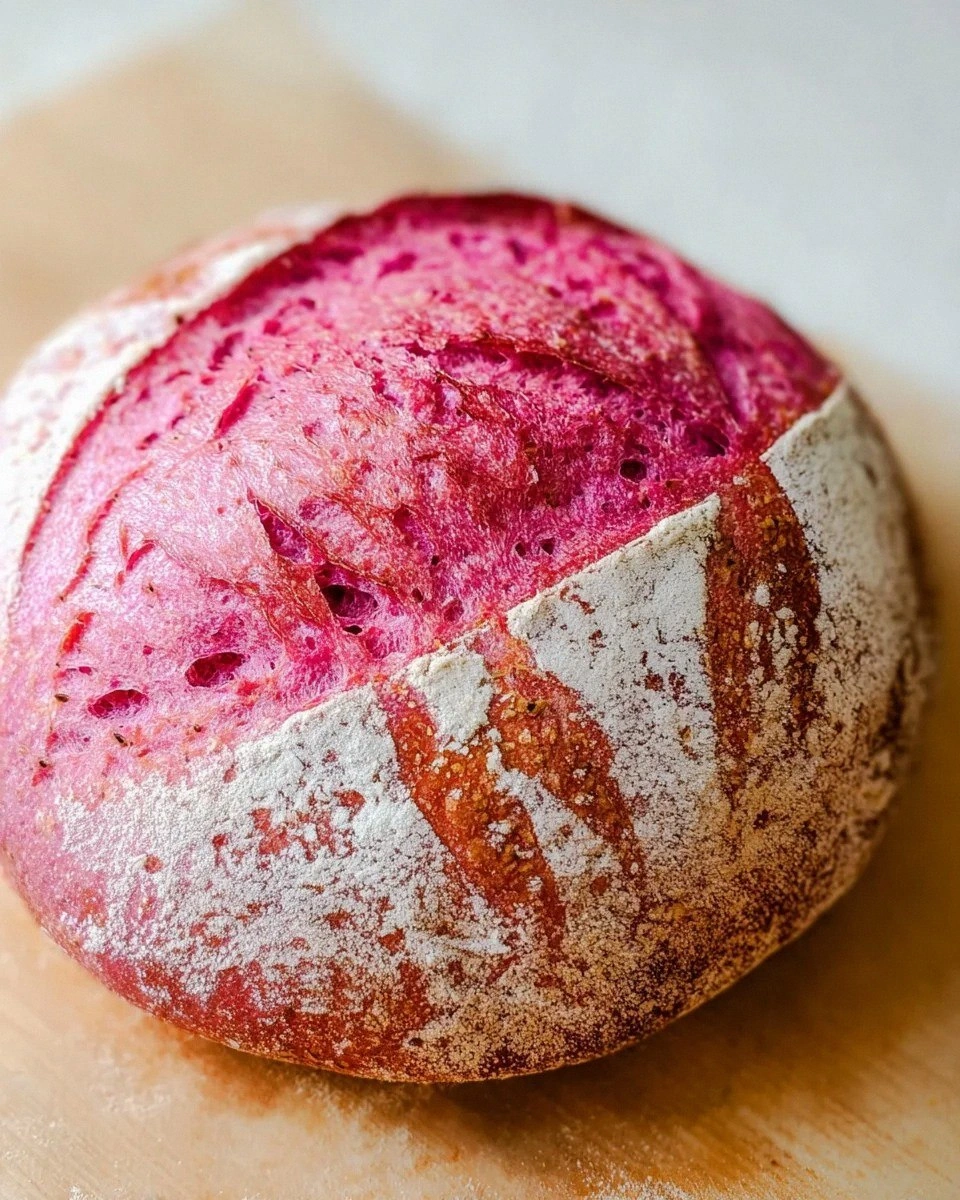
The Method — Step by Step
- Start by feeding your sourdough starter. Mix 50 g of starter with 50 g of bread flour and 50 g of water. Let it sit at room temperature for 4‑6 hours until it’s bubbly and has doubled in size. Pro tip: a lively starter smells slightly fruity, not sour. Kitchen Hack: Use a clear jar so you can see the bubbles develop without opening the lid.
- In a large mixing bowl, whisk together 2 cups of bread flour, 2 tbsp of dragon fruit powder, and 1 tsp of salt. The powder will dissolve gradually, giving the dough a uniform pink shade. Sensory snapshot: You’ll notice a faint, sweet aroma as the powder meets the flour.
- Create a well in the dry mixture and pour in 1 ¼ cups of room‑temperature water and the active starter (about ¾ cup). Mix with a wooden spoon until a shaggy dough forms. It will look sticky and a little rough, which is exactly what you want.
- Let the dough rest for 30 minutes (autolyse). This rest period allows the flour to fully hydrate, making the gluten easier to develop later. Watch Out: If the dough feels too dry after the rest, drizzle in a tablespoon of water; if it’s too wet, sprinkle a little extra flour.
- Begin the stretch‑and‑fold series: with wet hands, pull one side of the dough up and fold it over the center. Rotate the bowl and repeat 4‑5 times. Rest for 15 minutes, then repeat the process two more times. This gentle kneading builds strength without over‑working the dough.
- After the final fold, cover the bowl with a damp towel and let the dough bulk‑rise for 3‑4 hours at 75°F (24°C). You’ll know it’s ready when it has expanded by about 50 % and the surface shows tiny bubbles. Future pacing: Picture yourself checking the dough, seeing those bubbles, and feeling a surge of pride.
- Turn the dough onto a lightly floured surface, shape it into a tight boule by folding the edges toward the center, then flip it seam‑side down and tighten the surface tension with a swift, confident turn. Let the shaped loaf rest for 30 minutes while you preheat your oven to 475°F (245°C) with a Dutch oven inside.
- When the oven screams heat, carefully place the loaf into the hot Dutch oven, score the top with a razor blade (a shallow “X” works wonders), and cover it. Bake for 20 minutes, then remove the lid to let the crust turn a deep golden‑brown, about 25‑30 minutes total. This next part? Pure magic. The steam trapped inside creates that glossy, crack‑ready crust that shatters like thin ice.
That’s it — you did it. But hold on, I’ve got a few more tricks that’ll take this to another level. Trust me, the next slice will feel like a celebration in your mouth.
Insider Tricks for Flawless Results
The Temperature Rule Nobody Follows
Most bakers set their ovens and forget about ambient temperature. The secret is to keep the dough’s final proof at a consistent 75°F (24°C). If your kitchen is cooler, create a warm nook by turning on the oven at its lowest setting for 5 minutes, then turning it off and placing the dough inside with the door ajar. This gentle heat nudges the yeast without overheating the starter.
Why Your Nose Knows Best
Instead of watching the clock, trust the aroma. When the dough is ready for the oven, it will emit a faint, sweet‑sour perfume that’s unmistakable. If you’re still unsure, gently press a fingertip; the dough should feel slightly springy and bounce back slowly. Ignoring these cues often leads to under‑ or over‑proofed loaves, which can cause a gummy crumb or a flat loaf.
The 5‑Minute Rest That Changes Everything
After scoring, let the loaf rest uncovered for exactly five minutes before sliding it into the oven. This short pause allows the surface tension to settle, preventing the crust from tearing during the initial burst of steam. A friend once skipped this step and ended up with a cracked, uneven top that looked like a war‑torn battlefield.
Steam‑Boost With a Hot Pan
If you don’t have a Dutch oven, place a metal baking sheet on the oven floor, and pour a cup of boiling water onto it just as you load the loaf. The instant vapor creates a glossy crust and a beautiful rise. The trick is to act quickly; the water should sizzle and disappear within seconds, leaving behind that coveted shine.
Cool‑Down Ritual
Resist the urge to slice immediately. Let the loaf cool on a wire rack for at least an hour. This cooling period lets the crumb set, preventing a gummy interior. If you’re impatient, a quick 5‑minute blast of 350°F (175°C) in the oven can help, but the flavor and texture will never be as perfect as a slow cool‑down.
Creative Twists and Variations
This recipe is a playground. Here are some of my favorite ways to switch things up:
Coconut‑Lime Dream
Replace half of the water with coconut milk and add 1 tsp lime zest to the dry mix. The result is a tropical loaf with a faint citrus zing that pairs beautifully with grilled fish or a simple avocado spread.
Chocolate‑Cherry Fusion
Swap the dragon fruit powder for 2 tbsp unsweetened cocoa powder and fold in ¼ cup dried cherries during the final stretch‑and‑fold. The crumb turns a deep mahogany with pink speckles, perfect for a decadent breakfast toast.
Savory Herb Infusion
Add 1 tbsp each of dried rosemary and thyme to the flour blend, and omit the dragon fruit powder. The loaf becomes a savory companion for soups, stews, or a hearty cheese board.
Spiced Pumpkin Twist
In the fall, stir in ½ cup pumpkin purée and 1 tsp pumpkin pie spice, reducing the water by ¼ cup. The pink hue deepens, and the loaf takes on a warm, comforting flavor that screams autumn.
Nutty Crunch
Fold in ¼ cup toasted almond slivers during the final fold. The nuts add a delightful crunch that contrasts the soft crumb, making each bite a textural adventure.
Storing and Bringing It Back to Life
Fridge Storage
Wrap the cooled loaf tightly in a clean kitchen towel, then place it inside a sealed plastic bag. It will stay fresh for up to 5 days, though the crust will soften. Re‑crisp by heating it in a 350°F (175°C) oven for 5‑7 minutes.
Freezer Friendly
Slice the loaf before freezing, then arrange the slices on a parchment‑lined tray and flash‑freeze for 2 hours. Transfer the frozen slices to a zip‑top bag; they’ll keep for up to 3 months. When you’re ready, toast directly from frozen for a quick, crunchy snack.
Best Reheating Method
Add a tiny splash of water (about a teaspoon) to the crust before reheating. The steam revives the crust’s crispness, while the interior warms evenly. For a truly bakery‑like finish, reheat in a pre‑heated Dutch oven or on a pizza stone for 10 minutes.