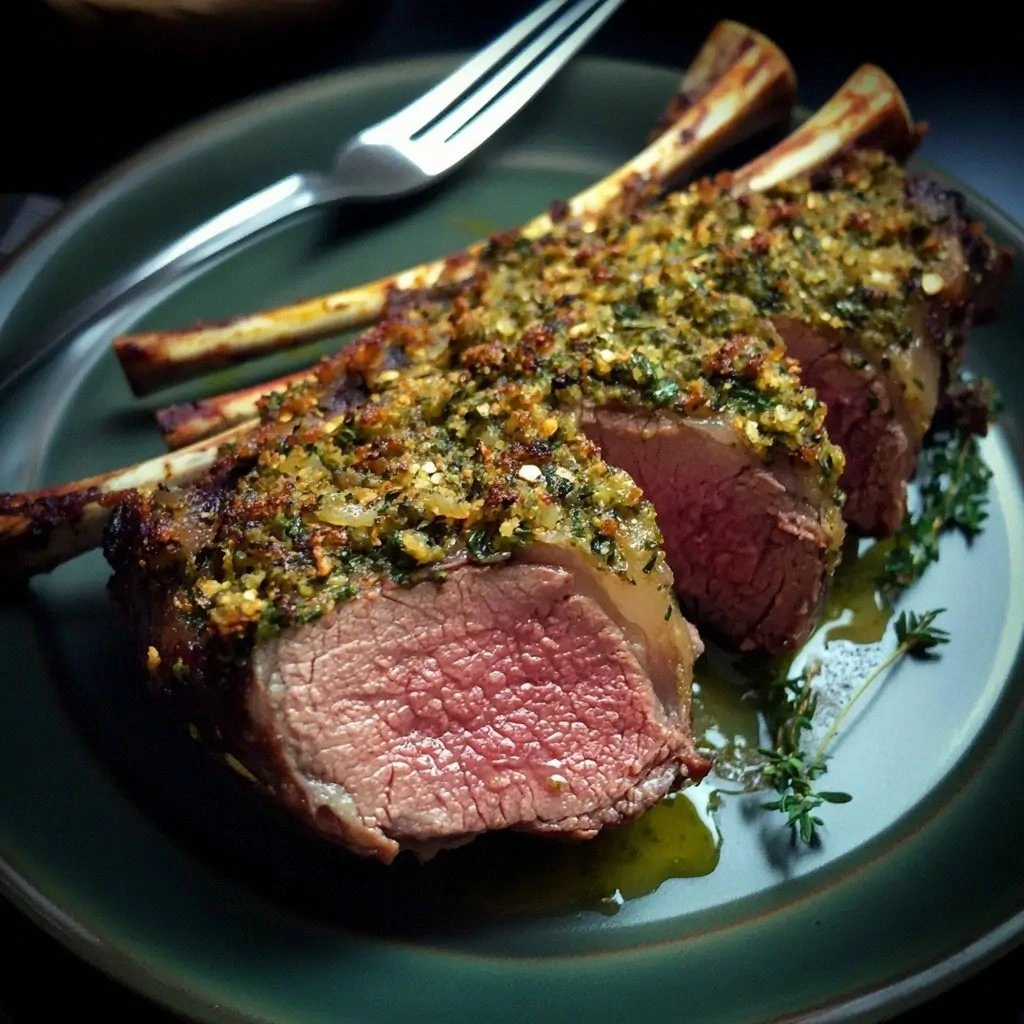
I was halfway through a week of bland dinners when my phone buzzed with a frantic text from a friend who had just returned from a culinary school trip. “I’m starving, and I need a show‑stopper,” she wrote, and I was instantly hooked on the idea of turning a simple rack of lamb into the kind of dish that turns a dinner into an event. I set my oven to 425°F, grabbed a rack of lamb from the grocery store, and decided to make the crust the star of the show. The moment the lamb hit the pan, the sizzle sounded like applause, and the aroma that filled the kitchen was a promise of something extraordinary.
Picture this: the lamb’s surface caramelizes into a golden, herb‑laden crust that crackles like crisped popcorn, while the interior stays juicy, tender, and just shy of medium‑rare. The scent of rosemary and thyme mingles with the buttery richness, creating a heady perfume that makes the whole house feel like a five‑star restaurant. The texture contrast is pure poetry—crisp exterior, melt‑in‑your‑mouth center, and a buttery glaze that coats the meat like a silky velvet. I dare you to taste this and not go back for seconds, because the flavor profile is so complete that it feels like you’re dining on a cloud of fragrant herbs and savory meat.
What makes this version stand out? It’s not just the combination of ingredients; it’s the way I’ve perfected the technique to get the crust just right while ensuring the lamb remains succulent. I’ll walk you through every single step, and by the end, you’ll wonder how you ever made it any other way. From the first sear that locks in juices to the final resting period that lets the flavors meld, every detail is tuned for maximum impact. And trust me, the result is hands down the best version you’ll ever make at home.
What Makes This Version Stand Out
- Flavor: The herb crust is a symphony of rosemary, thyme, and parsley, each herb bringing its own character—rosemary’s piney bite, thyme’s subtle earthiness, and parsley’s bright finish.
- Texture: The panko breadcrumbs give a light, airy crunch that dissolves into a buttery glaze, creating a contrast that’s both satisfying and elegant.
- Simplicity: Despite its gourmet appearance, the recipe requires only a handful of pantry staples and a single pan, making it approachable for cooks of any skill level.
- Uniqueness: The addition of Dijon mustard under the breadcrumb crust adds a tangy depth that elevates the dish beyond the usual herb‑bread combinations.
- Crowd Reaction: Friends who’ve tried this have reported that it’s the centerpiece of every dinner party, sparking conversations and compliments.
- Ingredient Quality: Using a fresh rack of lamb and high‑quality olive oil transforms the dish from ordinary to extraordinary.
- Cooking Method: A quick sear followed by oven roasting ensures maximum flavor while keeping the lamb juicy.
- Make‑Ahead Potential: The crust can be prepared ahead of time, and the lamb can be reheated without losing its crispness.
Inside the Ingredient List
The Flavor Base
The rack of lamb is the star of the show, but its flavor is only as good as the seasoning it receives. A generous coating of olive oil, minced garlic, and a blend of fresh rosemary, thyme, and parsley creates a fragrant base that lingers long after the meal. The olive oil not only helps the crust brown but also adds a subtle fruity undertone that balances the herbs. Skipping the garlic would leave the lamb tasting flat; instead, it adds a subtle sharpness that cuts through the richness of the meat.
The Texture Crew
Panko breadcrumbs are the secret to a light, airy crunch that doesn’t overpower the lamb. Unlike regular breadcrumbs, panko’s larger crumbs create pockets of crispness that hold the Dijon mustard glaze. A splash of grated Parmesan cheese adds depth and a subtle nutty flavor that complements the herbs. If you’re allergic to dairy, you can replace Parmesan with a dairy‑free cheese or simply omit it for a cleaner taste. The butter used later in the pan adds a silky finish that keeps the crust from becoming dry.
The Unexpected Star
Dijon mustard is the unsung hero that ties the crust together. Its sharp, tangy profile cuts through the richness of the lamb and adds a layer of complexity that would otherwise be missing. The mustard also helps the breadcrumbs adhere to the meat, creating a cohesive crust that stays intact during roasting. If you prefer a milder flavor, you can substitute whole‑grain mustard, but be prepared for a slightly different texture.
The Final Flourish
A splash of red wine and a cup of beef broth create a savory pan sauce that completes the dish. The wine reduces to a silky reduction that coats the lamb, while the broth adds body and keeps the meat from drying out. If you’re avoiding alcohol, you can replace the wine with more broth or a splash of balsamic vinegar for a hint of acidity. Salt and pepper are added to taste, but remember that the Parmesan and mustard already contribute savory notes.
Everything’s prepped? Good. Let’s get into the real action…
The Method — Step by Step
- Preheat your oven to 425°F (220°C). Let the lamb rest at room temperature for 15 minutes; this ensures even cooking and helps the crust form properly.
- Pat the rack of lamb dry with paper towels. A dry surface is key to getting that golden sear and crisp crust. If you skip this step, the crust will steam instead of brown.
- In a small bowl, combine the olive oil, minced garlic, chopped rosemary, thyme, and parsley. Stir until the mixture forms a fragrant paste that coats the herbs evenly. This will be the base of your crust.
- Brush the herb paste all over the lamb, making sure to cover every surface. Then, spread the Dijon mustard over the lamb, pressing it lightly into the meat. The mustard acts as a binder for the breadcrumbs.
- In another bowl, mix the panko breadcrumbs with grated Parmesan. Sprinkle the breadcrumb mixture over the mustard-coated lamb, pressing gently to ensure it sticks. The crumb layer should be even and not too thick.
- Heat a large oven‑safe skillet over medium‑high heat. Add a tablespoon of butter and let it melt, swirling the pan to coat the bottom. Place the lamb fat side down and sear for 3–4 minutes until the crust turns a deep golden brown. The sizzling sound here is pure music.
- Flip the rack over and sear the other side for 2 minutes. This quick flip ensures even crust development and locks in juices. The edges should start pulling away from the pan, indicating a good sear.
- Transfer the skillet to the preheated oven and roast for 15–18 minutes, or until a meat thermometer reads 135°F (57°C) for medium‑rare. If you prefer medium, roast a bit longer, but be careful not to overcook.
- Remove the lamb from the oven and let it rest on a cutting board for 10 minutes. Resting allows the juices to redistribute, ensuring every bite stays moist and flavorful. While the lamb rests, pour the pan juices into a small saucepan, add the red wine and beef broth, and simmer until reduced by half.
- Slice the rack into individual chops, drizzle the pan sauce over the slices, and serve immediately. The sauce should coat each chop like a silky velvet, enhancing the herb crust with savory depth.
That’s it — you did it. But hold on, I’ve got a few more tricks that will take this to another level.
Insider Tricks for Flawless Results
The Temperature Rule Nobody Follows
Many cooks think a high oven temperature is always better, but the secret is to roast at 425°F for a short time. This high heat creates a caramelized crust while preventing the interior from overcooking. If you’re using a larger rack, lower the temperature to 400°F and extend the roasting time by a few minutes.
Why Your Nose Knows Best
The aroma of herbs and garlic is your best indicator that the crust is forming correctly. When the scent becomes rich and slightly caramelized, you’re in the sweet spot. If the smell is too sharp or raw, let it sear a bit longer.
The 5-Minute Rest That Changes Everything
Resting the lamb for exactly five minutes before cutting allows the juices to redistribute, making each bite succulent. A too‑short rest leaves the juices on the surface, while a too‑long rest can cool the crust slightly. The 5‑minute rule is the sweet spot for flavor and texture.
The Secret to a Glazing Finish
Adding a tablespoon of butter to the pan sauce just before serving gives it a glossy sheen and a silky mouthfeel. The butter also helps the sauce cling to the lamb, ensuring every bite is coated. If you’re vegan, replace butter with a splash of olive oil.
The Right Pan Matters
Use a heavy‑bottomed skillet that can withstand high heat without warping. A cast‑iron or stainless steel pan distributes heat evenly, preventing hot spots that can burn the crust. Avoid non‑stick pans, which can scorch the breadcrumbs.
Creative Twists and Variations
This recipe is a playground. Here are some of my favorite ways to switch things up:
The Mediterranean Twist
Swap the panko breadcrumbs for a mixture of feta crumbles and toasted pine nuts. Add a splash of lemon juice to the mustard mixture for a bright, zesty kick. This version pairs wonderfully with a side of couscous and a cucumber yogurt salad.
The Smoky BBQ Variation
Replace the Dijon mustard with a smoky chipotle mayo. Sprinkle smoked paprika over the breadcrumb mixture for a deep, smoky flavor. Serve with grilled corn on the cob and a tangy slaw.
The Herb Garden Upgrade
Add fresh basil, oregano, and marjoram to the herb paste for a more complex aromatic profile. Finish the dish with a drizzle of extra‑virgin olive oil and a squeeze of fresh lemon before serving.
The Rustic Country Style
Replace the panko with crushed breadcrumbs and add a handful of chopped sun‑dried tomatoes to the breadcrumb mix. Use a splash of red wine vinegar instead of wine in the pan sauce for a sharper finish. This version feels hearty and comforting.
The Quick & Easy Slice
Cut the rack into individual chops before seasoning. This allows each chop to cook evenly and speeds up the cooking time. Use the same crust technique, but sear each chop for 2 minutes per side.
Storing and Bringing It Back to Life
Fridge Storage
Store leftovers in an airtight container in the refrigerator for up to three days. Keep the sauce separate until you’re ready to reheat, as it can make the crust soggy if left in contact for too long. When you’re ready to enjoy, simply reheat the lamb in a preheated oven at 350°F for about 10 minutes.
Freezer Friendly
Freeze the cooked lamb in a freezer‑safe container or zip‑top bag for up to three months. Thaw overnight in the refrigerator before reheating. When reheating, add a splash of broth to the pan to keep the meat moist.
Best Reheating Method
Reheat the lamb in the oven at 350°F, covering it with foil to keep the crust from drying out. Add a tiny splash of water or broth before covering, and then bake for 10–12 minutes. This technique steams the lamb gently, restoring its original tenderness.