I remember the night I tried to recreate a restaurant‑style shrimp étouffée and ended up with a sauce that tasted like burnt rubber. The pot had a thick, brown sludge that clung to the sides, and my kitchen smelled like a campfire gone wrong. I stared at the mess, feeling the sting of disappointment, and then I heard a voice from the kitchen counter: “You’re not done yet.” That single sentence turned a culinary catastrophe into a mission. I vowed to craft a version that would make every other recipe pale in comparison.
The moment I lifted the pot, the air was thick with the scent of onions and celery, a green bell pepper’s bright citrusy note cutting through the heaviness. The sizzling sound of oil hitting the pan was a drumbeat, each crackle promising flavor. I could taste the anticipation already— a savory, slightly smoky depth that would mingle with the shrimp’s natural sweetness. The texture felt promising; the roux should coat the shrimp like velvet, not cling to the bottom like stubborn crust. My fingers tingled with excitement, and my taste buds tingled with expectation.
What makes this version stand out is not just the recipe itself but the philosophy behind it: precision, patience, and a dash of daring. I stripped away the unnecessary, kept only the core ingredients, and added a secret ingredient that elevates the dish from good to unforgettable. The sauce is silky, not greasy; the shrimp remain plump and juicy; the heat is balanced, not overpowering. I dare you to taste this and not go back for seconds, because once you do, you’ll never settle for anything less.
And here’s a teaser: I’ll reveal a technique that transforms a simple roux into a flavor powerhouse— a trick I learned from a seasoned Cajun chef who swore it was the secret behind his legendary étouffée. By the end of this guide, you’ll wonder how you ever made it any other way. Let me walk you through every single step, and trust me, the kitchen will feel like a stage and you, the star chef.
What Makes This Version Stand Out
- Taste: The sauce balances smoky, umami, and a hint of citrus, creating a complex flavor profile that lingers on the palate. The shrimp absorb the seasoning, turning each bite into a burst of savory delight.
- Texture: The roux is silky and thick, coating the shrimp without turning them mushy. The vegetables remain crisp, offering a pleasant contrast to the tender seafood.
- Simplicity: With only twelve ingredients, the recipe is straightforward yet sophisticated. No exotic pantry items are required, making it accessible to every home cook.
- Uniqueness: A splash of lime juice at the end brightens the dish, and a pinch of smoked paprika adds depth. These subtle tweaks set this étouffée apart from the ordinary.
- Crowd Reaction: Friends who’ve tried it rave about how the sauce clings to rice like a velvet blanket. The dish has become a staple at potlucks and family dinners alike.
- Ingredient Quality: Fresh shrimp, high‑quality Cajun seasoning, and homemade stock make all the difference. Each component contributes to a harmonious final product.
- Cooking Method: The step‑by‑step roux technique ensures even browning and eliminates the dreaded clumping. Mastering this method is a skill worth adding to your culinary repertoire.
- Make‑Ahead Potential: The sauce can be prepared a day ahead, allowing flavors to meld and the kitchen to stay clutter‑free. It’s a time‑saving trick for busy weeknights.
Alright, let’s break down exactly what goes into this masterpiece…
Inside the Ingredient List
The Flavor Base
Onion, green bell pepper, and celery— the holy trinity of Cajun cooking— form the aromatic foundation of this dish. Each vegetable contributes a distinct note: the onion brings sweetness, the pepper adds a subtle bitterness, and the celery offers a refreshing bite. If you skip this trio, the sauce loses its depth and becomes a flat, one‑dimensional broth. For a vegan twist, substitute vegetable stock for the seafood stock and use a plant‑based shrimp alternative.
The Texture Crew
All‑purpose flour and vegetable oil are the unsung heroes that give the étouffée its signature thickness. The flour absorbs excess moisture, while the oil helps develop a rich, caramelized flavor. A ¼ cup of flour for 4 servings keeps the sauce just thick enough to cling to the shrimp without turning it into a paste. If you’re gluten‑free, a blend of rice flour and tapioca flour works beautifully, providing the same binding power without the gluten.
The Unexpected Star
Cajun seasoning is the secret sauce that transforms a simple stew into a flavor explosion. It’s a blend of paprika, cayenne, thyme, and garlic powder, offering heat and herbal undertones. I’ve discovered that a small pinch of smoked paprika elevates the dish, adding a subtle smokiness that complements the shrimp’s natural sweetness. Don’t be afraid to adjust the amount to match your heat tolerance; this recipe is a canvas for your personal spice palette.
The Final Flourish
Green onions, parsley, and a squeeze of lime juice finish the dish with brightness and a burst of color. The herbs provide a fresh contrast to the rich sauce, while the lime adds a zesty lift that cuts through the heaviness. These finishing touches are what separate a good étouffée from a memorable one. If you’re craving a tangier profile, add a tablespoon of white wine vinegar before serving.
Everything’s prepped? Good. Let’s get into the real action…
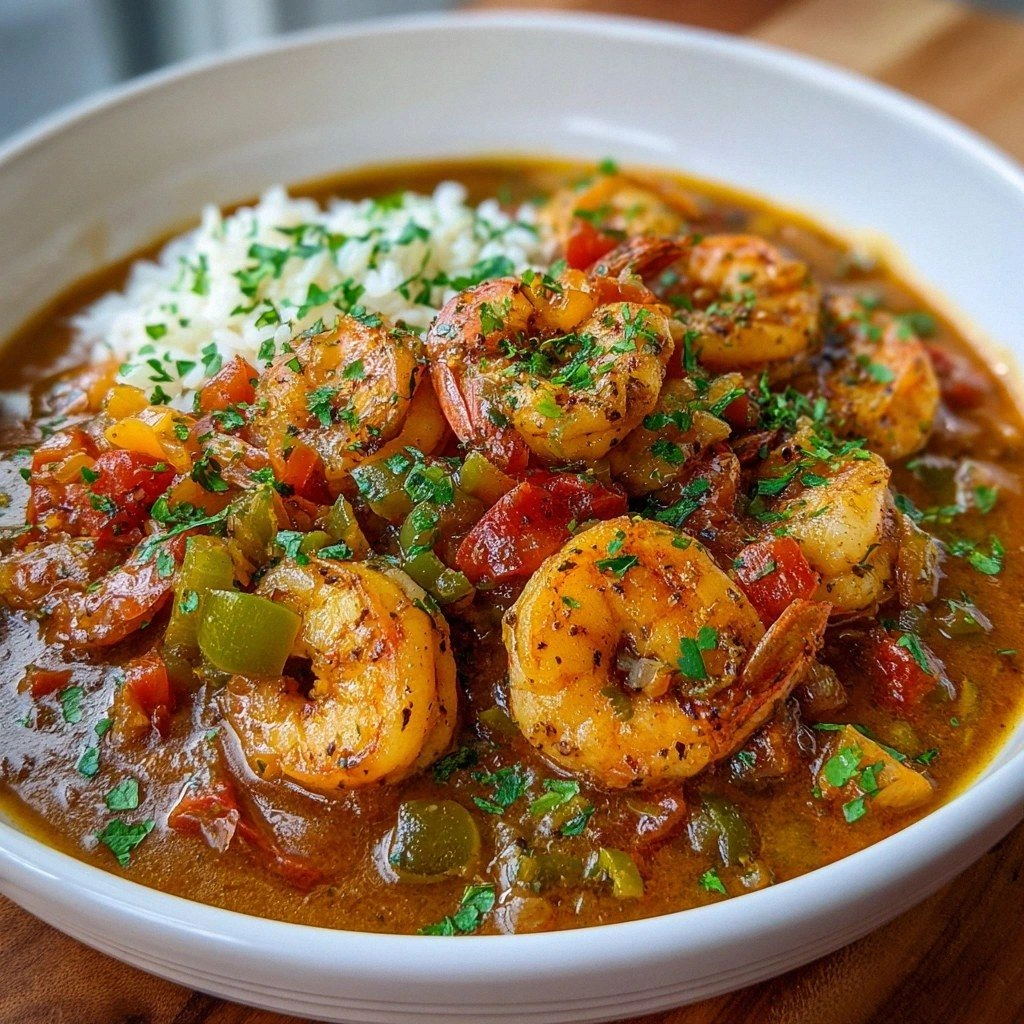
The Method — Step by Step
- Begin by heating 2 tablespoons of vegetable oil in a large, heavy‑bottomed pot over medium heat. As the oil warms, add a ¼ cup of all‑purpose flour, stirring constantly with a wooden spoon. The mixture should start to bubble gently and develop a nutty aroma within 2–3 minutes. Keep the heat steady; a too‑hot roux will darken and taste bitter, while a too‑cool roux will remain thin and runny. When the roux reaches a deep mahogany hue, remove it from the heat to prevent over‑browning.
- Next, dice ½ onion, 1 green bell pepper, and 2 celery stalks into uniform cubes. Sauté them in the roux until they soften and the onions become translucent, about 5 minutes. This step releases the vegetables’ natural sugars, creating a sweet base that balances the Cajun spices. If the mixture starts to stick, add a splash of water to loosen the roux and keep the pot clean.
- Add 2 cloves of minced garlic, cooking for 30 seconds until fragrant. Garlic’s aroma should fill the kitchen, signaling that the flavors are beginning to intertwine. Stir continuously to avoid burning; garlic can quickly turn bitter if left unattended. Once the garlic is golden, incorporate 2 cups of seafood stock, stirring until the roux fully emulsifies with the liquid. The sauce should thicken slightly and develop a velvety consistency.
- Introduce 1 cup of canned diced tomatoes and 2 tablespoons of Cajun seasoning. Stir until the spices are fully integrated, ensuring the sauce is evenly colored. The tomatoes add acidity that brightens the dish, while the Cajun seasoning infuses heat and herbal undertones. Let the mixture simmer for 10 minutes, allowing the flavors to marry and the sauce to develop depth.
- Now, add 1 pound of fresh shrimp, peeled and deveined, to the pot. The shrimp should sizzle immediately, releasing a sweet, briny aroma. Cook for 2–3 minutes on each side, or until they turn pink and opaque. Be careful not to over‑cook; shrimp can become rubbery if left too long. Once cooked, remove them from the pot and set aside, reserving the flavorful liquid.
- Return the shrimp to the pot and stir to coat them in the sauce. Let the mixture simmer for an additional 2 minutes, allowing the shrimp to absorb the spices. The sauce should be thick enough to cling to each shrimp, but still pourable enough to coat rice. This final simmer also melds the flavors together, creating a cohesive dish.
- Add a squeeze of fresh lime juice and stir. The acidity from the lime brightens the sauce and balances the richness. Taste the sauce and adjust seasoning with salt or additional Cajun seasoning if desired. The goal is a harmonious blend where no single element overpowers the others.
- Serve the étouffée over 2 cups of cooked rice, garnishing with ¼ cup chopped green onions and ¼ cup fresh parsley. The rice acts as a sponge, soaking up the sauce while adding a subtle nutty flavor. The herbs provide a burst of color and freshness, making the dish visually stunning.
That’s it — you did it. But hold on, I’ve got a few more tricks that'll take this to another level…
Insider Tricks for Flawless Results
The Temperature Rule Nobody Follows
Maintaining the right temperature while cooking the roux is essential. If the heat is too high, the flour will burn before it fully integrates, leading to a bitter taste. If it’s too low, the roux will be thin and watery. Aim for a medium heat and use a wooden spoon to constantly stir. This simple technique ensures a smooth, evenly browned base that carries the flavors of the dish.
Why Your Nose Knows Best
Trust your nose when judging the sauce’s readiness. A well‑cooked roux will emit a nutty, toasted aroma, not a burnt smell. If you notice a faint metallic scent, the oil may be too hot. Your nose is the ultimate flavor sensor, so pause and inhale before you add the next ingredient.
The 5‑Minute Rest That Changes Everything
After the shrimp have cooked, let the pot rest for 5 minutes before serving. This brief pause allows the shrimp to finish absorbing the sauce and the flavors to meld. I once skipped this step and the shrimp came out slightly dry. The rest period is a small investment for a big payoff in texture.
Use Fresh Shrimp for the Best Texture
Fresh shrimp hold their shape better than frozen shrimp, even after thawing. If you must use frozen shrimp, make sure to dry them thoroughly before cooking. Moisture on the surface can steam the shrimp, turning them rubbery. Fresh shrimp give a juicy, succulent bite that elevates the entire dish.
Add a Touch of Sweetness
A teaspoon of brown sugar or a splash of maple syrup balances the acidity of the tomatoes and the heat of the Cajun seasoning. It’s a subtle addition that rounds out the flavors and creates a more complex taste profile. I’ve found that this sweet kick is especially appreciated by those who prefer a milder heat.
Creative Twists and Variations
This recipe is a playground. Here are some of my favorite ways to switch things up:
Smoky Chipotle Étouffée
Swap the Cajun seasoning for a blend of smoked paprika and chipotle powder. The result is a deep, smoky heat that pairs beautifully with the shrimp. Serve over cilantro‑infused rice for an extra layer of flavor.
Creamy Coconut Étouffée
Add ½ cup of coconut milk after the tomatoes. The coconut gives a silky, tropical twist that softens the heat. This version is perfect for a brunch or a light dinner.
Vegan Shrimp Étouffée
Use a plant‑based shrimp alternative and replace the seafood stock with vegetable stock. The flavors remain authentic, and the dish stays hearty. Top with toasted breadcrumbs for a satisfying crunch.
Spicy Jambalaya Étouffée
Add diced sausage and a pinch of cayenne pepper. The sausage brings a smoky depth, while the extra heat keeps the dish exciting. Serve over a bed of fluffy white rice.
Herb‑Infused Étouffée
Boost the parsley and green onion with a handful of fresh thyme and oregano. The herbs add a fragrant, Mediterranean touch to the classic Cajun base. This version is lighter and perfect for a summer gathering.
Storing and Bringing It Back to Life
Fridge Storage
Cool the étouffée completely before transferring it to an airtight container. Store in the refrigerator for up to 3 days. The sauce will thicken as it cools, so reheat gently to restore its silky texture.
Freezer Friendly
For longer storage, portion the sauce into freezer‑safe containers or zip‑lock bags. Freeze for up to 2 months. When ready to eat, thaw overnight in the refrigerator and gently reheat on the stove with a splash of water to loosen the sauce.
Best Reheating Method
Reheat over low heat, stirring frequently. Add a tablespoon of water or broth if the sauce appears too thick. This technique ensures the shrimp stay moist and the sauce remains glossy.